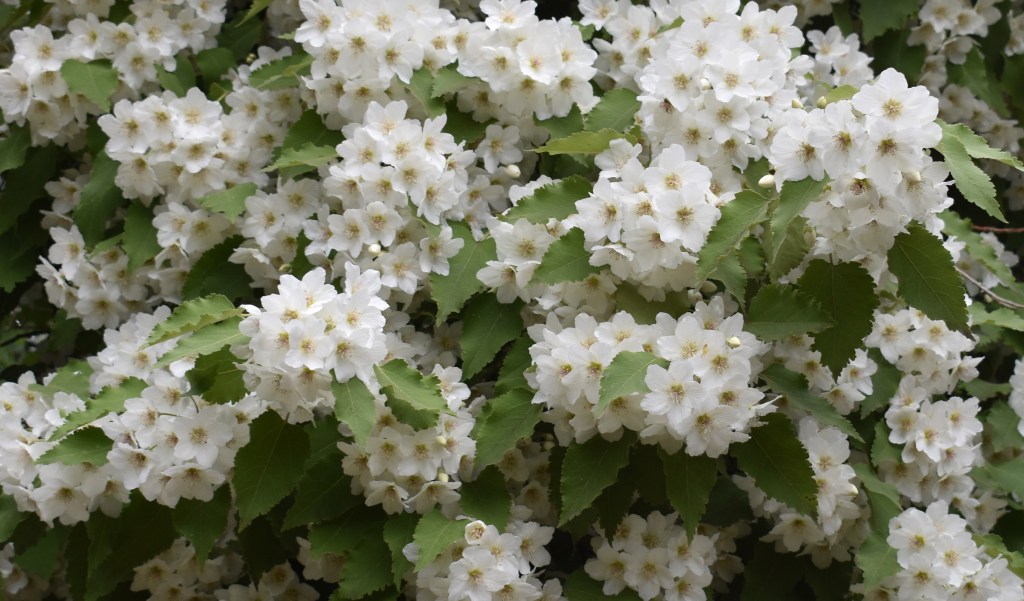
As July slips away we know we need to make the most of summer living, but while the rest of the world seems to be experiencing a heatwave, here in the North-East of Scotland we are wondering whether to put on the heating.
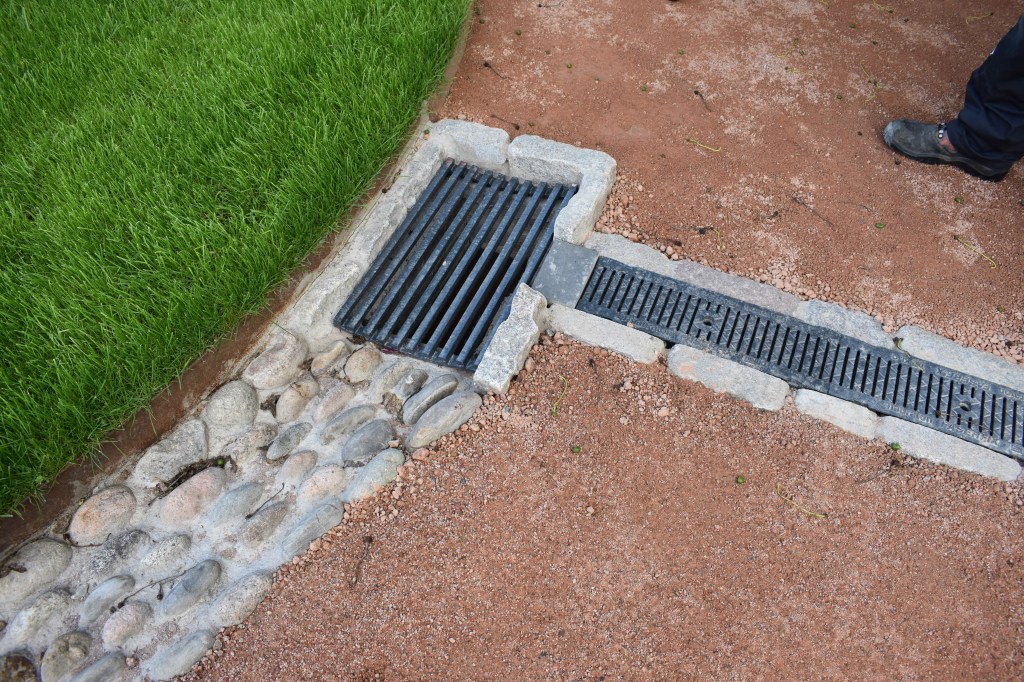
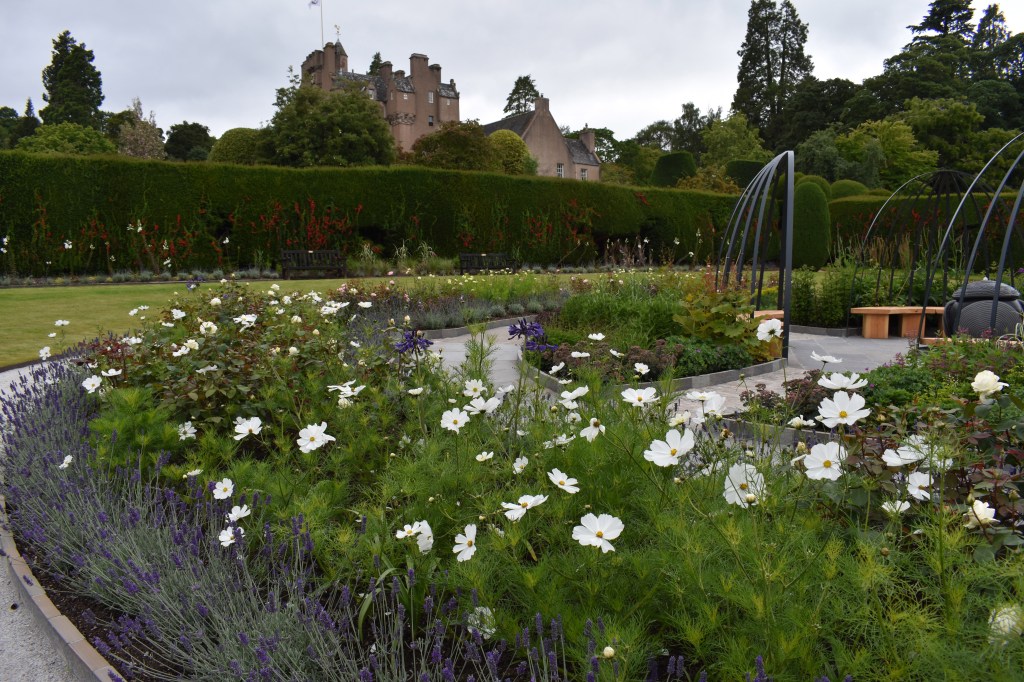
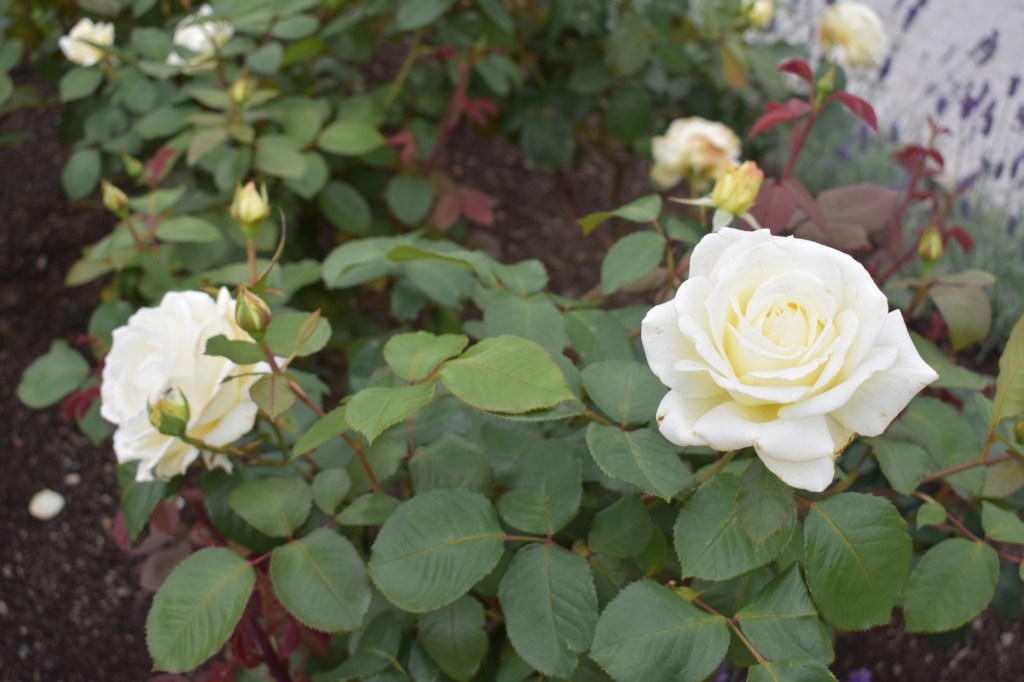
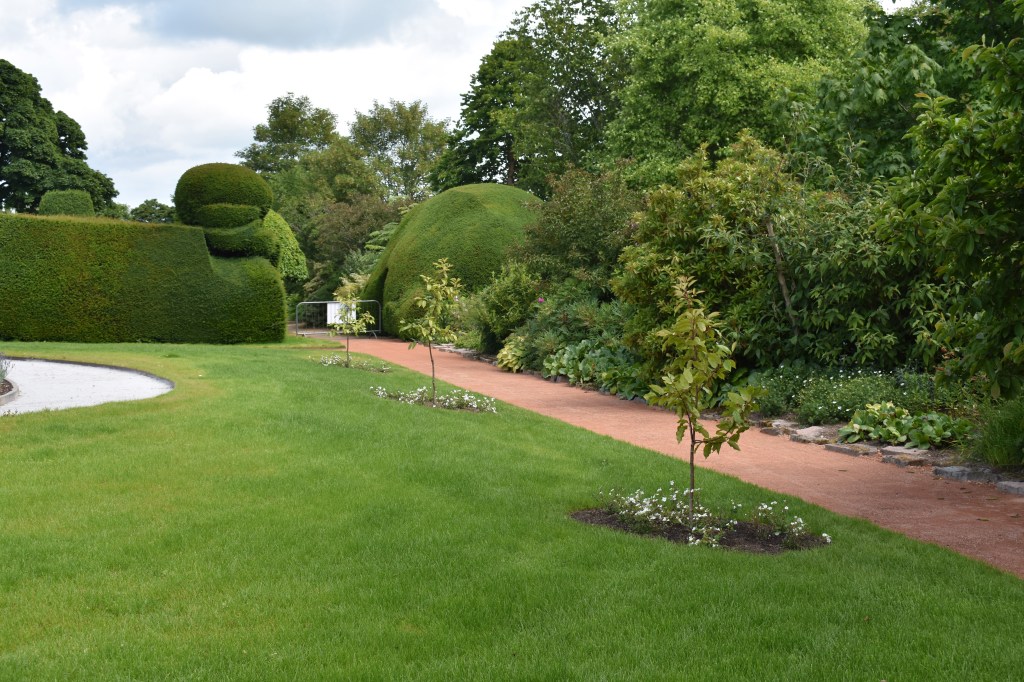
However, the sun shone on the opening day of the Rose Garden. I was away on holiday, but the gardeners report that the day went well. I could feel the relaxed mood when I visited a few days later. James felt as though a heavy load had been lifted from his shoulders; a deadline had been met and a project had been successfully finished. I say finished, but of course a garden is never finished – it’s always work in progress. The heavy rain prior to the opening tested the new drainage to the limit; the result was a resounding pass; none of the newly laid red blaze on the paths was washed away and I could see no damage to the flowers – a testament to strong healthily grown plants chosen for resilience and given time to settle in. I was particularly taken by the combination of the creamy white rose, ‘Memoire’ (also known as ‘Ice Cream’), with the white cosmos. The pink floribunda rose is called’ Valentine Heart’. As the climbing roses cover the arbours the garden will slowly ease into maturity.
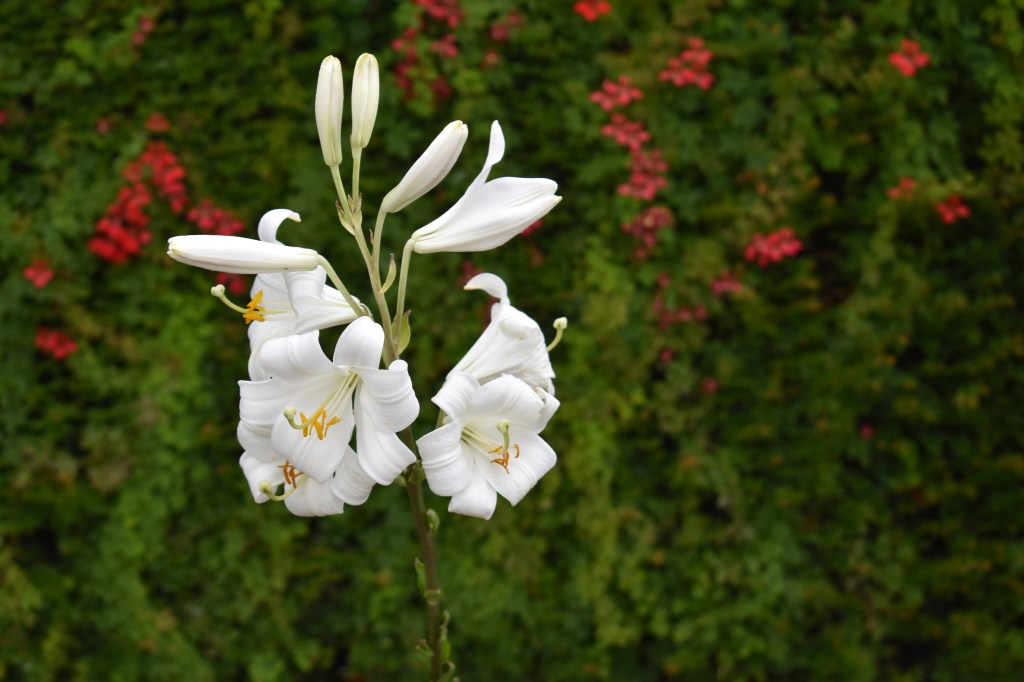
The three Portugal laurels which used to grace the lower end of the Rose Garden were removed partly by accident – a branch of the handkerchief tree fell and damaged one a few years ago – and partly by design because the middle one was only about 25 years old anyway and James felt that three laurels all of different ages would spoil the effect of the original design. Three cuttings which Joanna has been nurturing for about four years have now been planted and they will be clipped in recognition of the Victorian design. The three old laurels in the Fountain Garden which are fragile, with the trunks beginning to rot away, will also be replaced in time. The Madonna lilies on the west border of the Rose Garden are flowering well and will bulk up in the years to come. After the hard work, over more than three years, the gardeners can take pleasure in their achievements before the next project begins. Holidays are in prospect.
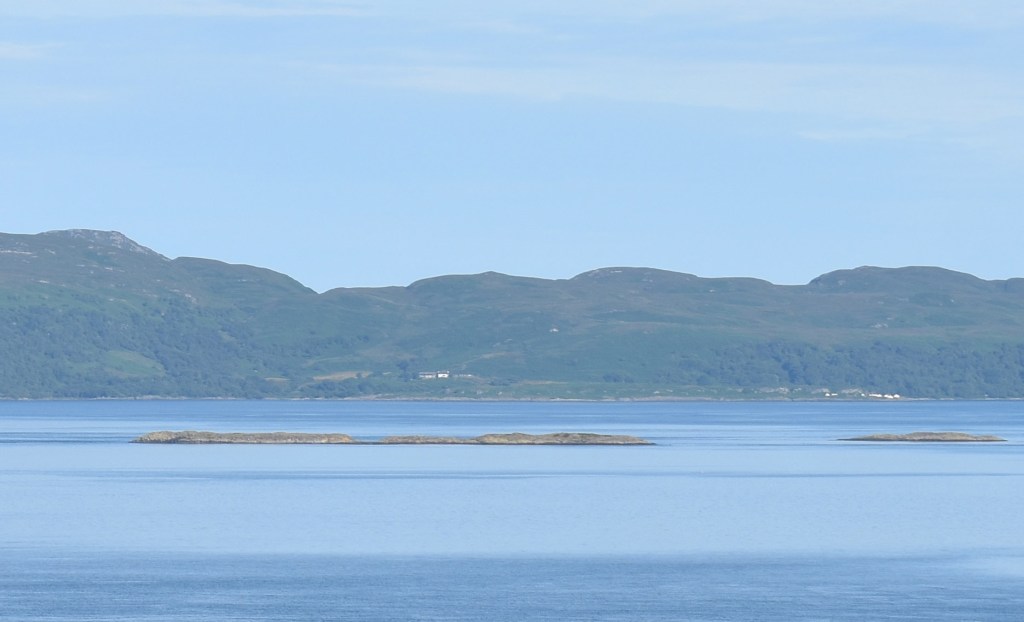
Some of our family have been to the west coast by the Crinan Canal, overlooking the Sound of Jura. It’s an area of Argyll that I hadn’t visited before, with landscapes and gardens to lift the spirit. From the house we had rented we could look north to Mull and west to Jura where we could see what we think is Barnhill, the farmhouse where George Orwell stayed in the late 1940s near the end of his life. I had been reading his diaries about his attempt at self-sufficiency in the remote farmhouse, 25 miles of rough track from the nearest shop or telephone.* Reading the mundane accounts of Orwell’s planting of potatoes and peas, struggles with slugs and rabbits, and comments on the first flowering of his roses and fuchsias , I realise that he loved this garden and the simple life. This pleasure was in stark contrast to the fact that he was at the same time coughing up blood and writing his dystopian masterpiece, 1984.
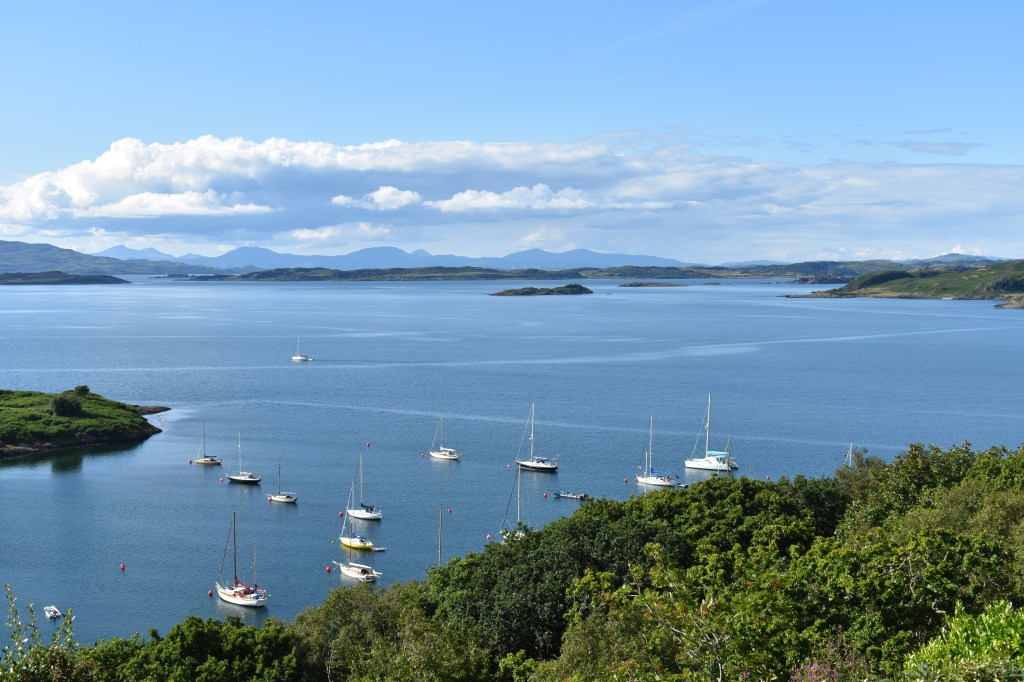
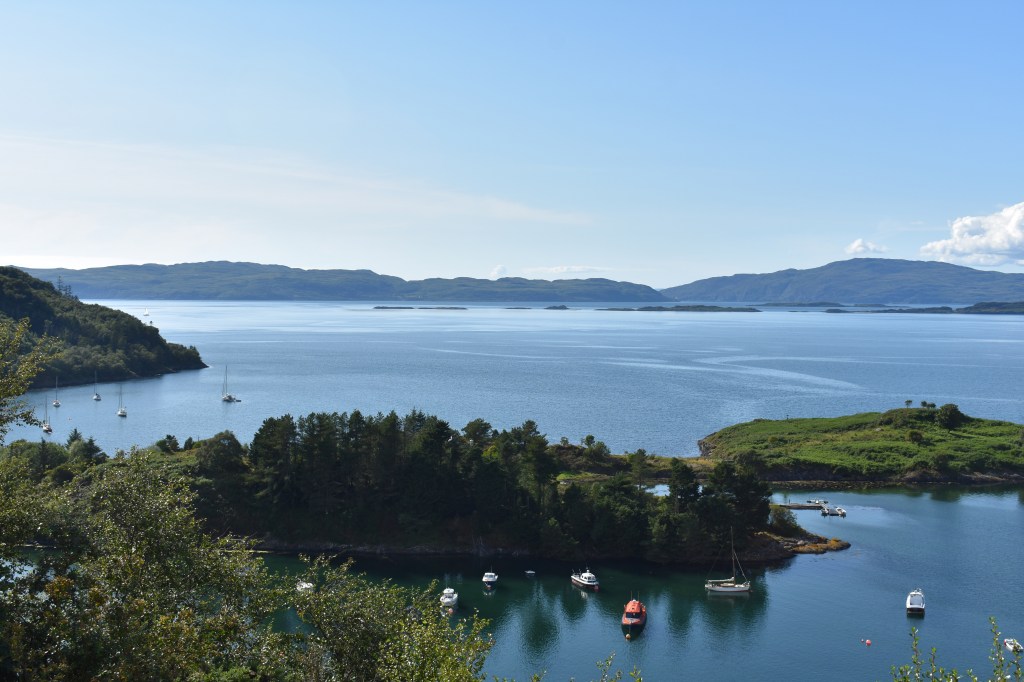

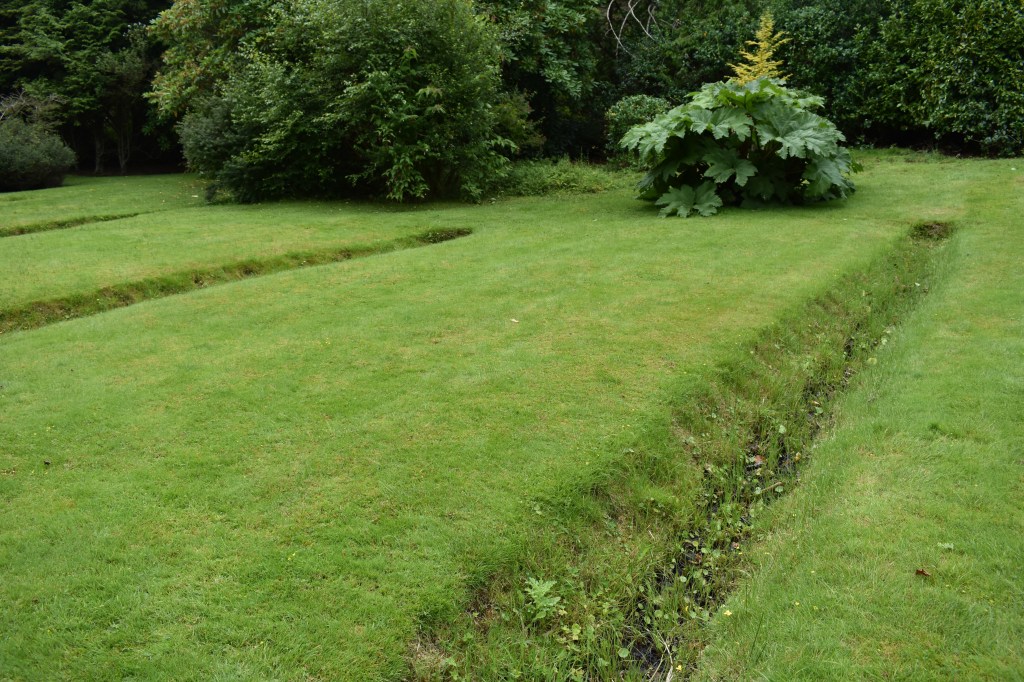
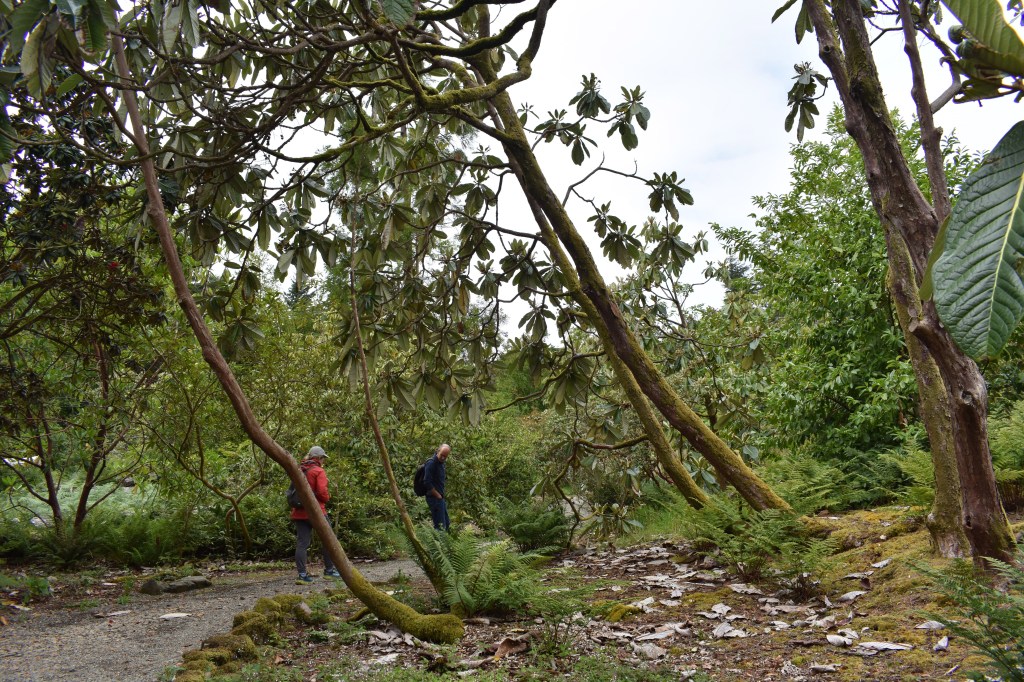
One day we spent a lovely afternoon visiting Arduaine, a NTS garden on a small peninsular not far to the north of Crinan. This is a grand garden with an important collection of rhododendrons. The garden was started by James Arthur Campbell in 1898 and continued by his son, Bruce, and other members of the family. By the time James Arthur died there were over 220 different kinds of rhododendrons growing at Arduanie. Eventually the garden was sold to the Wright brothers, Edmund and Harry, who added to the rhododendron collection and finally gave it to the Trust in 1992. So different from Crathes, but with some issues in common. I was interested to see a lot of skunk cabbage and asked a gardener about it. He explained that they could only keep on top of it by cutting the flowering heads (as in the Coy Burn at Crathes). Because the garden drained into a sea loch, it was unlikely to be infecting other properties. More problematic was the Phytophthora ramorum, a pathogen that has done immense damage across Britain and in other NTS gardens, especially on the west coast. The Phytophthora had infected the larch which had to be felled. This meant that when Storm Arwen hit Arduaine the shelter belt had been removed and storm damage was much heavier than anticipated. Rebecca, the apprentice at Arduaine was on the same course as Emily at Crathes. They spent ten weeks of their two year apprenticeship at college in Edinburgh and are now moving on to horticultural posts (Emily at Crathes). We thoroughly enjoyed our walk round Arduaine which culminated in a spectacular viewpoint looking out to a seascape of Scottish Islands.
Grand or simple, collecting rhododendron or planting potatoes, making a garden gives enormous pleasure and at this time of year more than any gardeners get their reward for hard work and patience.
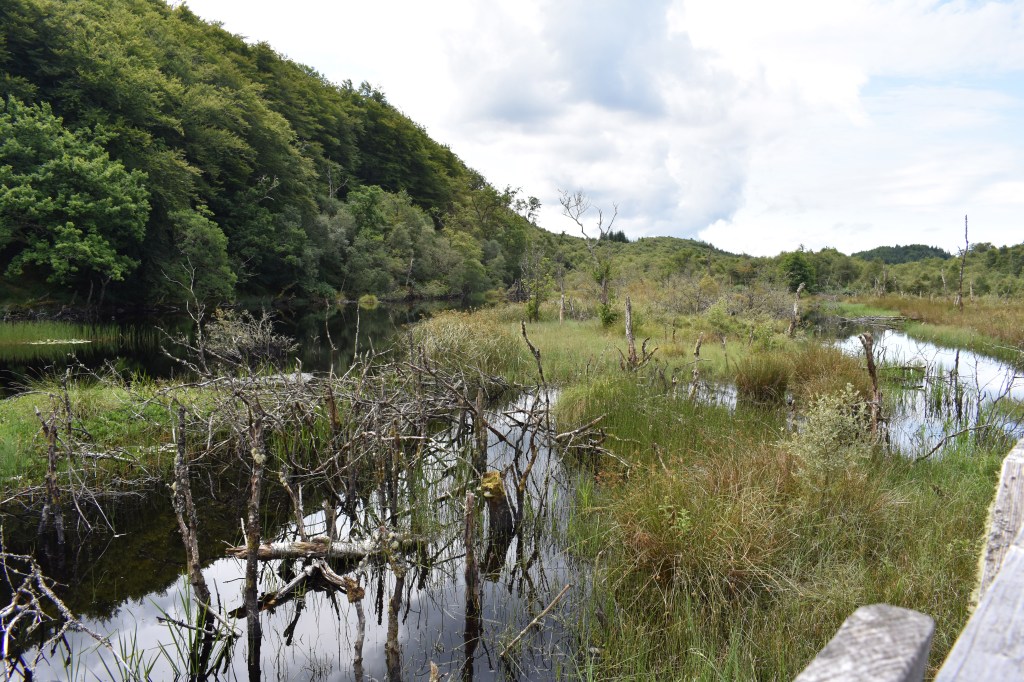
Knapdale just to the south of Crinan is a wooded and watery landscape and this is where the first authorised release of beavers took place. In 2009 four families of beavers from Norway were released, with a few more being added later to keep the gene pool diverse. There are now thought to be at least 30-40 beavers in the area. We didn’t visit at dusk which is when they are most likely to be seen but we were told by the Argyll Beaver Centre about the success of the project; of how the dams are unlikely to be seen in summer because they are covered in vegetation; of how the water levels were rising by beaver engineering; and of the increase in biodiversity that follows. We certainly saw a lot of different types of dragonflies and damsel flies.

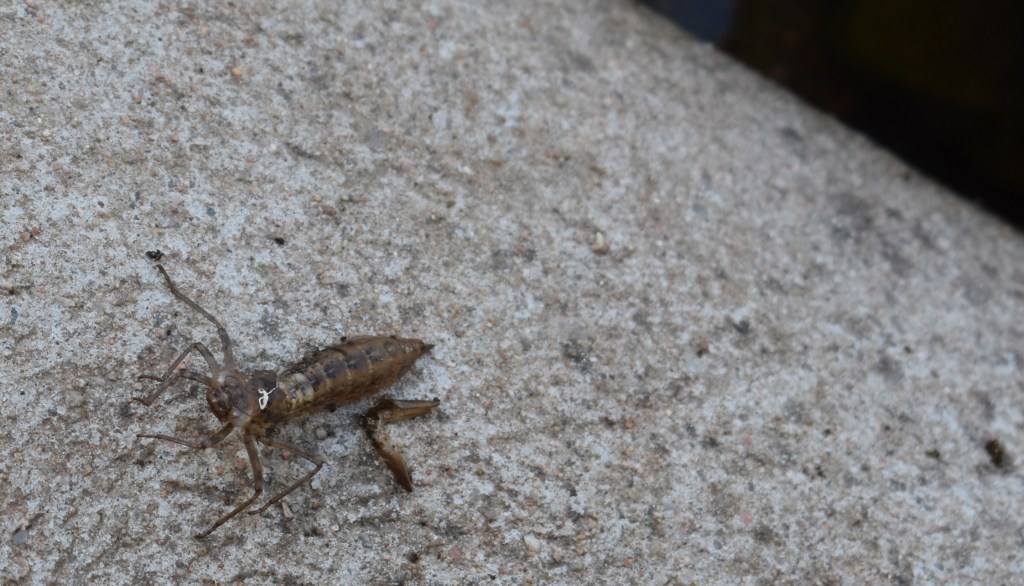
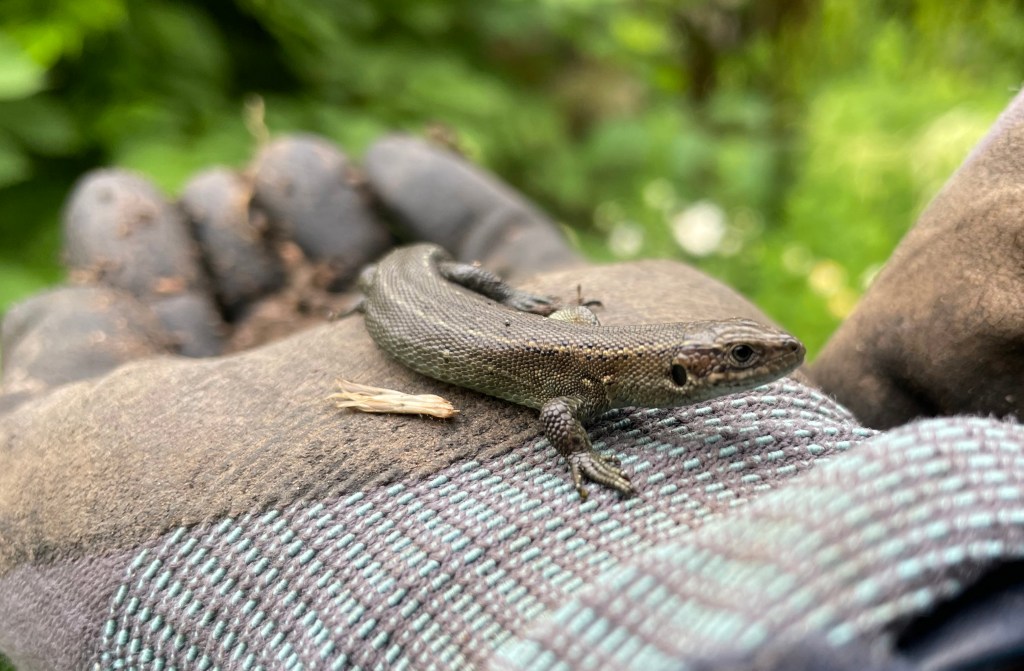
Thinking of dragonflies reminds me that Emily spotted their cast skins on the edge of the dipping pool. The larvae crawl out of the pond, shed their skins, wait for their new wings to expand, and fly away. The species can be identified by the skins (called exuviae) by an expert. Emily also spotted a common lizard in the garden one day. Maybe it was too cold to run away – she was able to pick it up and Joanna got a photograph. It’s good to think of that the frogs and toads in the garden (so many more since the dipping pool project) will be joined by lizards in the natural control of slugs.
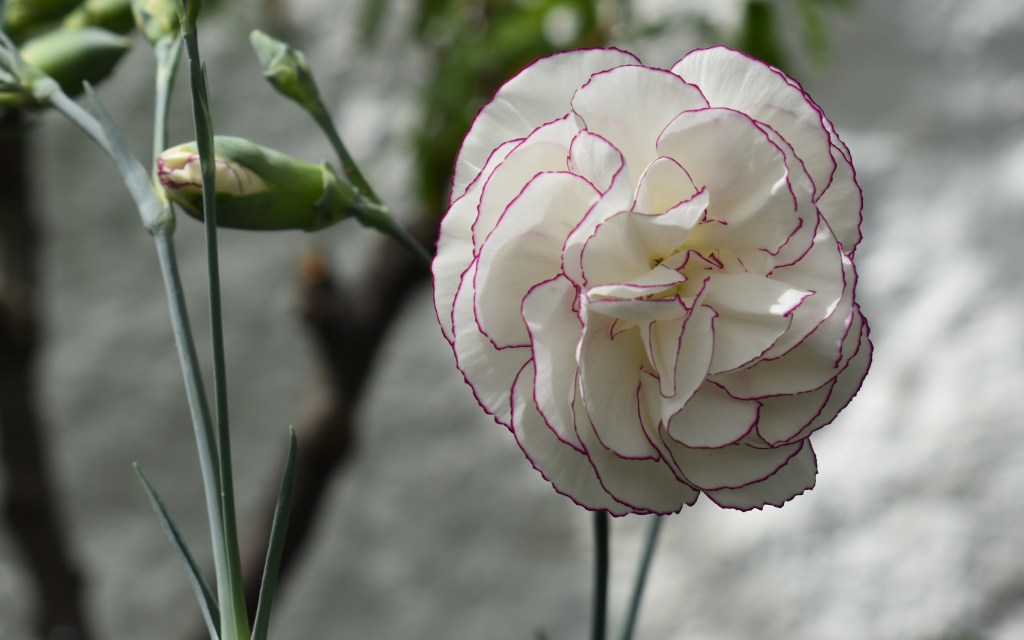
Joanna has been given some carnations to care for. The white one with pink edges gives her the most pleasure. It has that delicate clove scent I associate with childhood. For as long as I can remember I have loved flowers and gardens. Such a pleasure.
Updates:
We hear that Andy, our First Gardener, will be moving on. He came to Crathes in 1997 as propagator. After twenty years in the glasshouses he moved to be First Gardener about the same time as James started as Head Gardener. Andy and his pruning skills will be greatly missed.
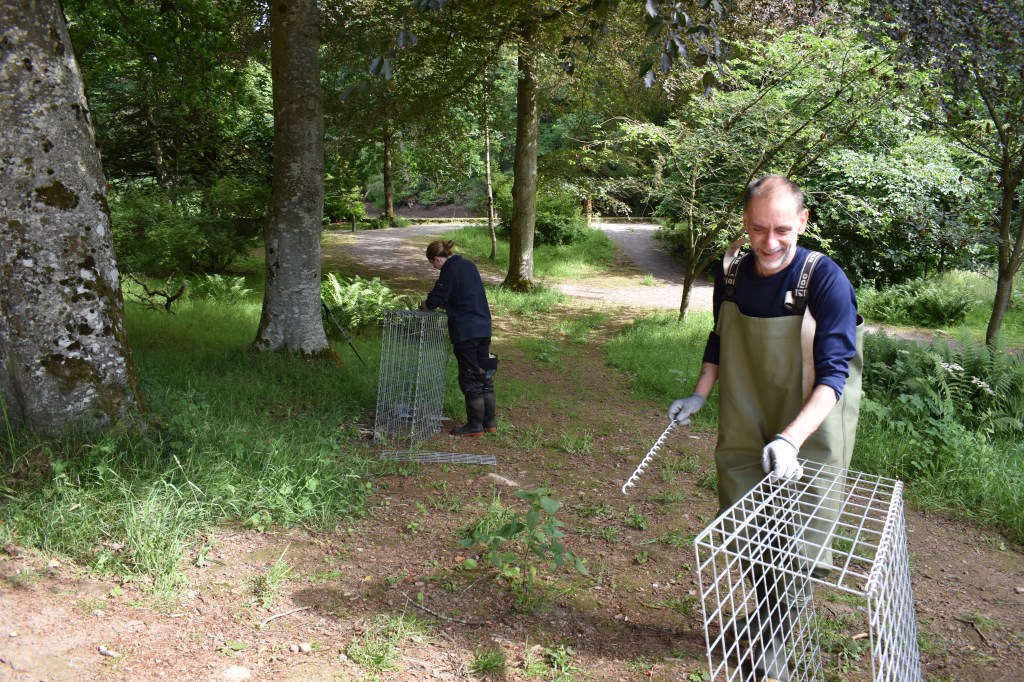
Work on removing the sediment from the Millpond has begun. It’s important to prevent extra sediment escaping into the Dee. A three-fold approach is devised with ‘silk curtains’, fibre mats and gabion baskets filled with stones and straw to trap the escaping sediment. The bulk of the sediment will be used by the gardeners. James is very happy about this source of natural nutrient-rich silt for the walled garden.
The James Hutton Institute has tested the water from the borehole and found it to be of very good quality. It’s a little high in iron but very little treatment will be needed to enable us to drink it in the bothy. Previously we relied on bottled water – even boiling was not recommended – which meant delivery of large plastic bottles on a regular basis.
The rangers report increased squirrel activity and abundance of tree bumblebees and speckled wood butterflies. The tree bumblebees love the bramble flowers and are spreading rapidly; I even saw one on the west coast. The general absence of insects continues to be worrying.
*George Orwell Diaries edited by Peter Davison (2009)
 Notes from Crathes