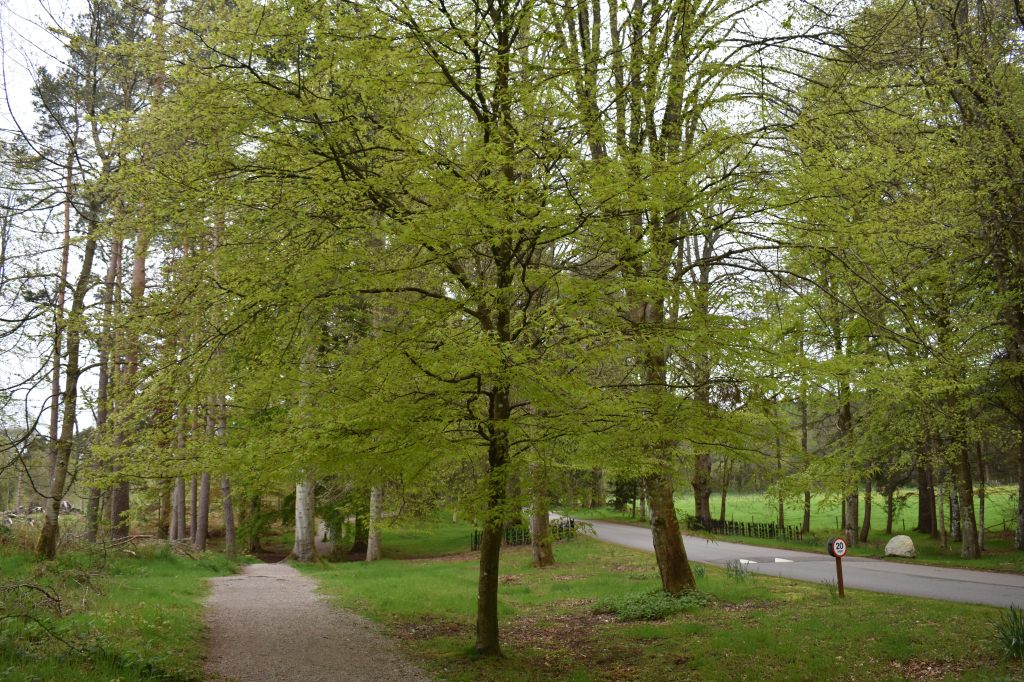
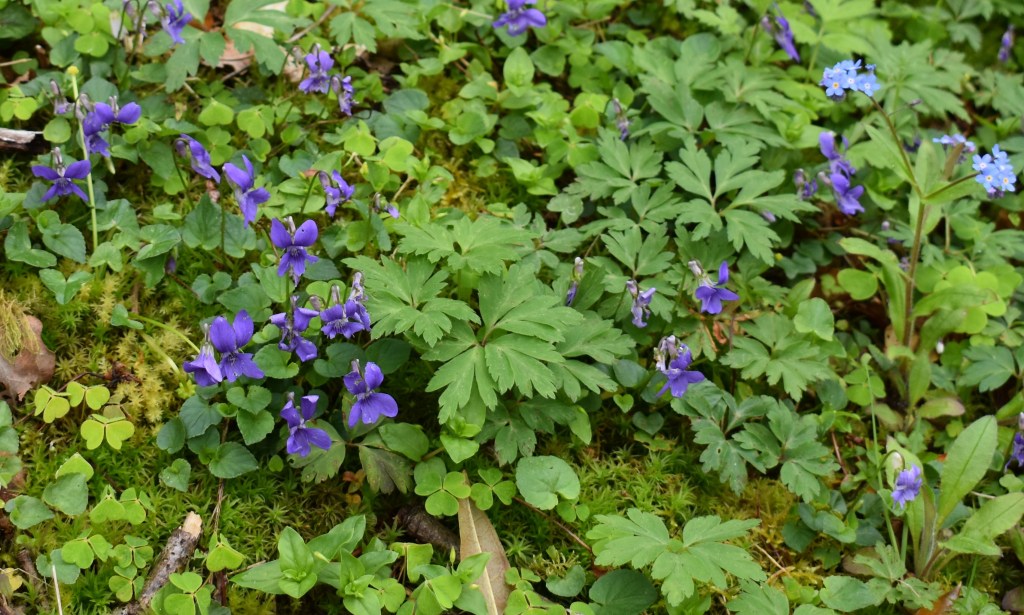
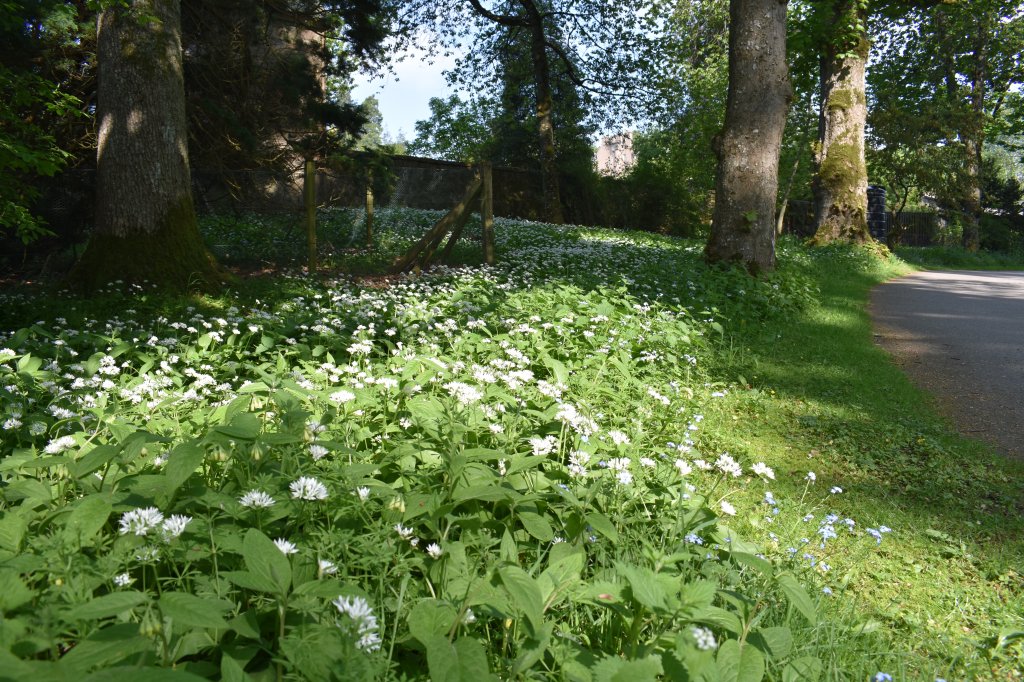
The loveliness of spring always works it magic. Along with the soft green haze spreading across the woodlands, there are dog violets and forget-me-nots joining the celandines, wood anemones, primroses in the grass; banks of wild garlic; drifts of pink campions; unfurling fern croziers; summer visitors – chiff chaffs, willow warblers, swallows and martins returning and the calling of the cuckoo (though no swifts as yet); St Mark’s flies in plenty; orange tip butterflies and the buzz of bees high up in the old sycamores. A glorious return of life. I long for it and anticipate it’s glory, but every year it is overwhelming in its beauty. This year hardly has spring arrived than it is summer. The long, drawn out, wet, cold winter turns suddenly into a May miracle of warmth. Admittedly there is a worry behind the warmth as meteorologists and scientists report a steadily increasing rise in temperature, but like most people, I enjoy the warmth along with all the burgeoning of life.
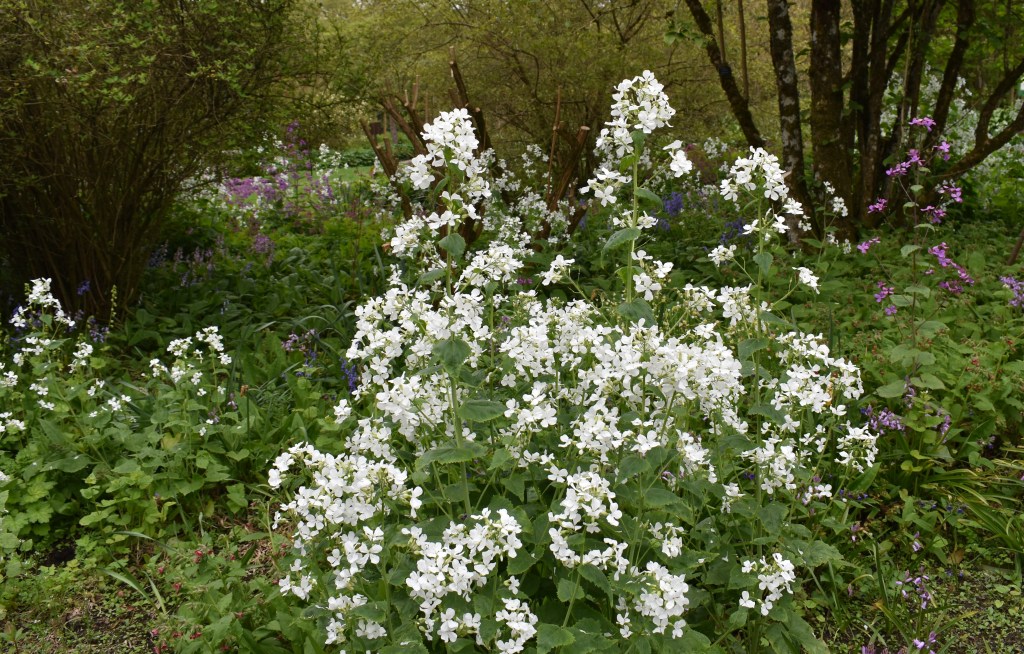
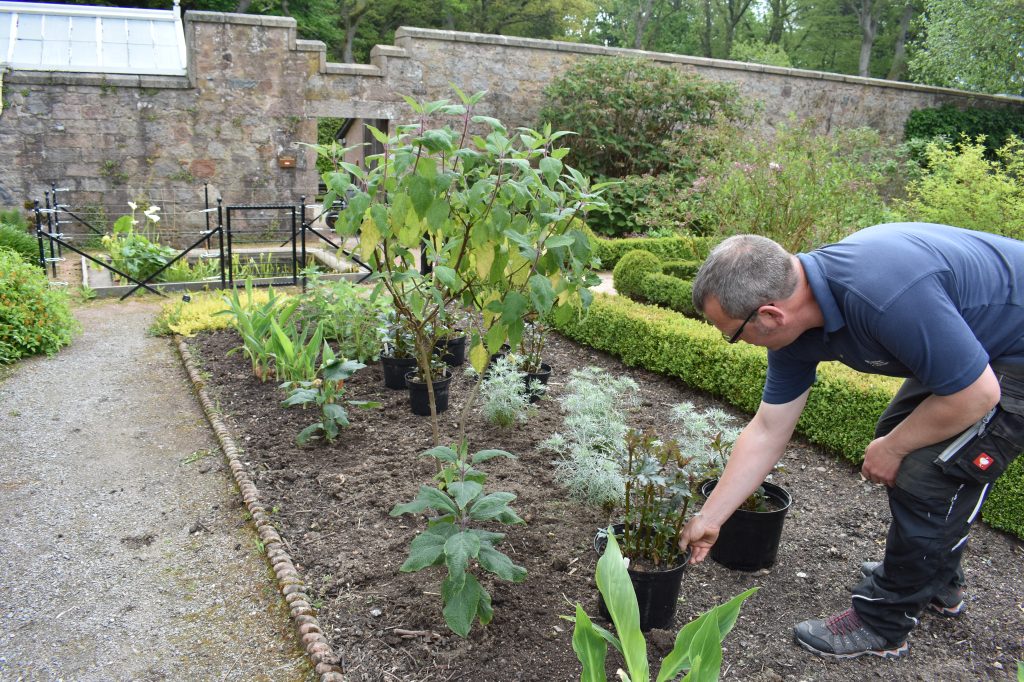
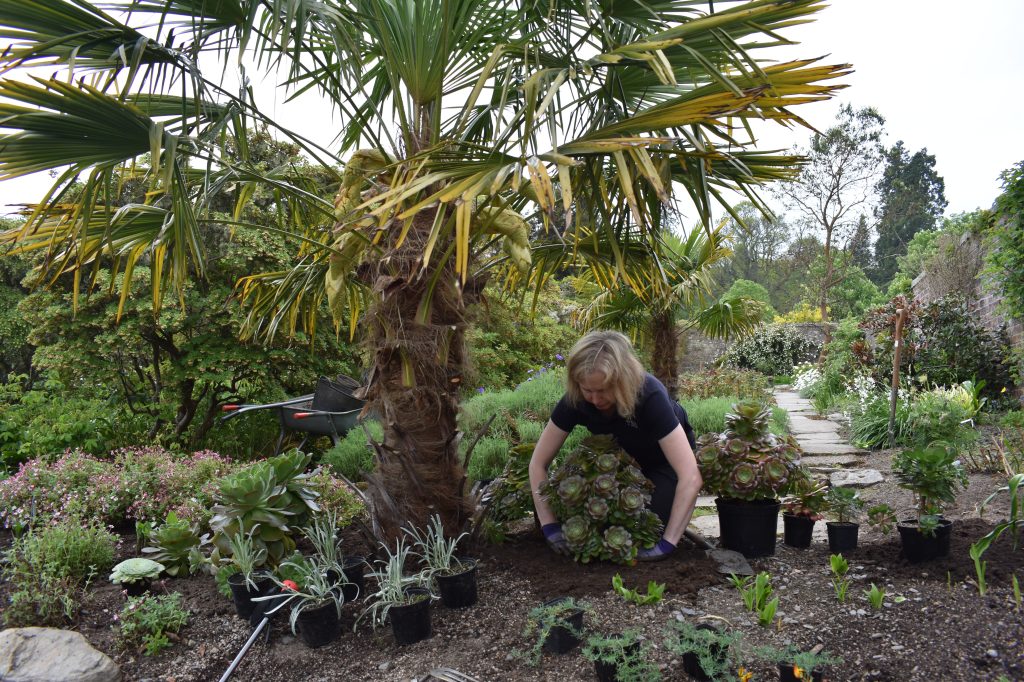
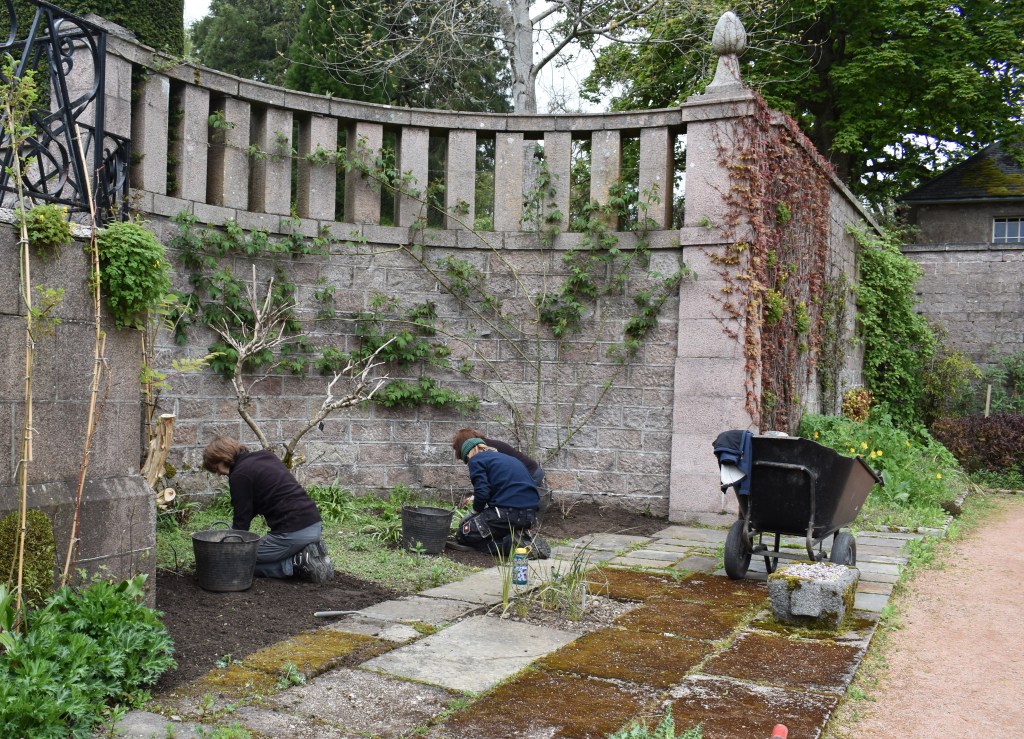
This spell of dry warm weather is perfect for the gardeners. Now there is a race to get the weeding done (an unrealistic target) and the planting finished.
I discover an interesting fact about the thale cress (Arabidopsis thaliana) – a weed that has plagued Crathes with its fecundity since Covid. Because its genome is well established it is the drosophila (fruit fly) of the plant world and the subject of many research programmes.
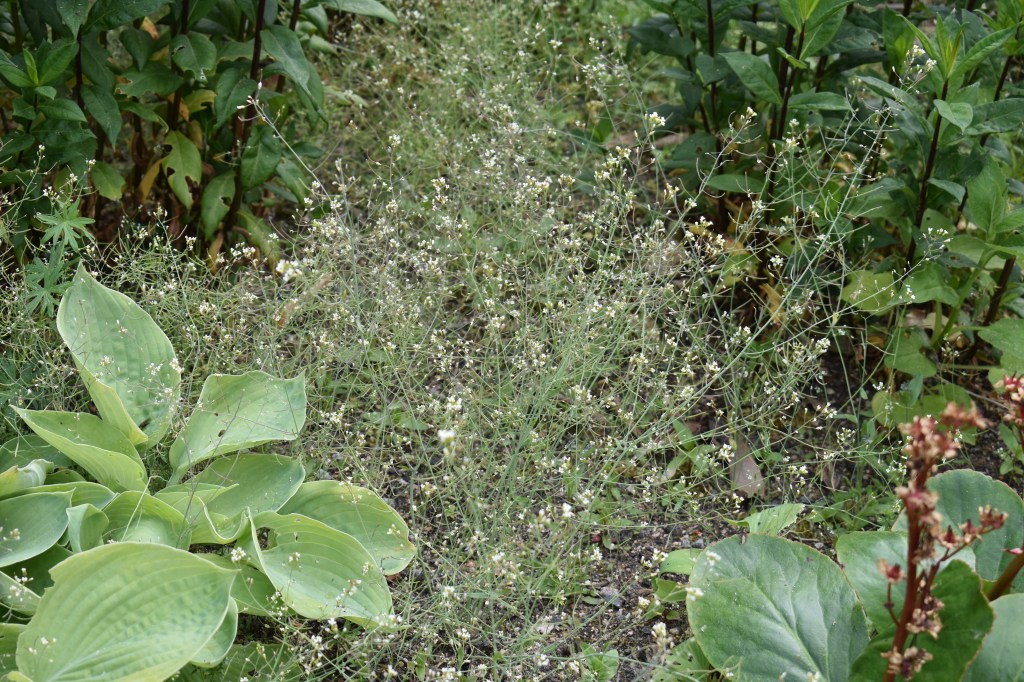
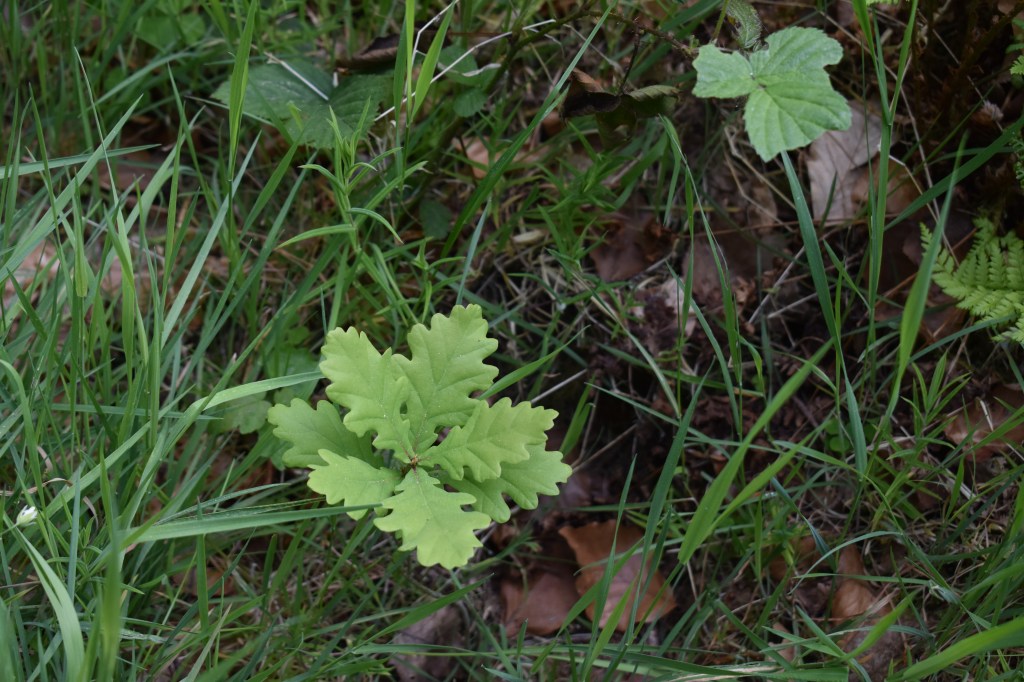
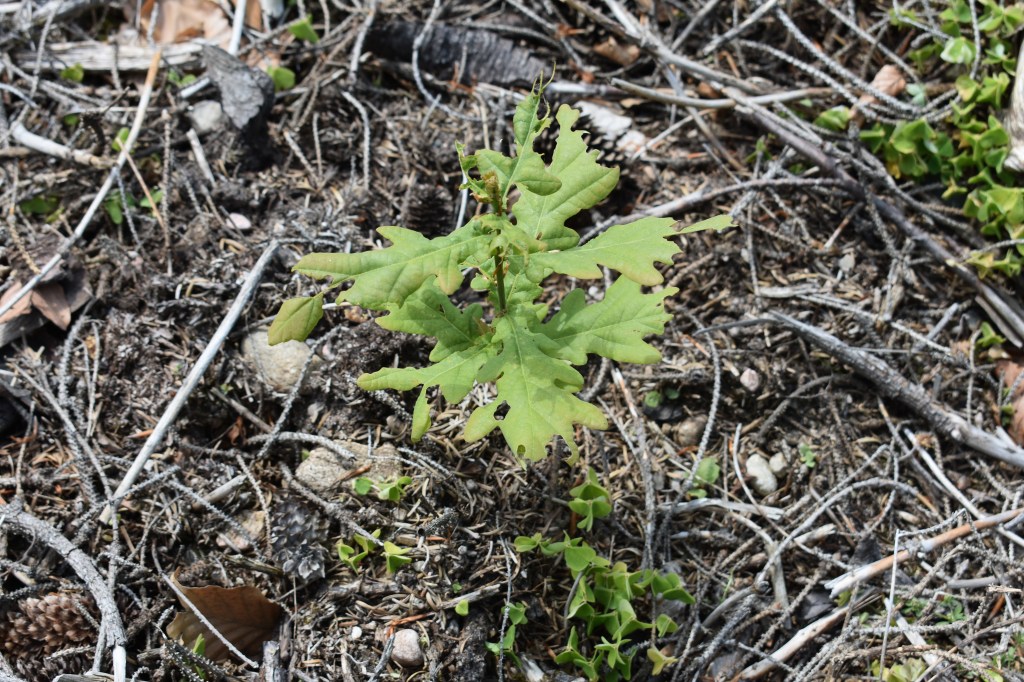
Apparently the roots of the cress can recognise genetically related plants and position their leaves to enable light to fall on their relatives. I found this detail in a book by Peter Wohlleben called How Trees can Save the World (2024). Peter Wohlleben is a forester to trade who has moved away from traditional German forestry practice. Ruminating on his dislike of plantations and his observations that forests will return of their own accord if allowed, I look for the trees that are growing in the plantation area by the East Drive brought down by Storm Arwen and later felled. There are few mature oaks along the East Drive, but plenty of saplings. In the felled area where the ground between the old stumps is just coniferous needles and dead branches there are more young oaks; also occasional beech and Scots pine saplings. This area looks as if it could perhaps grow into an oak woodland. My own garden in Torphins would grow into a birch woodland with some rowan if left to its own devices. Whatever plays out for Crathes I am pleased to think that commercial forestry is no longer practiced and non-native conifers will not be planted in large stands; neither will heavy machinery compact the soils. Ultimately, what I take from Wohlleben’s book is the fact that it is not only me who doesn’t understand the complexity of the natural world but many experts too. We only have to see how understanding has changed over the years (take the idea of planting sitka spruce in precious peatlands) to appreciate this fact. No-one, not even experts, reach the end of understanding, but making an attempt is part of the joy of living.

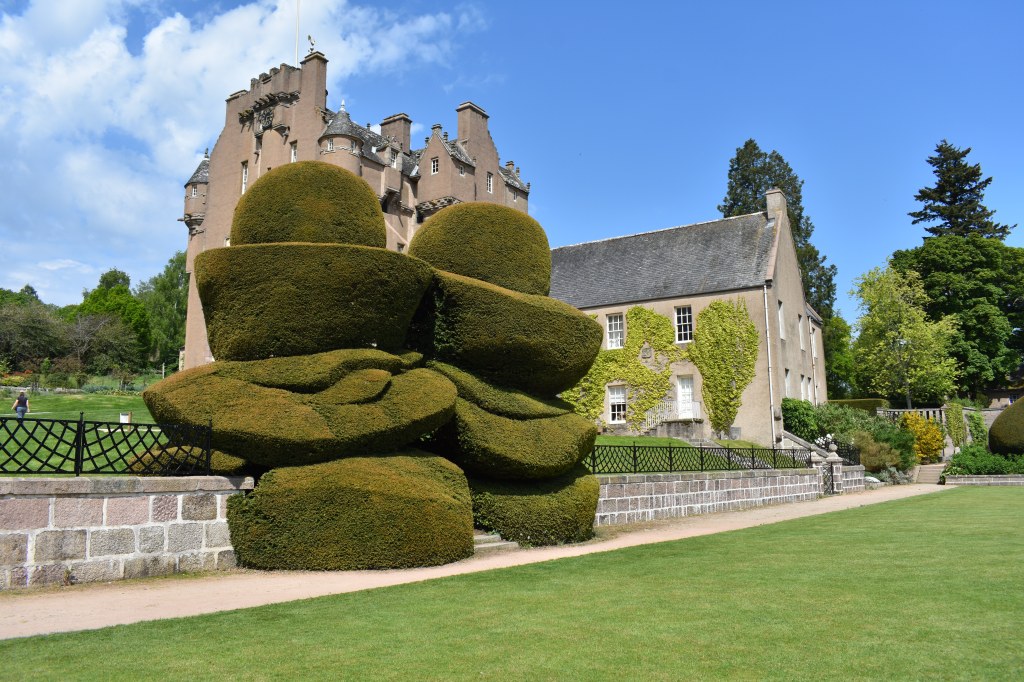
Still on the subject of trees, I had intended to mention the visit of SYTHI (Scotland’s Yew Tree Heritage Initiative) in ‘Updates’ but after James reported the visit to me and I had visited their website I realised that the yew was due a little more consideration. The society is trying to research all of Scotland’s ancient yews (Taxus baccata). Apparently Yew fossils (Paleotaxus rediviva) have been found in modern Germany which date back over 200 million years to the time of the supercontinent Pangaea. This means that yews have survived various extinctions, global upsets (such as asteroid collisions and major volcano eruptions), and ice ages, to the present day. They have ‘seen’ the dinosaurs come and go, but are now under threat from human destructive behaviour. There is much about the cultural history of yews on the website, but also scientific research that will further our knowledge. The society members were visiting Crathes to take samples of the old yews so that they could establish their DNA. They are making a genetic map of Scotland’s yews; something that is also being done in other parts of the UK and Europe. I am reminded of the heritage yew hedge in Edinburgh (see my post ‘It’s all in the genes’ 12 September 2021).
I have been obsessing about wild bees. This is part of a continuous awareness of bee numbers as a gauge of the state of the planet, and partly because there is an abundance of wild bees at Crathes just now. There used to be lots of mining bees in the Fountain Garden but there have not been many in the last few years. Whether this is because of major work on the fountain and surrounding paths or the cold weather I don’t know, but this year they have made a comeback. Furthermore, they are present in their thousands in the nursery area; I can hardly believe my eyes.
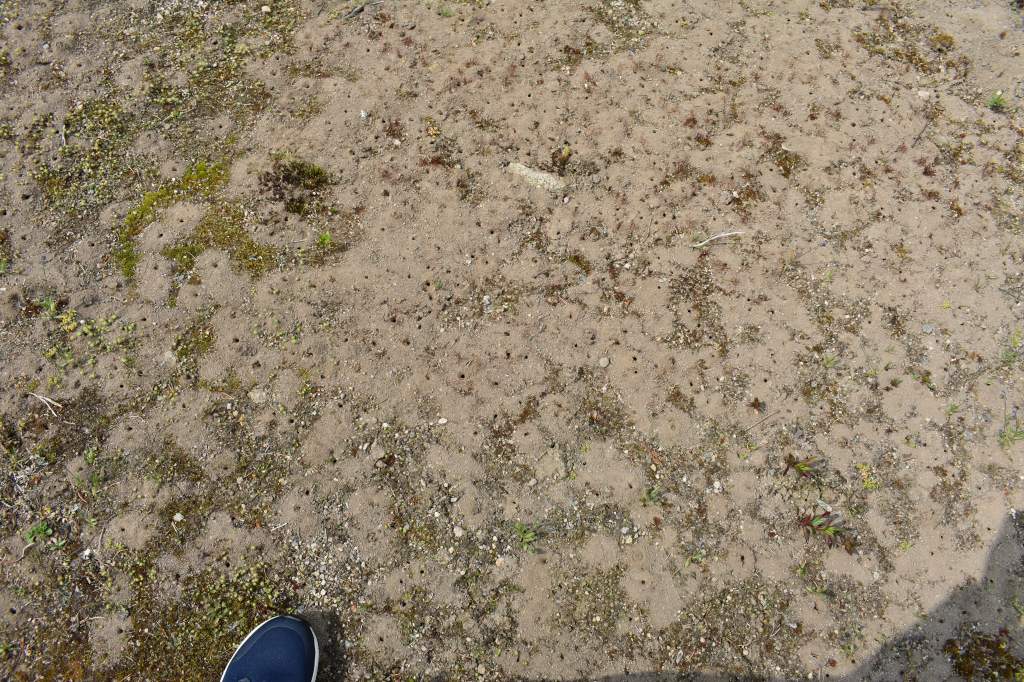
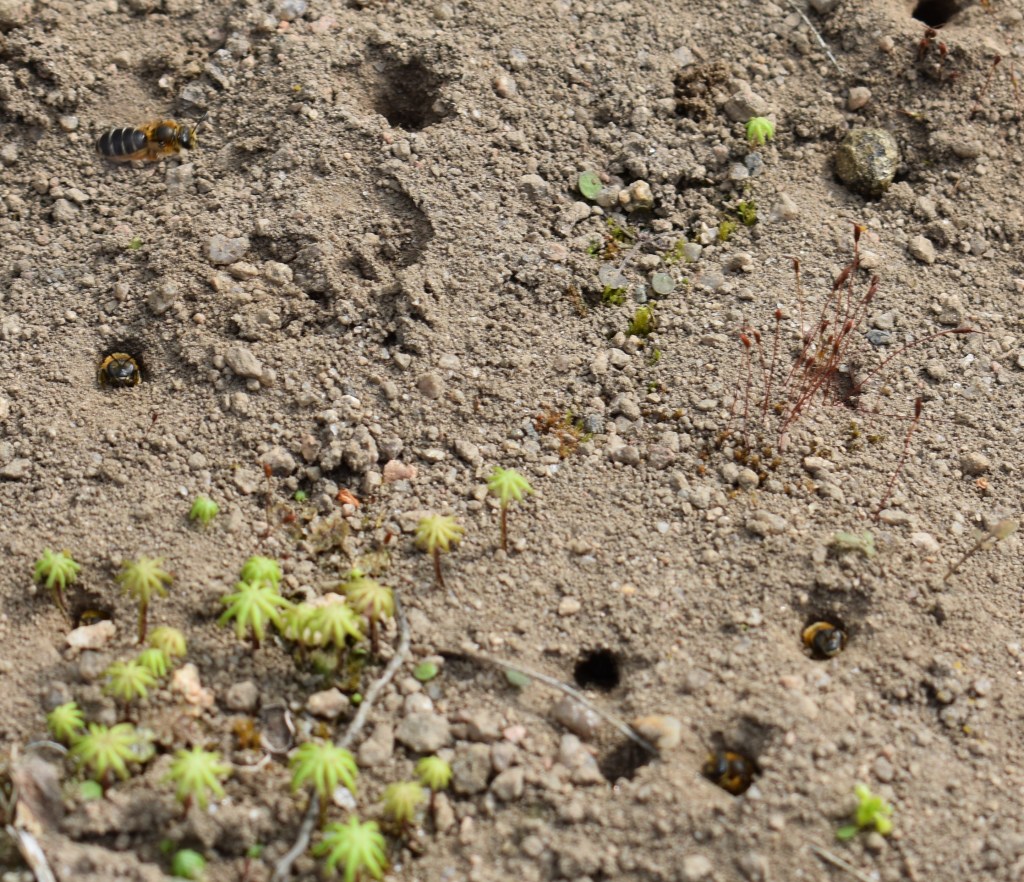
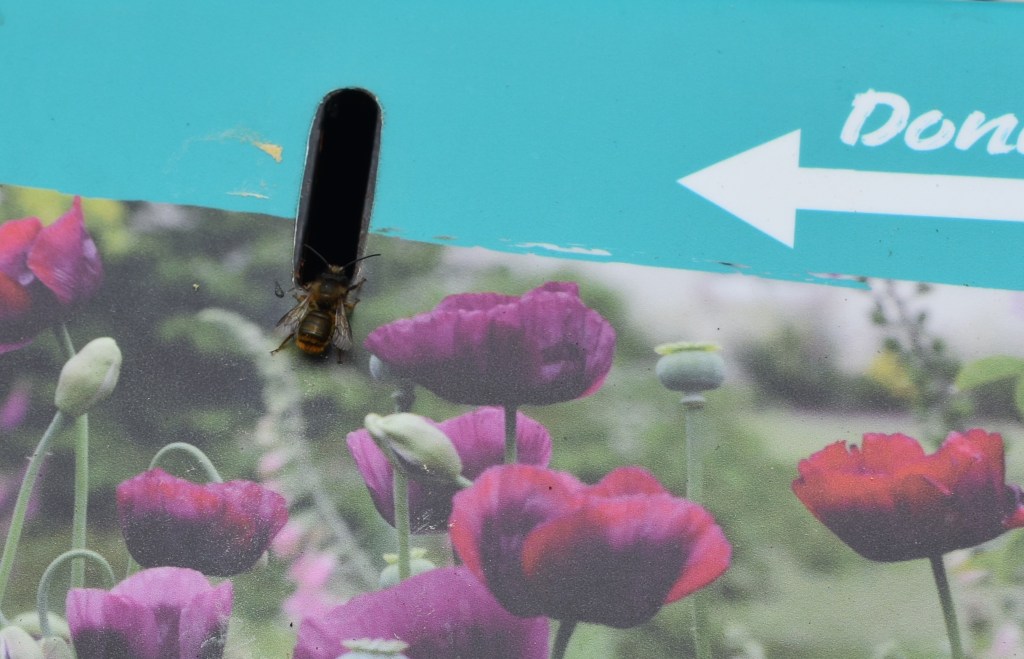
Maybe the abundance is partly due to the glorious weather, and surely it is helped by the reduction in pesticide use. Whatever the reason, such a quantity of bees is worthy of a celebration – a gold medal maybe? It seems that there are bee holes all over the garden. Bees are even seen entering the donation box. Emily wonders if this is a red mason bee. The range of this bee has been extending northwards but has not yet been recorded on the NESBReC website (North-East of Scotland Biological Records Centre). The bee using the donation box has the rotund abdomen and red hair that is typical of the species. Perhaps it is the warming climate that is seeing so many insect species moving northwards. There are tree bumblebees at Crathes and in my garden in Torphins, but they were never seen in Scotland until recently.
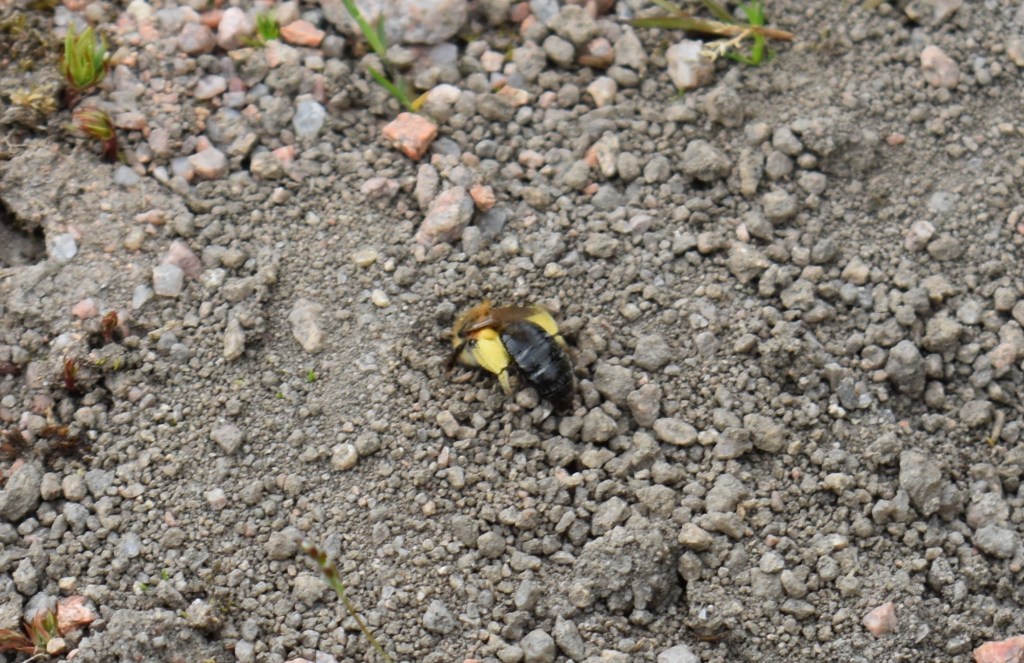
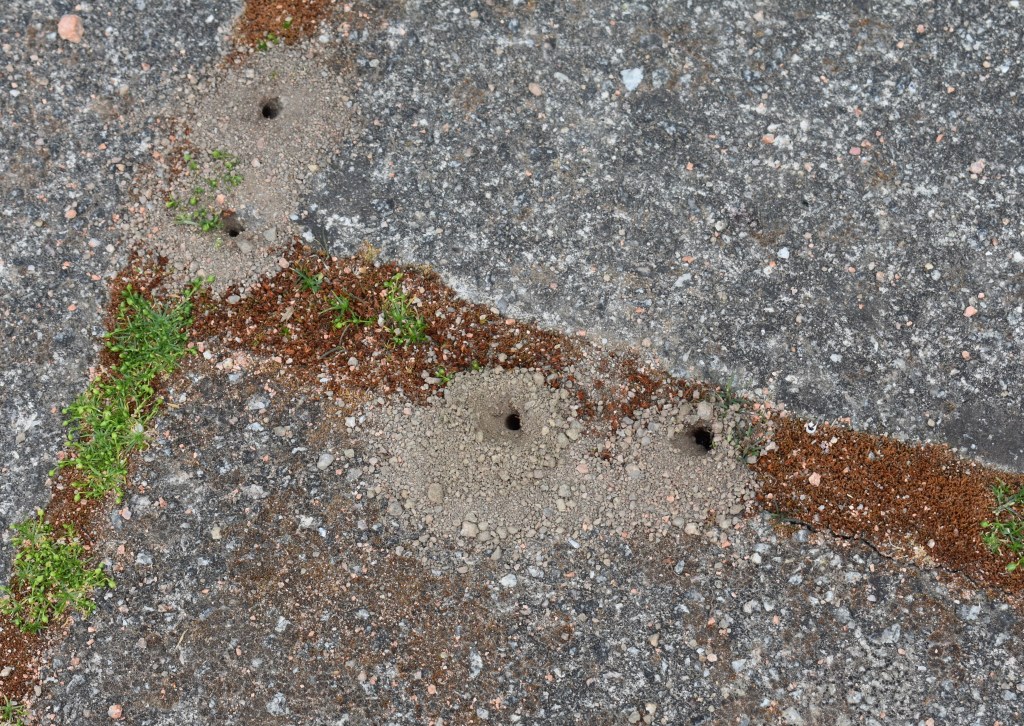
Listening to Radio 4 on Start the Week (13 May) I learn with astonishment that bumblebees like to play. What do they like to play? Why football of course! They can be taught to move small wooden balls about and they return to this activity even when the reward (a drop of something sweet) is taken away. It is mostly the young bees and males that show this behaviour – presumably adult females are too busy keeping the species alive. Another thing I learn on the same programme is that wool carder bees like to clip the hairs of plants such as lamb’s lugs (Stachys lanata) to line their nests. The wool carder bee is another solitary bee until recently unknown in Scotland. There is one NESBReC record for this bee in the Banchory area. Possibly this is because there has not been much recording on solitary bees in the North-East. The ashy mining bee, Andrena cineraria, which both Emily and I think we have seen in the Fountain Garden has no record in NESBReC. The yellow legged furrow bee, Halictus rubicundus, which I think is the one found in the nursery area in such abundance, has just seven records in NESBReC, two in the Aberdeen area. After spending a lot of time poring over books and consulting websites I give up (for the time being) on trying to identify the solitary bees; just another thing I can’t be sure about. However, getting my ‘eye in’ will help when I have another attempt.
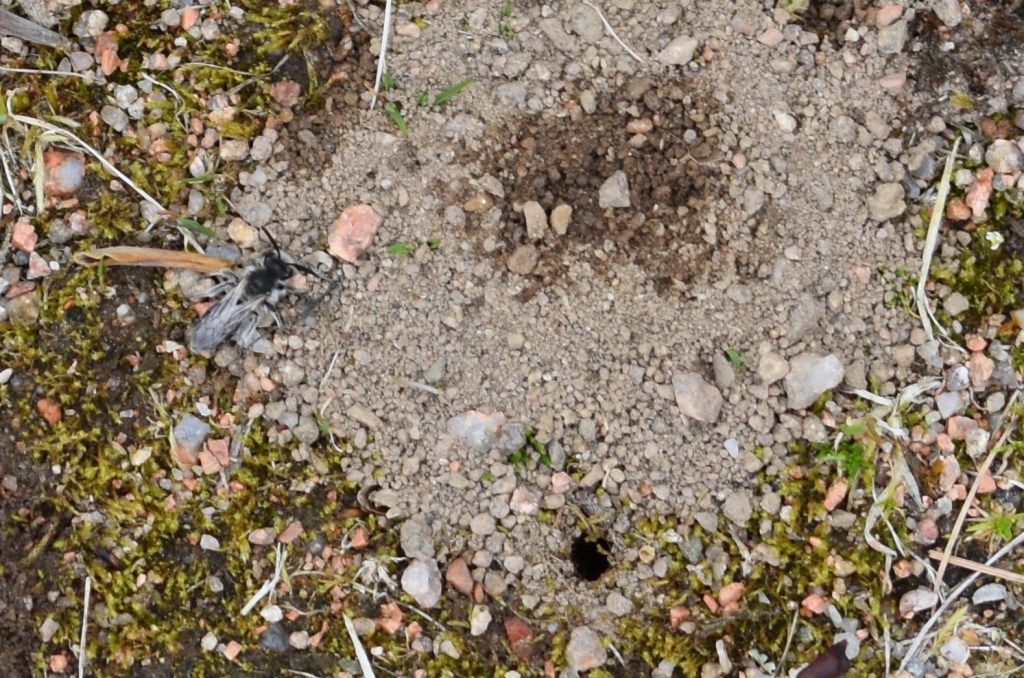
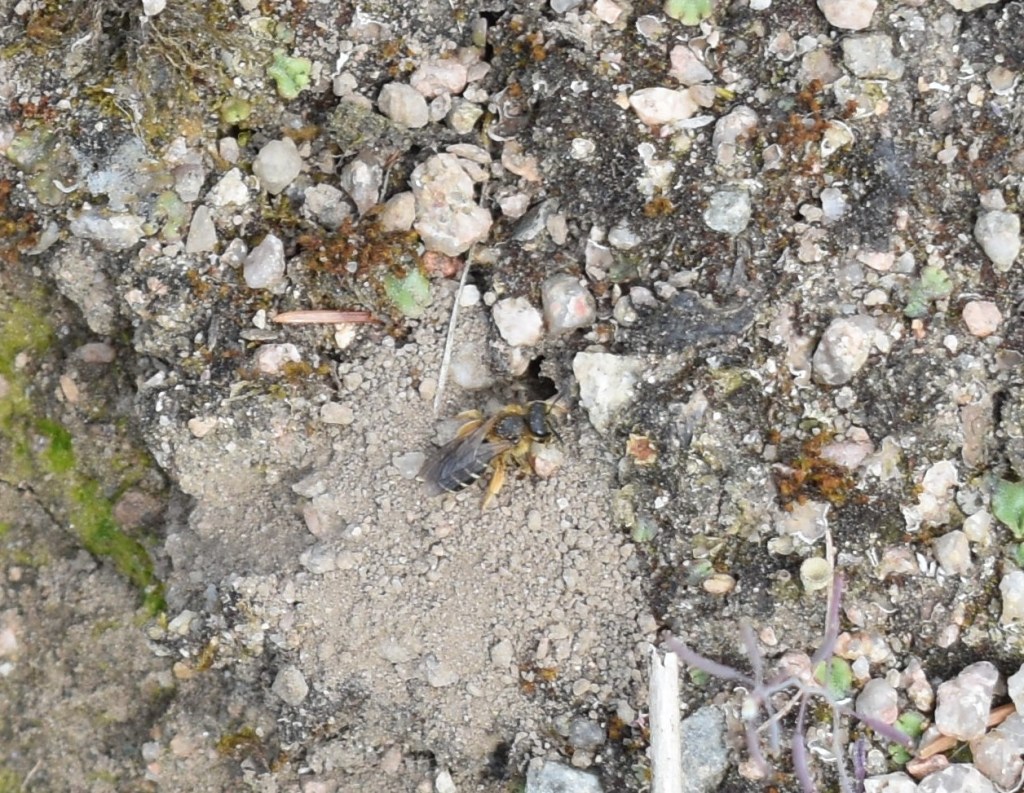
The honeybees that swarmed under our roof slates have not made it through the winter. Honeybees are important pollinators but not so effective as the solitary bees which mostly collect the pollen on the hairs of their abdomens and legs since they don’t have pollen baskets like the honeybees and bumblebees. Bumblebees are helpful in other ways as they have varying lengths of tongue which adapts them for pollinating different shaped flowers. If you are near a foxglove that buzzes loudly you might realise that the bumblebee inside the flower is deliberately making the buzz so that the vibrating flower will shed its pollen all over the bee’s hairy body.
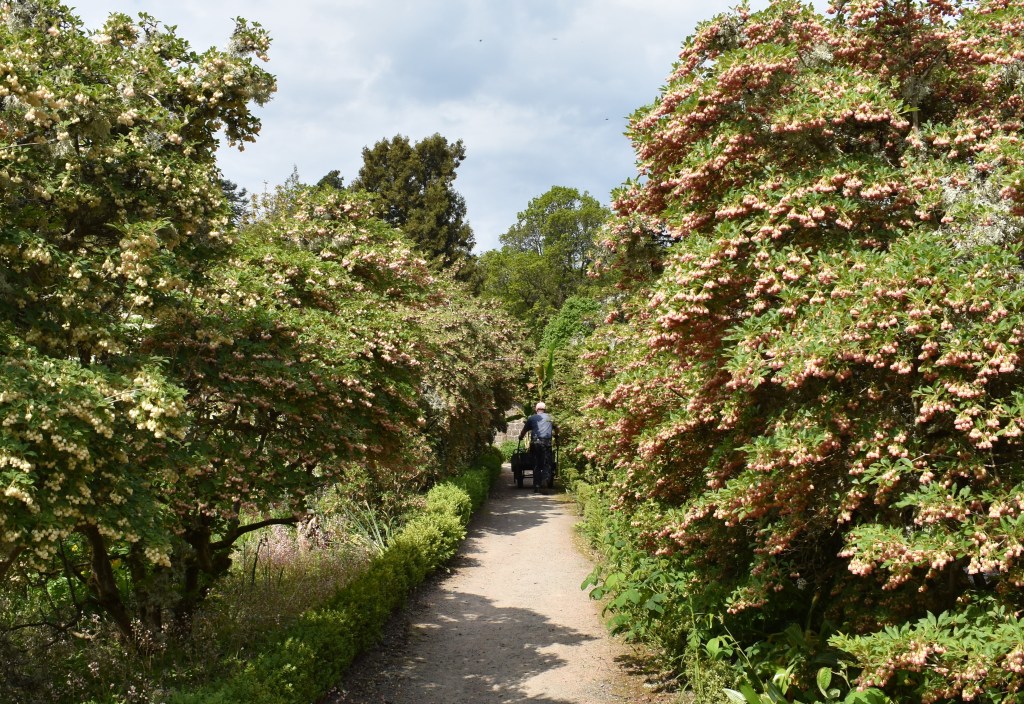
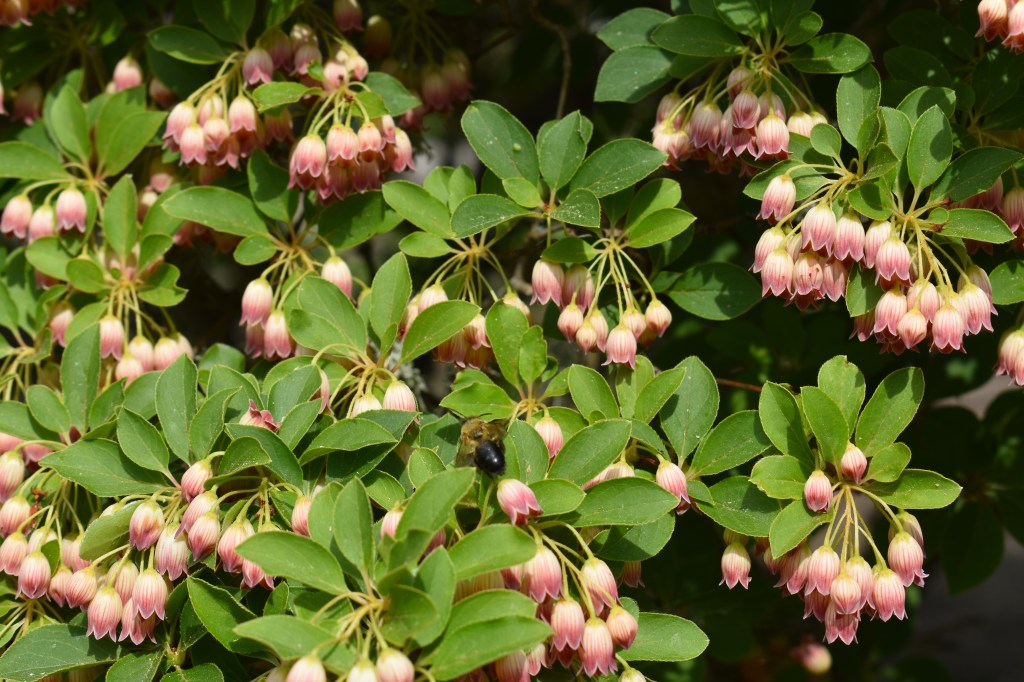
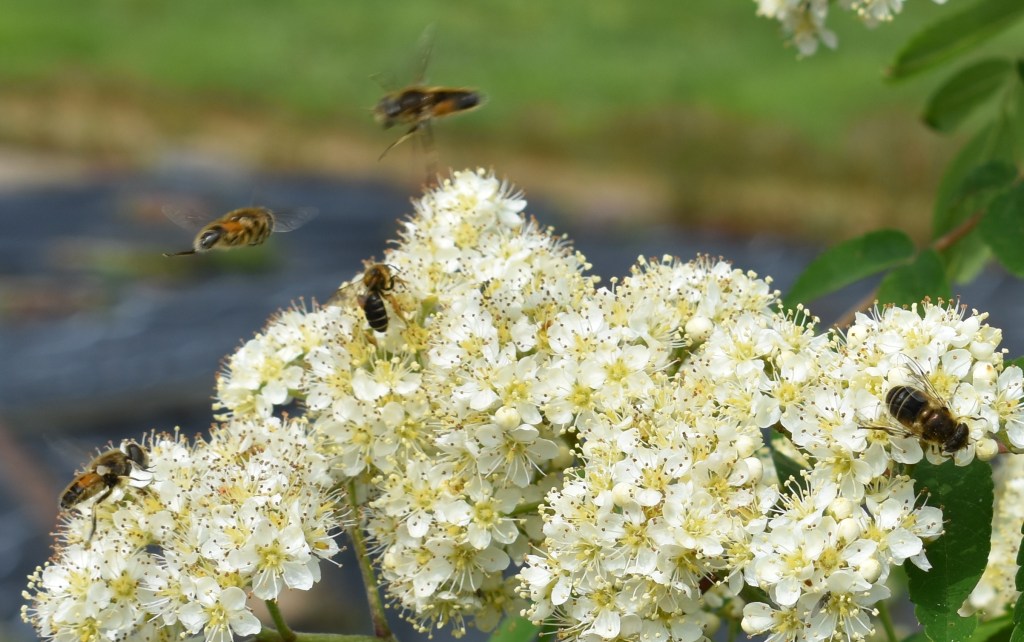
The enkianthus avenue is a major port of call for the bees; it is abuzz (May 21) with solitary bees, bumblebees, honeybees, hoverflies and wasps. By the time I write this the rain and cold has returned but the good spell of weather should have enabled the wild bees to provision their young with their needs for the future. This abundance of bees is a bright spot in a gloomy world.
The climbers that grow behind the Blue and Pink Border have been hard pruned in the last few years and we are now reaping the benefit. The Actinidia kolomikta, which is related to the kiwi fruit, is putting on a show as pink slowly spreads across the green and white leaves; the wisteria is looking good with plenty flowers and the Clematoclethra lasioclada, previously unnoticed, has been given plenty space. This last mentioned is probably one of Sir James Burnet’s acquisitions. It is listed in his handwritten notebook, Trees and Shrubs at Crathes 1937, growing in the same location – although the Blue and Pink Border was then part of the ‘vegetable’ garden. This climber is neither related to the clematis nor the clethra, but belongs to the Actinidiaceae family. Like the actinidia its flowers are small and white, and the scent is said to be of lily of the valley.
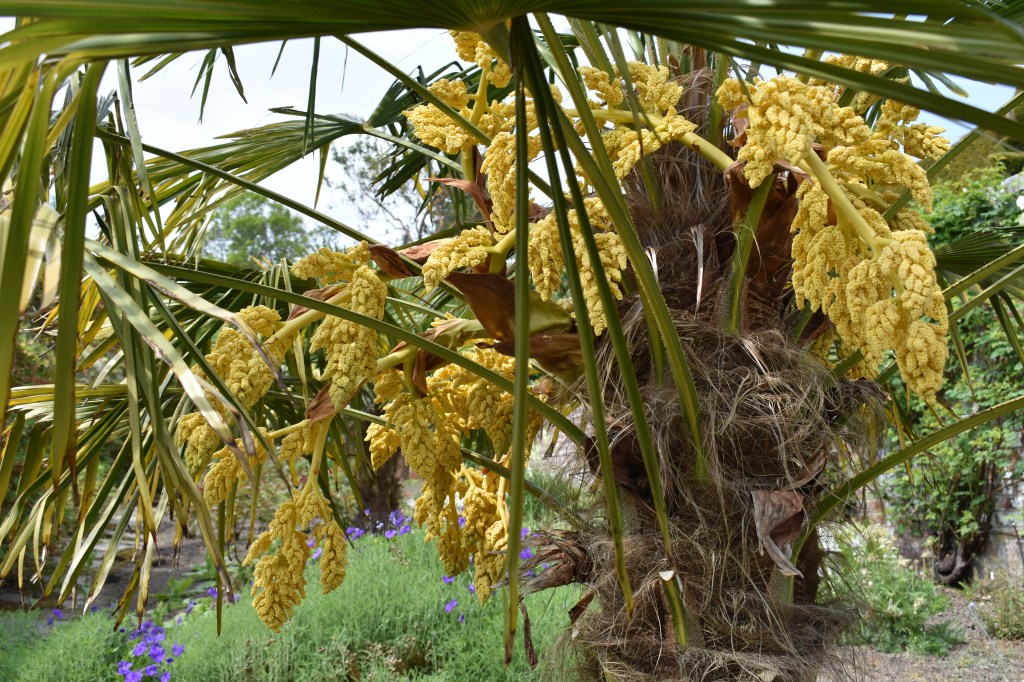
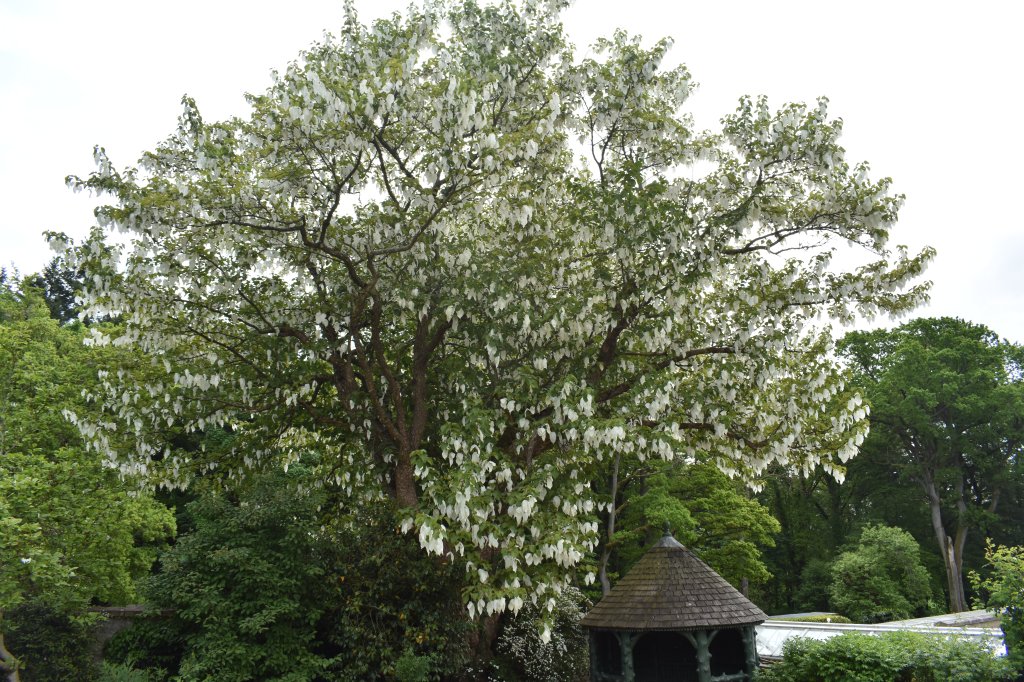
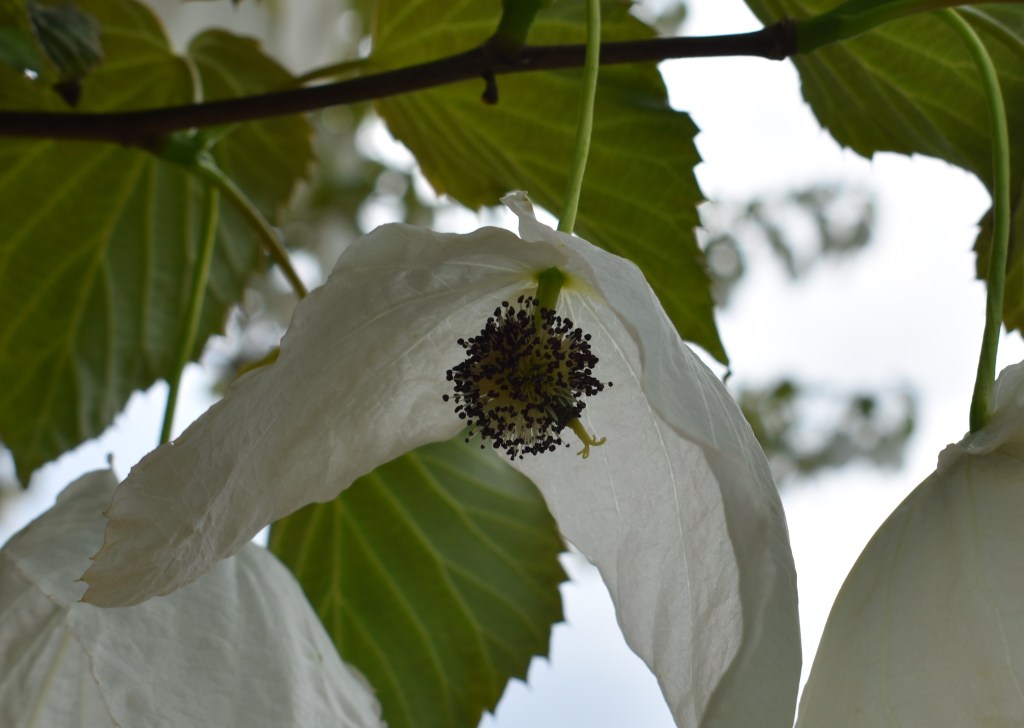
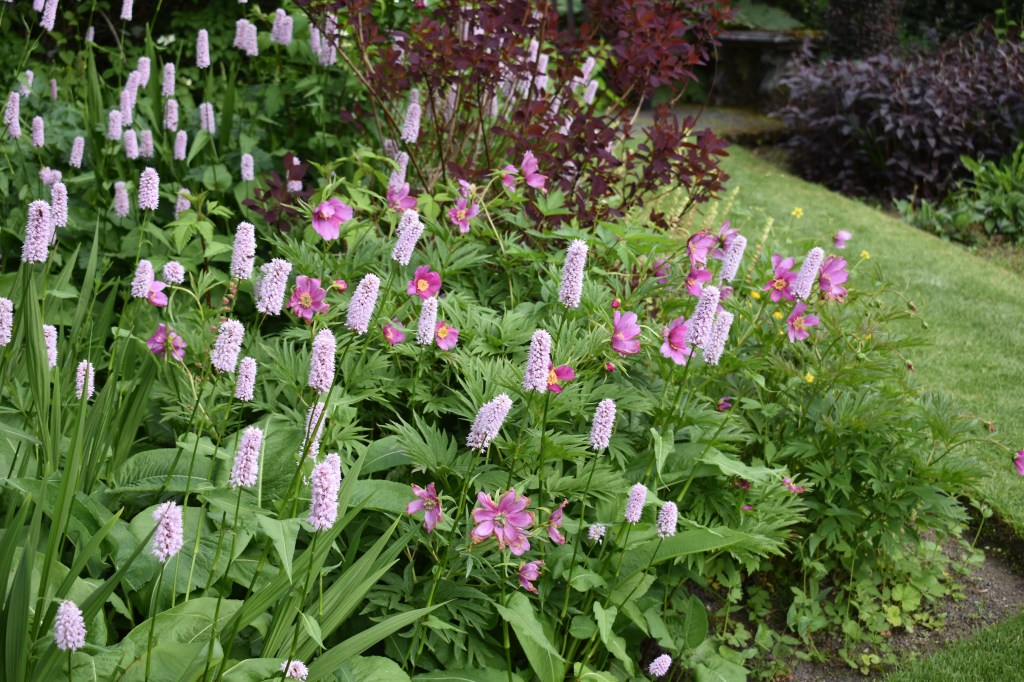
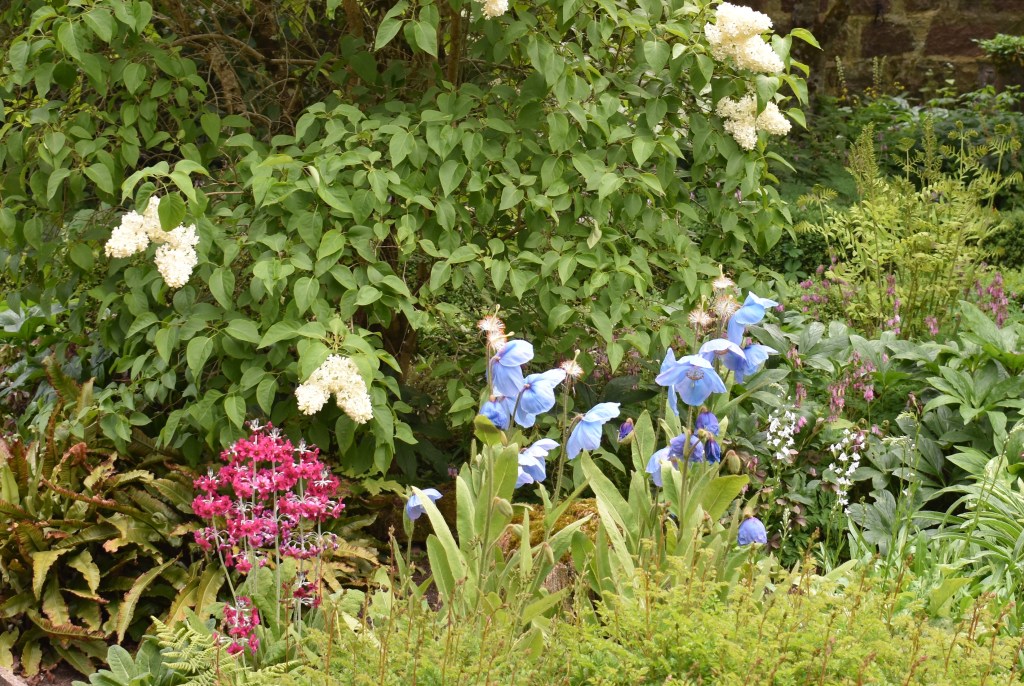
All around the garden there is an abundance of flowers; even the Chusan palm is about to flower. I wait to see if it is attractive for the bees. The handkerchief tree is early to flower this year. The photograph in my book taken in 2013 is of 19 June just about a month later than this year’s flowers.* The white ‘handkerchiefs’ are not petals, but bracts. A low hanging branch enables me to see the stamens and style of the flower. By autumn there will be an abundance of fruit which will fall and soften over the winter, providing food for the blackbirds in January.
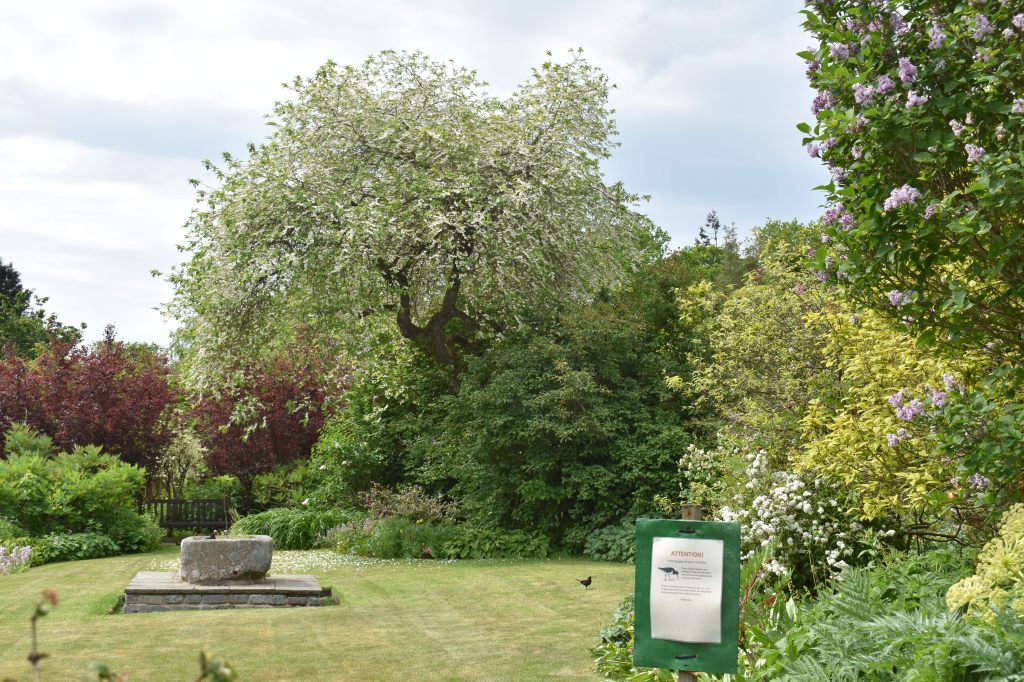
The oyster catcher remains on her nest in the trough garden (in the trough itself). Emily has put up notices to keep people at a distance. Every year we are rooting for these lovely birds that choose such public spaces in which to lay their eggs.
After a morning at Crathes I leave refreshed and full of optimism.
Updates:
The glasshouses are still awaiting the new staging.
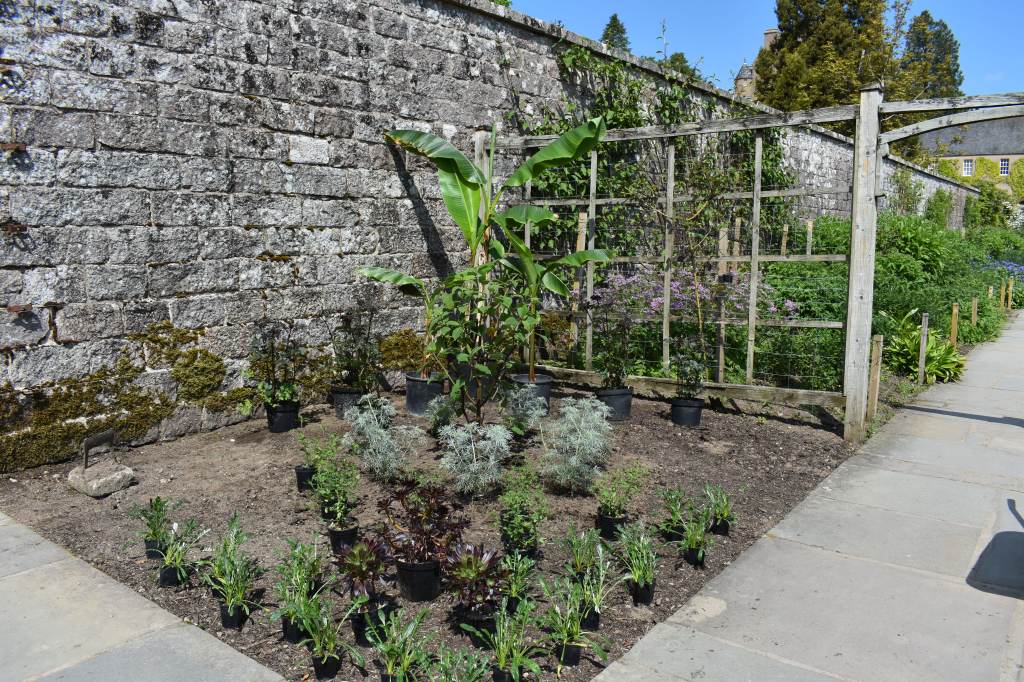
The entrance beds are now planted up with bananas with the tender red Salvia confertiflora as the central feature in each bed.
The first roses are out, ‘Glory of Edzell’ in the rose garden and ‘Nevada’ in the Four Squares.
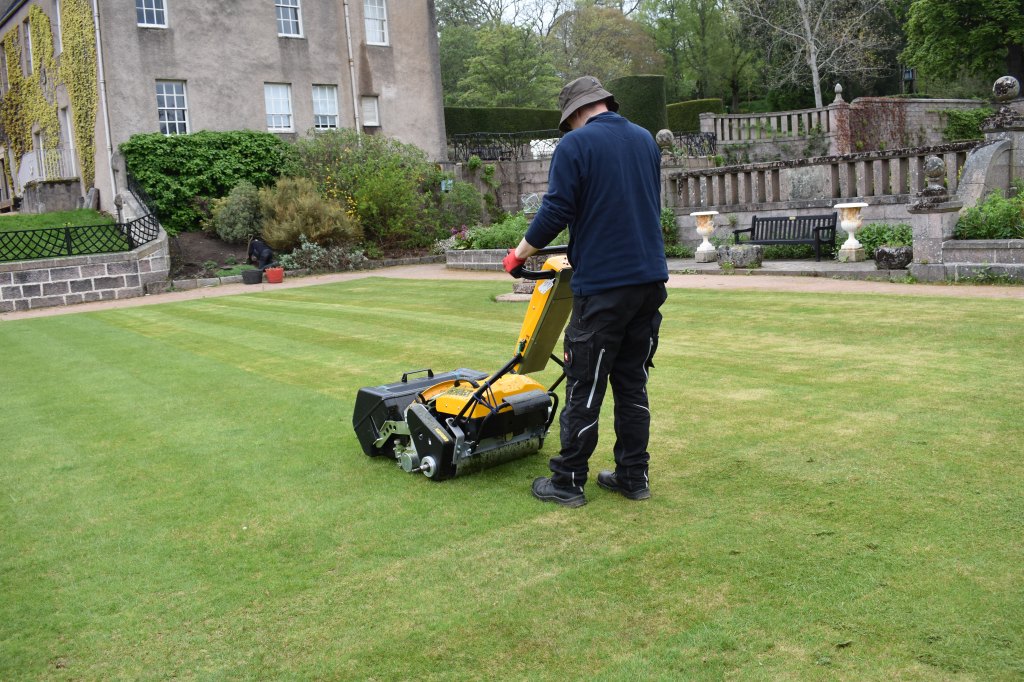
An electric mower has arrived, but Mike finds it takes some time to learn to use it.
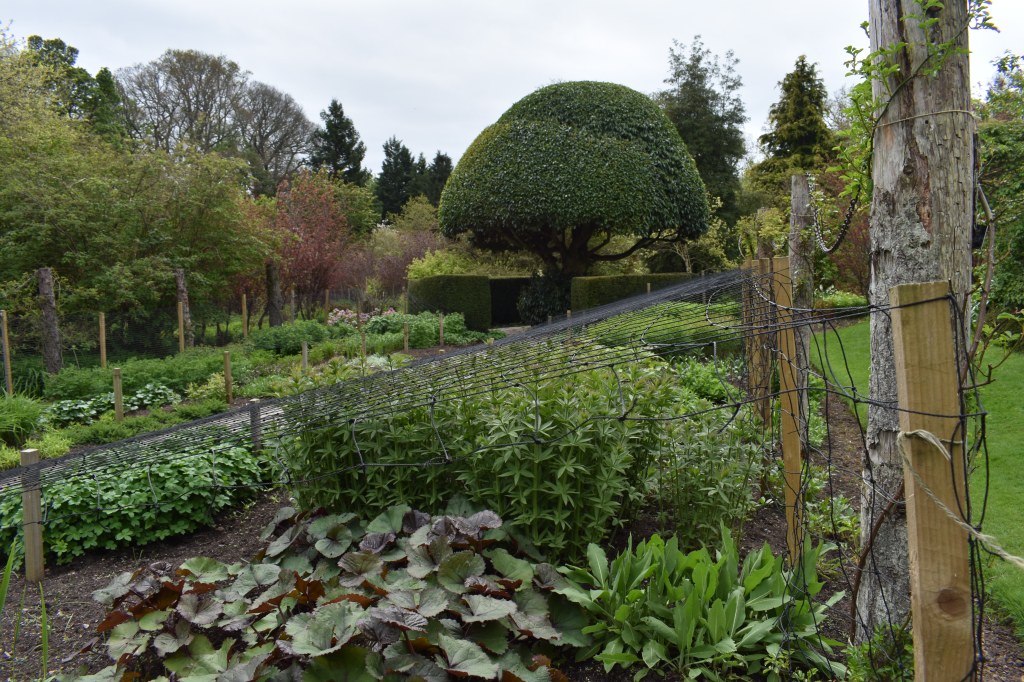
The nets are now on the main herbaceous beds
*The Gardens and Landscape of Crathes Castle by Susan Bennett (2019) Book
 Notes from Crathes