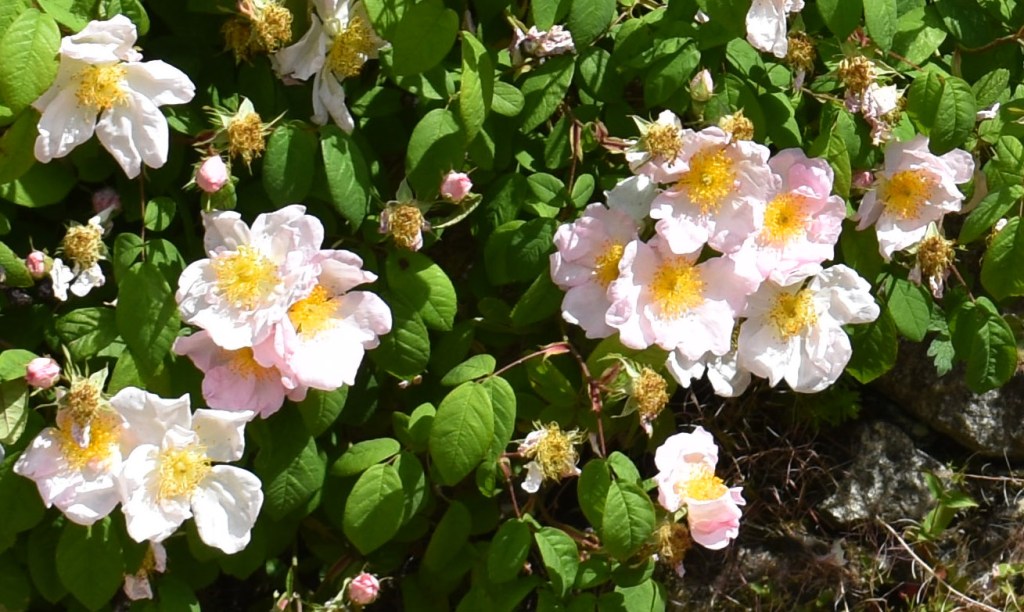
The country lanes around Torphins are full of loveliness in June as wild flowers clothe the roadsides with cow parsley, campions, vetches, dog roses, foxgloves and many many more.
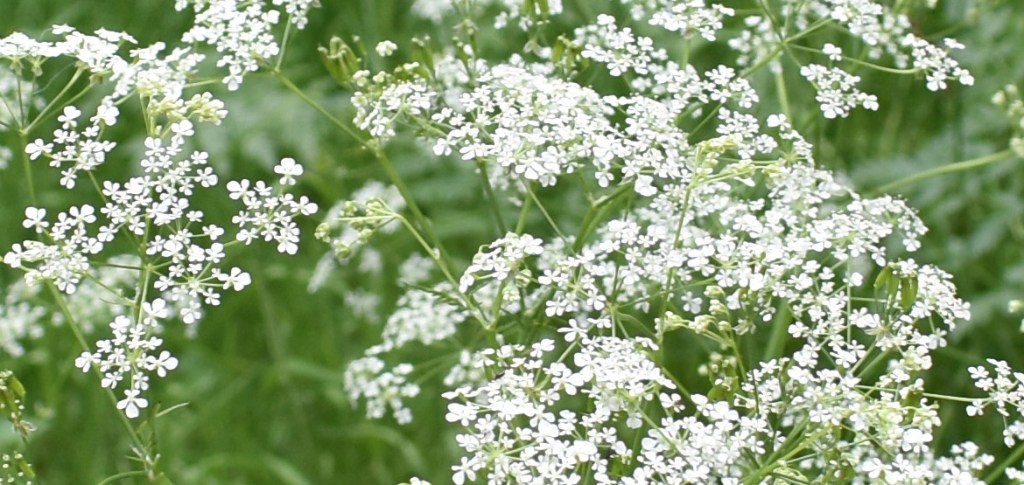
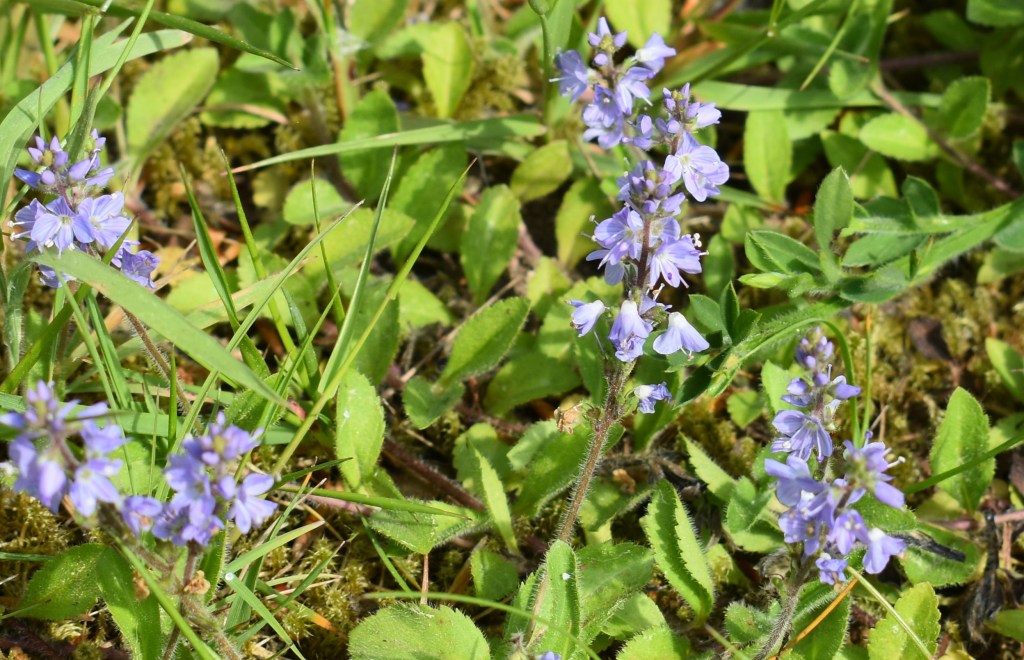
Walking up the Crathes drive the other day and seeing the bright clear blue of the germander speedwell, Veronica chamaedrys, growing in the grass, I got intrigued by the speedwells of the Scrophulariaceae or figwort family. This is a large family that includes toadflaxes, foxgloves, mulleins and eyebrights amongst others. I recognise the speedwell partly by its two stamens in an actinomorphic (symmetrical in one plane only) flower. The thyme-leaved speedwell, Veronica serpyllifolia, also grows in amongst grasses and some appeared in my own ‘lawn’. Further up the drive I find the heath speedwell, Veronica officinalis, growing in a dryer area.

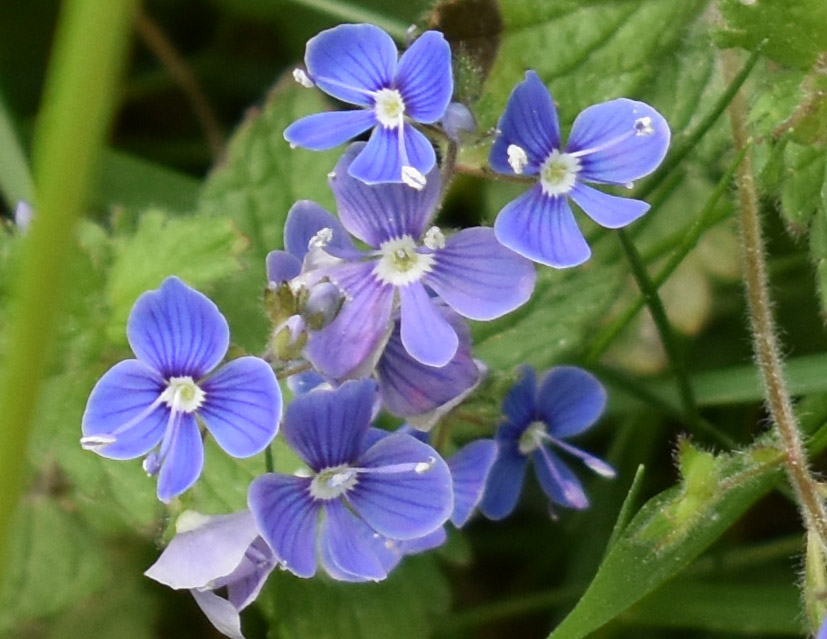
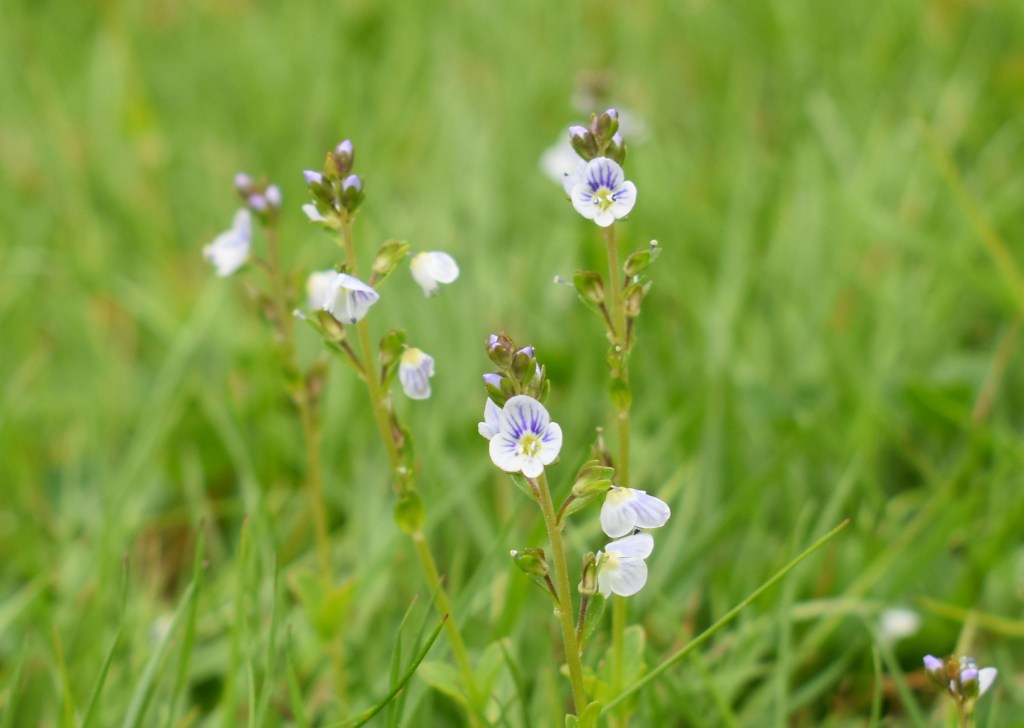
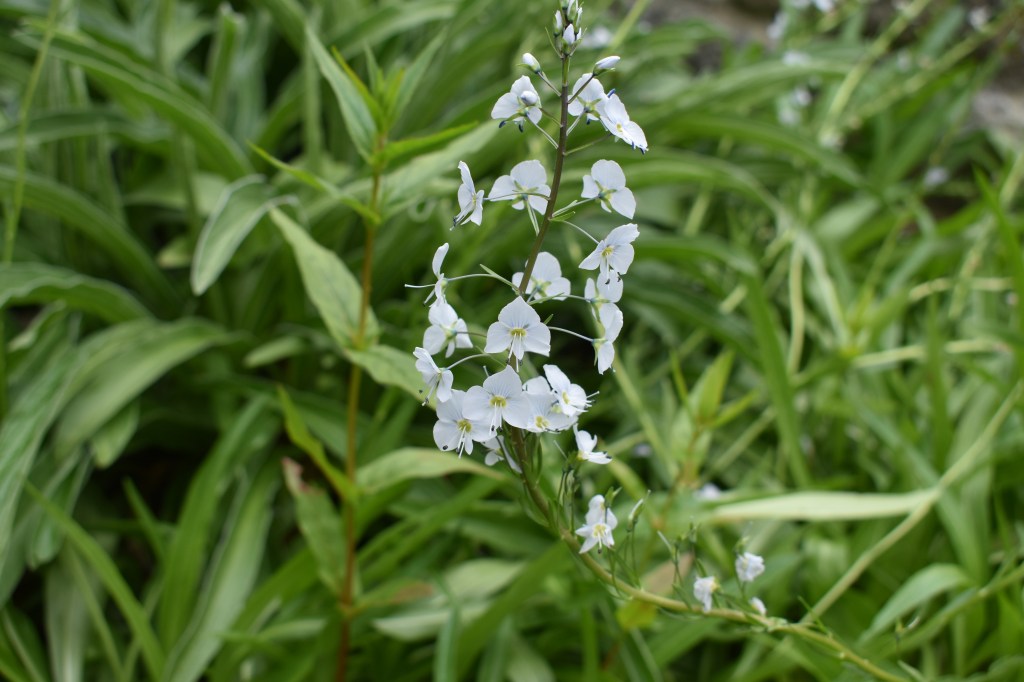
In the walled garden I find Veronica gentianiodes ‘Pallida’, which is a cultivar of a native of the Middle East and easily distinguished as a speedwell with a flower shape very similar to our germander native.
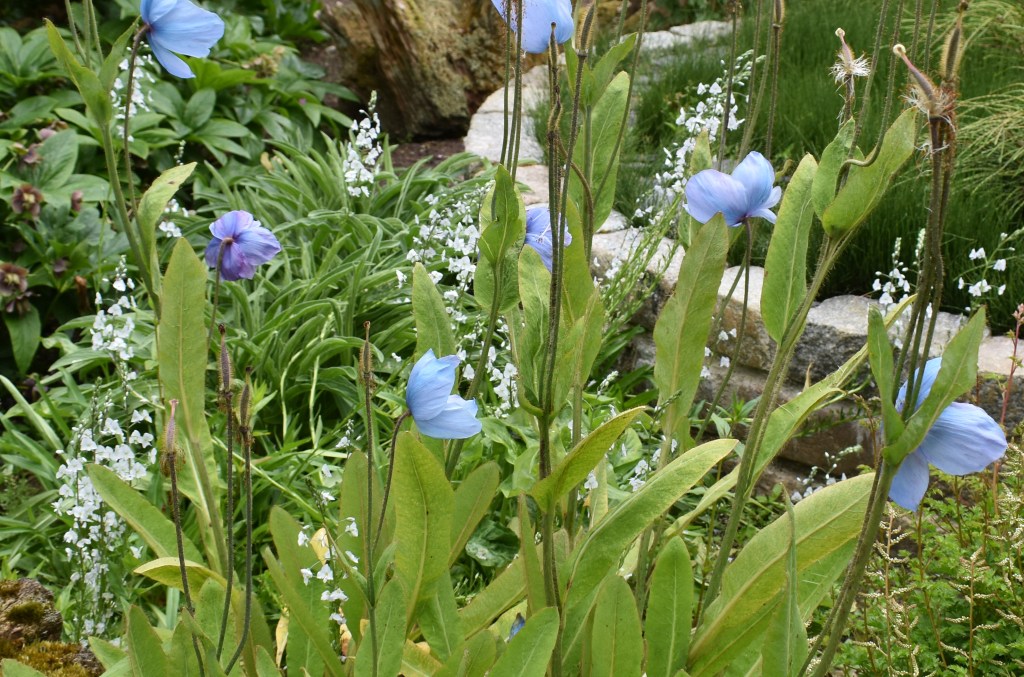
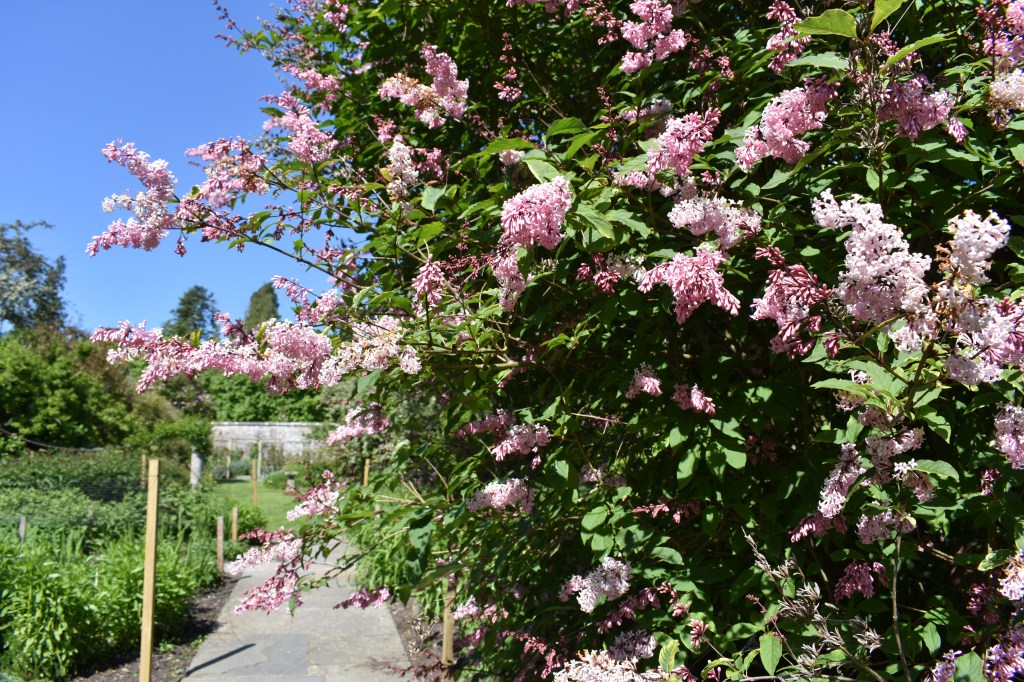
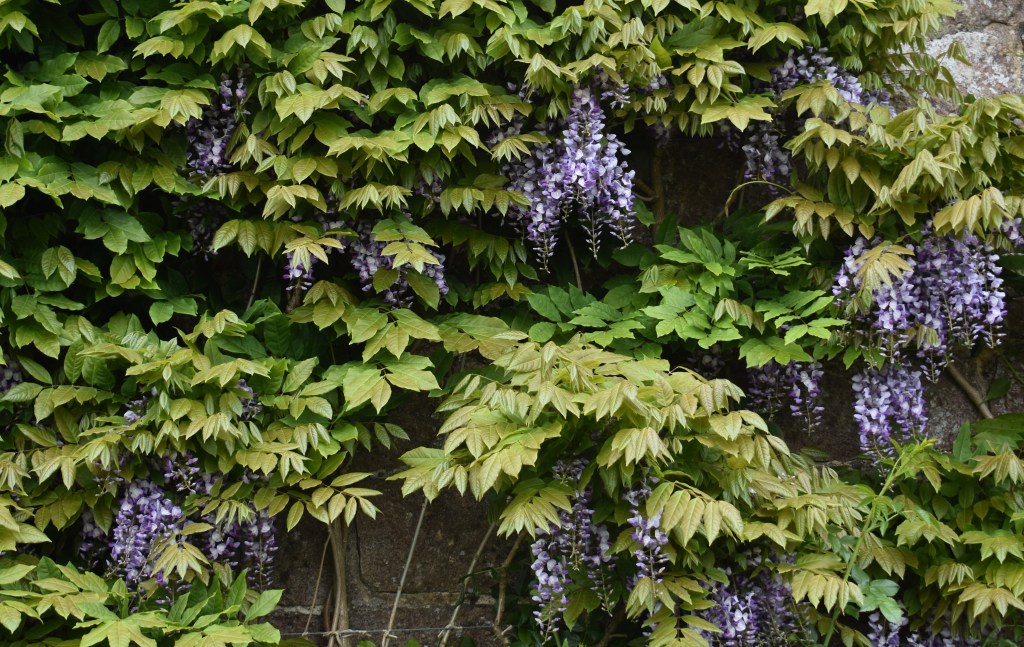
Like the countryside, the June garden is full of flowers: lilacs, deutzias, peonies, lupins, irises and early roses to name a few.
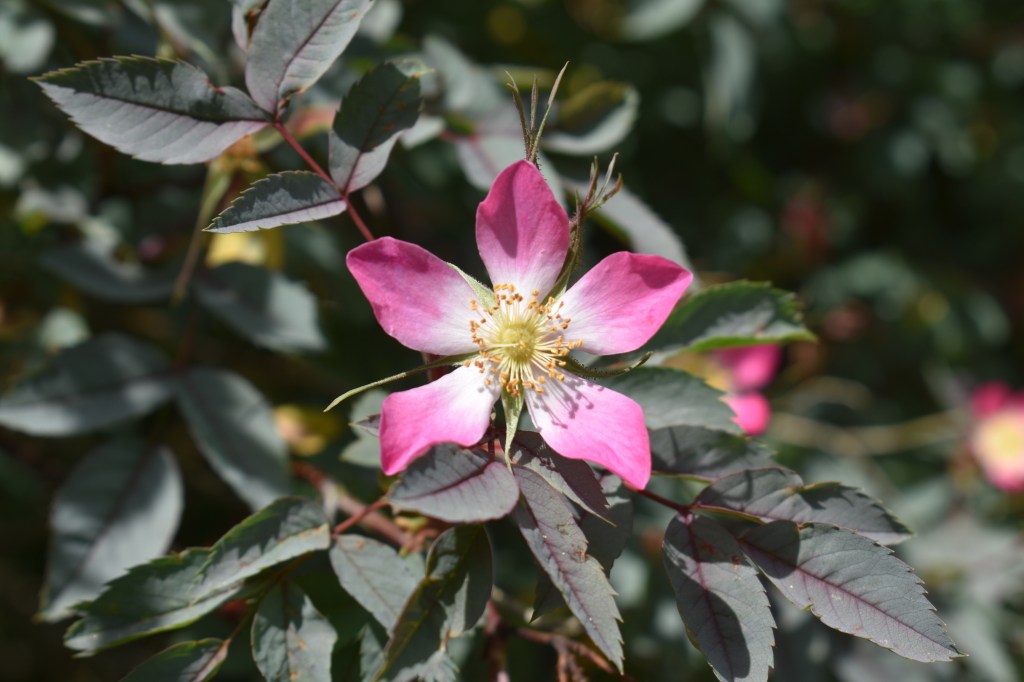
Each flower brings its own beauty, but for me the rose holds supreme. The Scots roses, Rosa pimpinellifolia, are high on my list with their ferny foliage and exquisite scent; they come early in June and last for a brief week or two. There are hundreds of different Scots roses, many growing beside derelict cottages and abandoned places. A lovely pink double grows on the old railway line in Torphins.
One of the earliest to flower at Crathes is ‘Glory of Edzell’. It blooms near the summerhouse in the Rose Garden and in the Trough Garden. The Trough Garden rose makes me smile because some years ago the gardeners tried to eradicate it from this part of the garden – it is a bit of a thug, putting up suckers all around.

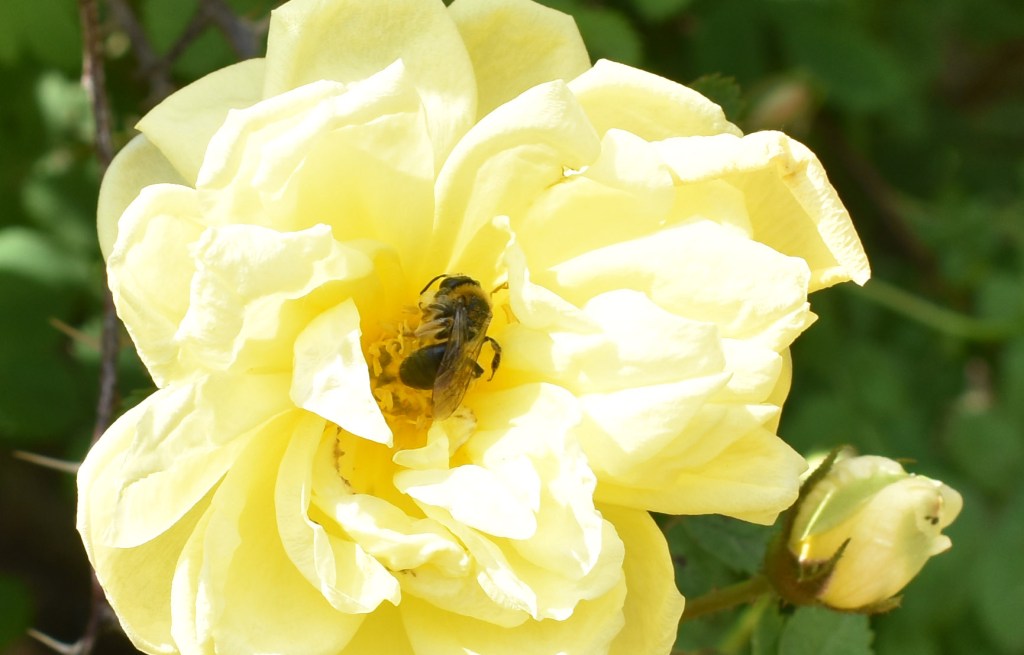
Flowering close on the heels of ‘Glory of Edzell’ is a magnificent yellow rose that blooms just under the castle and beside the steps to the Upper Pool Garden. No-one seems to know its name. Its leaves suggest a Scots rose and the scent is heavenly with a hint of lemon. There is a bonus with this rose; it is much visited by solitary bees.
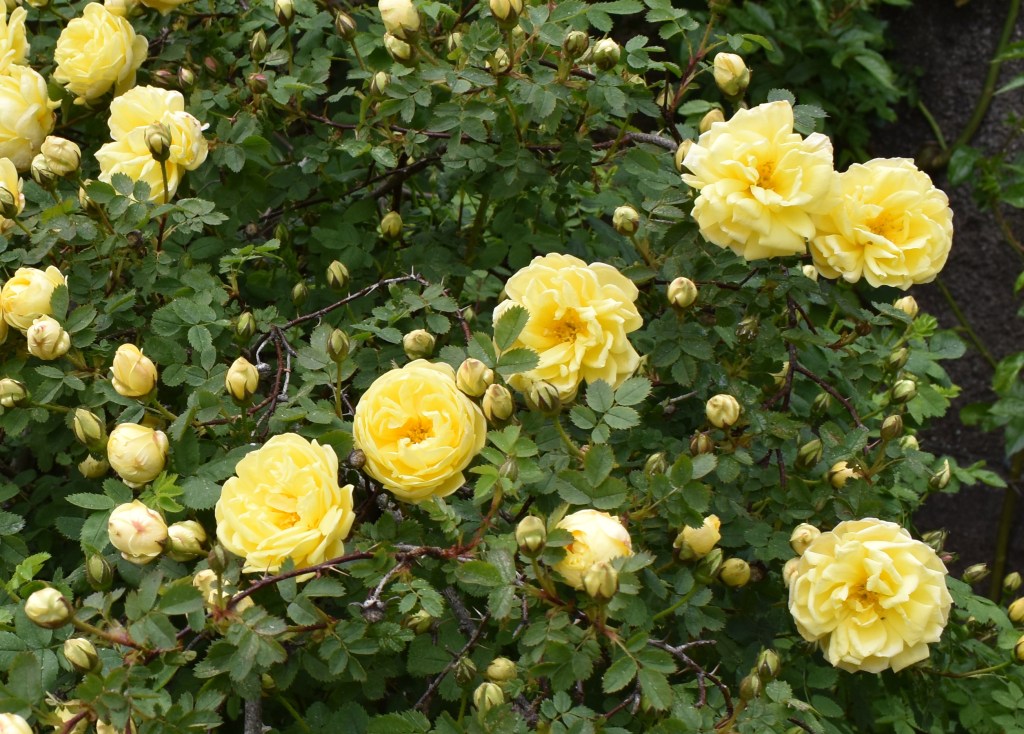
There are roses throughout the walled garden; species, bush, ramblers, climbers, hybrid teas, old and new, they are all a delight; especially this year. The right pruning and the recent hot weather with just enough rain has made this a perfect year for roses so far.
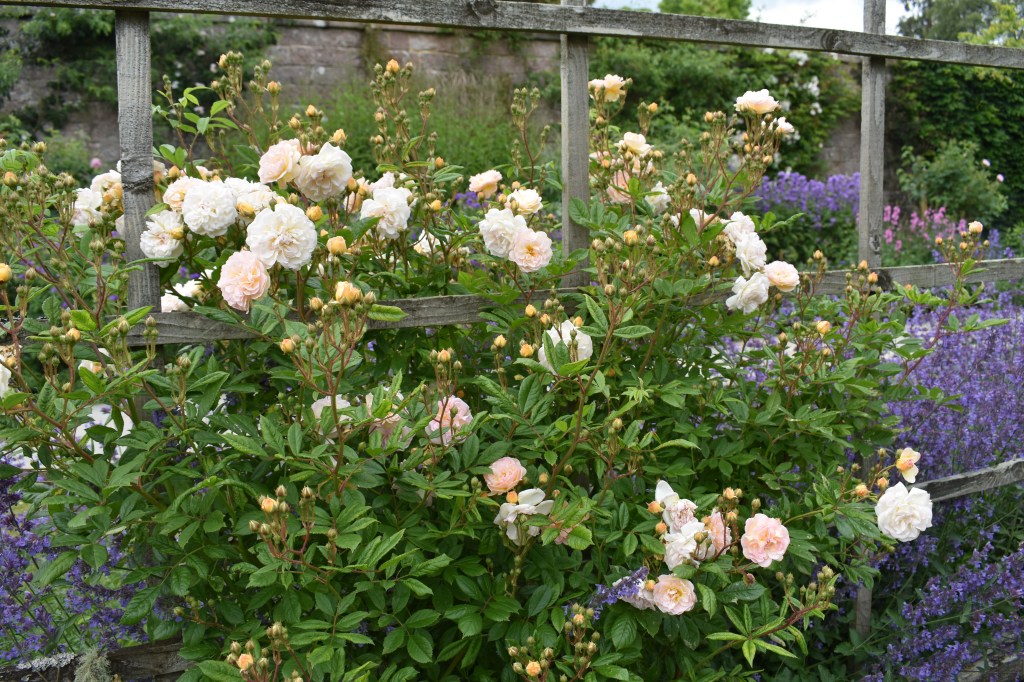
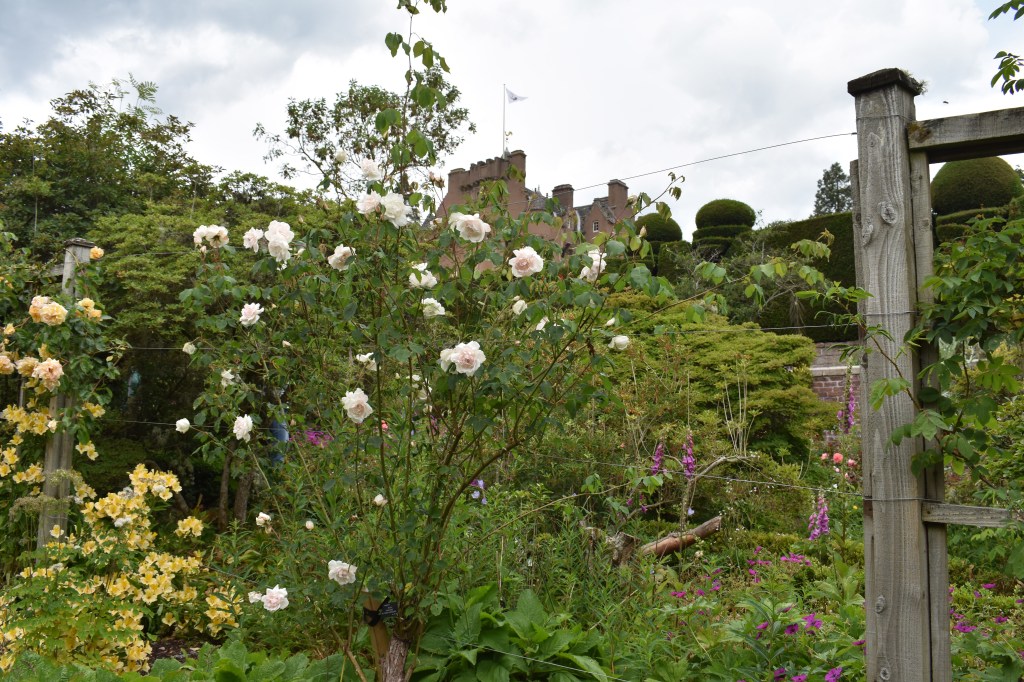

The new Rose Garden is not quite finished. Steve’s engineering skills have been needed again as there has been trouble with the water feature. Mike has been planting out cosmos where the agapanthus have been slow to establish, but most of the plants are looking happy and beginning to flower. Two benches are now in place. It had been hoped that they could have been made of Crathes oak fallen in the storms, but the craftsman explained that oak and Caithness slabs do not go well together as the iron in the slabs can stain and spoil the oak. As a compromise cedar for the seats and Douglas fir for the support blocks have been sourced from nearby Scolty Hill.
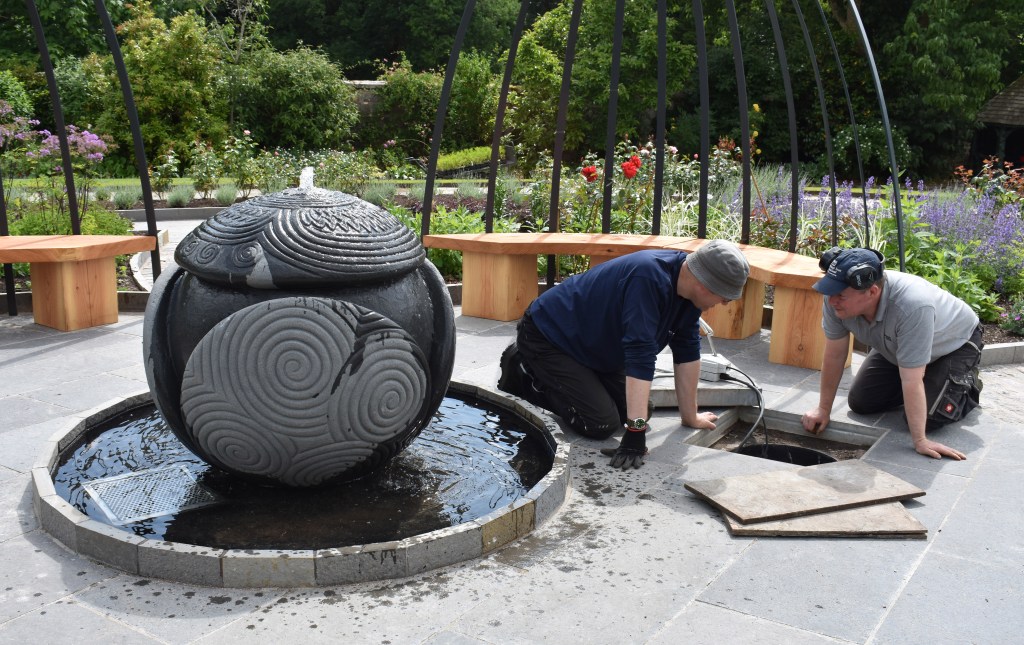
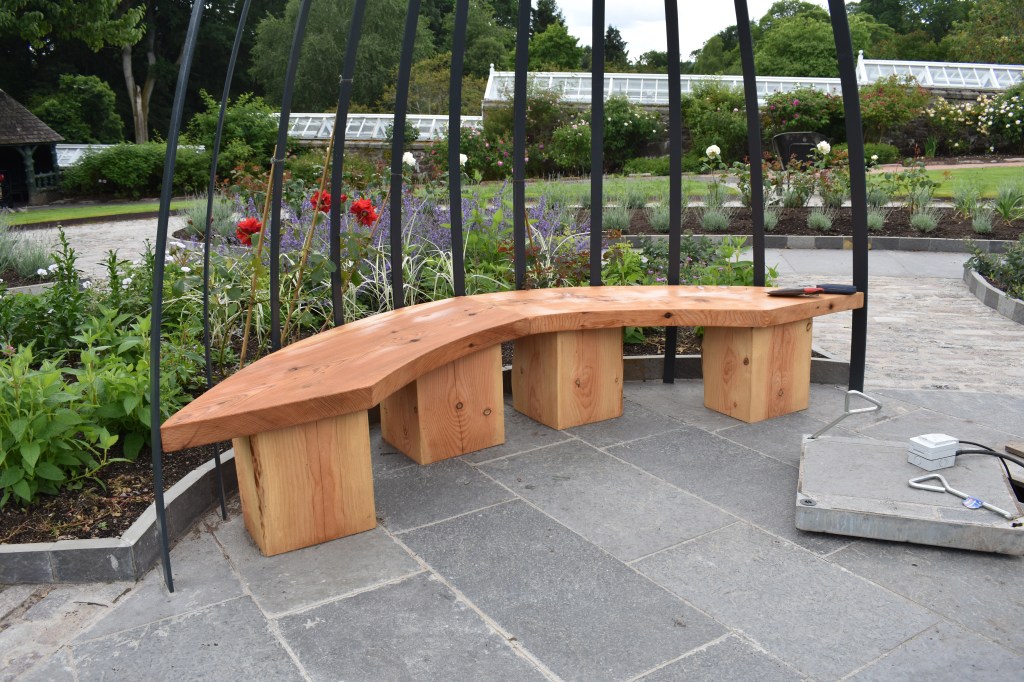

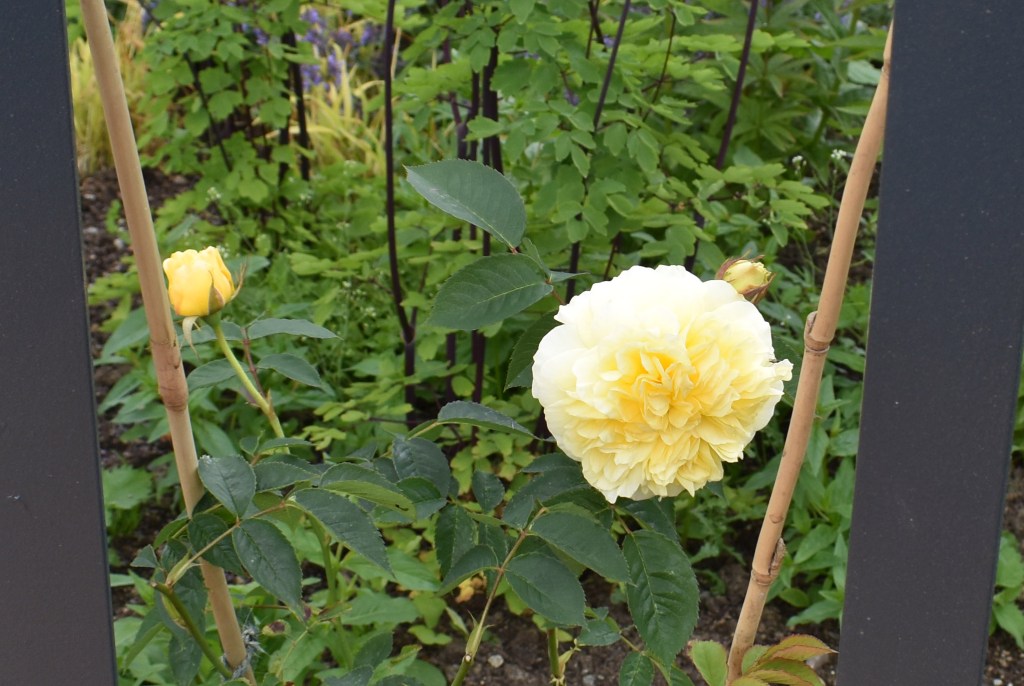
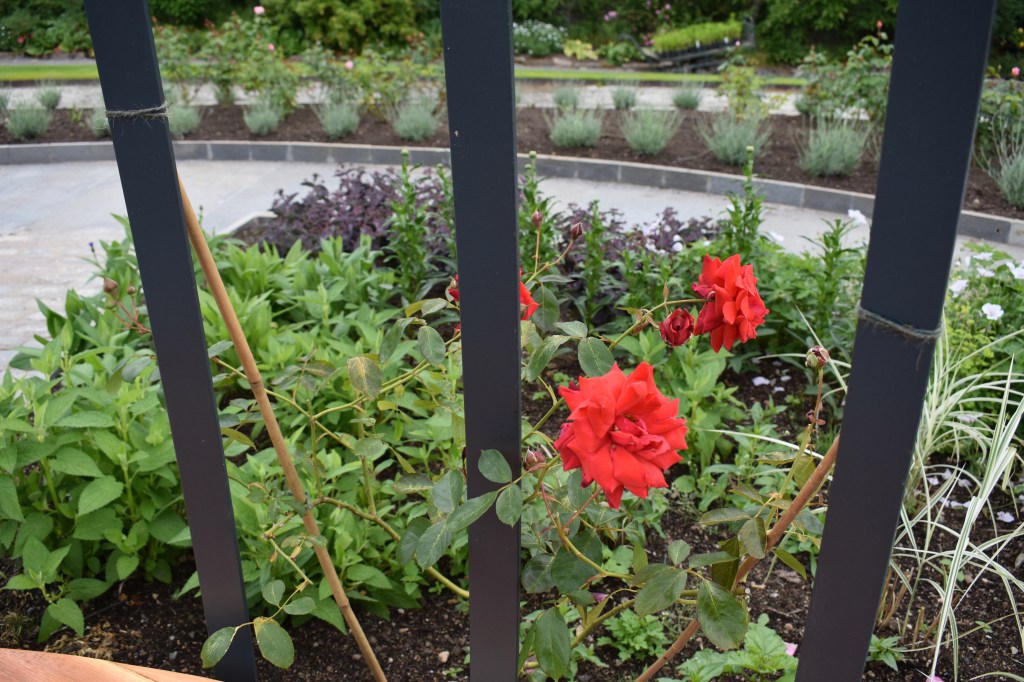
The roses by the arbours are just beginning to climb and flower. The yellow climber is ‘The Pilgrim’ (introduced 1991), the rose that is yellow in bud and creamy white in flower is ‘Claire Austin’ (2007), the pink rose is ‘Strawberry Hill’ (2006) and the red rose is ‘Danse de Feu’ (1953). All but Danse de Feu are roses bred by David Austin, the renowned rose breeder. Claire is David’s daughter, ‘Strawberry Hill’ is named for Horace Walpole’s eighteenth century estate, and ‘The Pilgrim’ refers to the Canterbury Tales. There are other roses in the outer beds, but I will find out their names later, by which time I hope to have got the names of the climbers into my head.
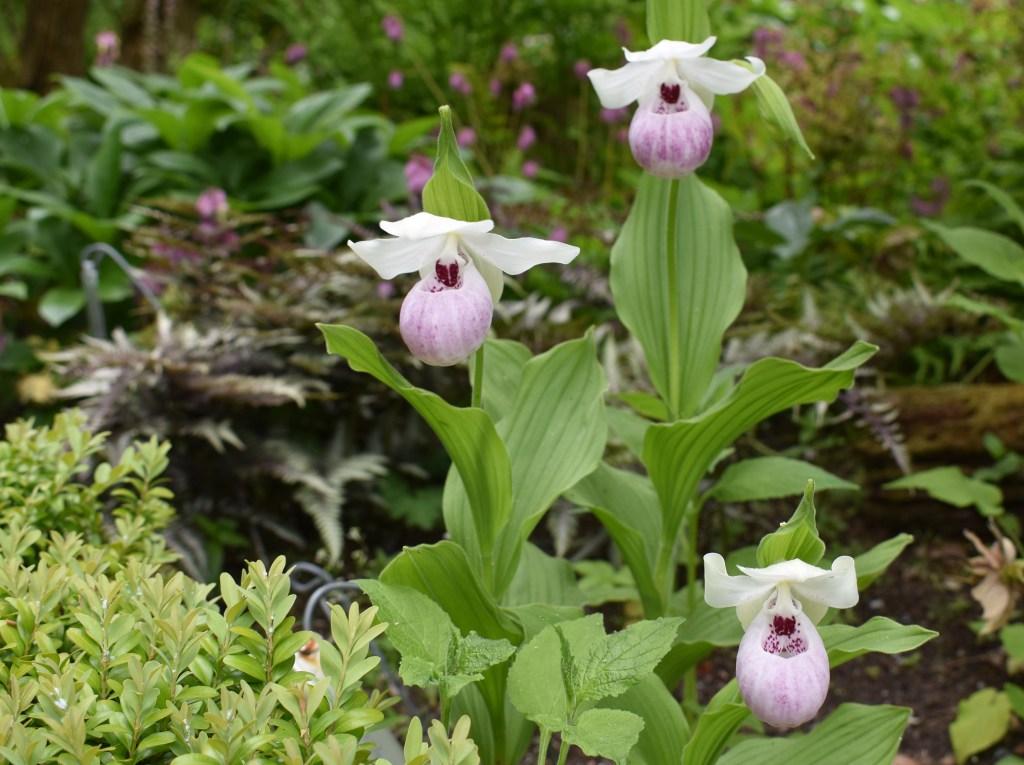
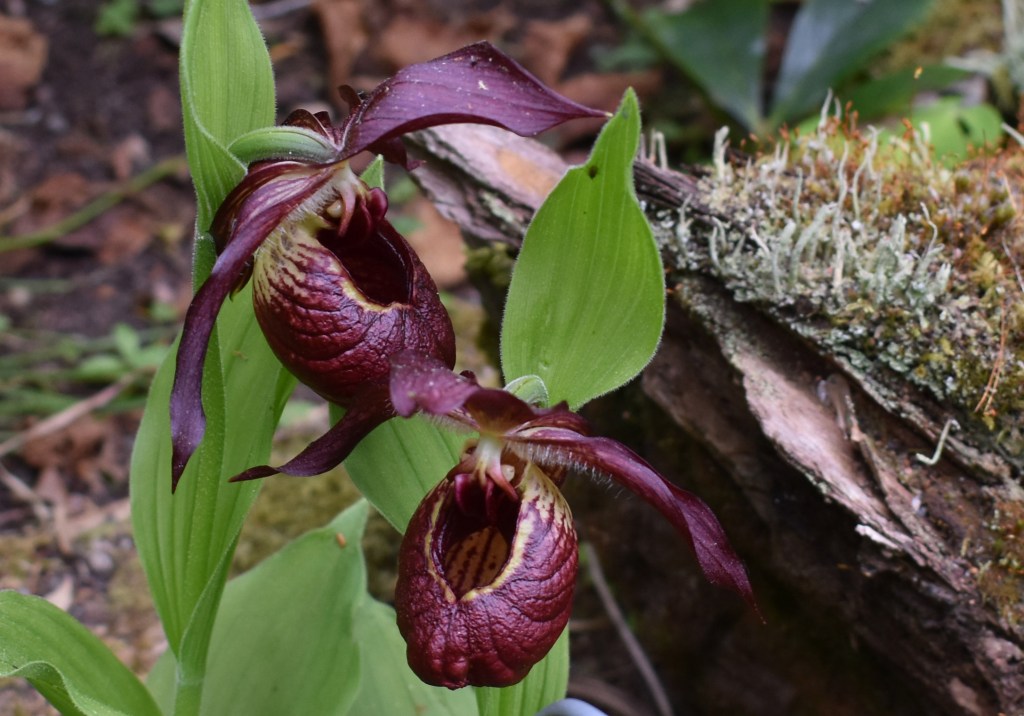
The roses have lots of competition; there are the old favourites like the catmints (every garden should have a catmint) and lupins, but also more unusual plants like the spectacular lady’s slipper orchids beside the doocot path. Although these plants are cultivars, lady’s slipper is a native orchid, Cypripedium calceolus, almost driven to extinction by collectors. It survives in one limestone location in Yorkshire where it is carefully managed in the hope of increasing its range.
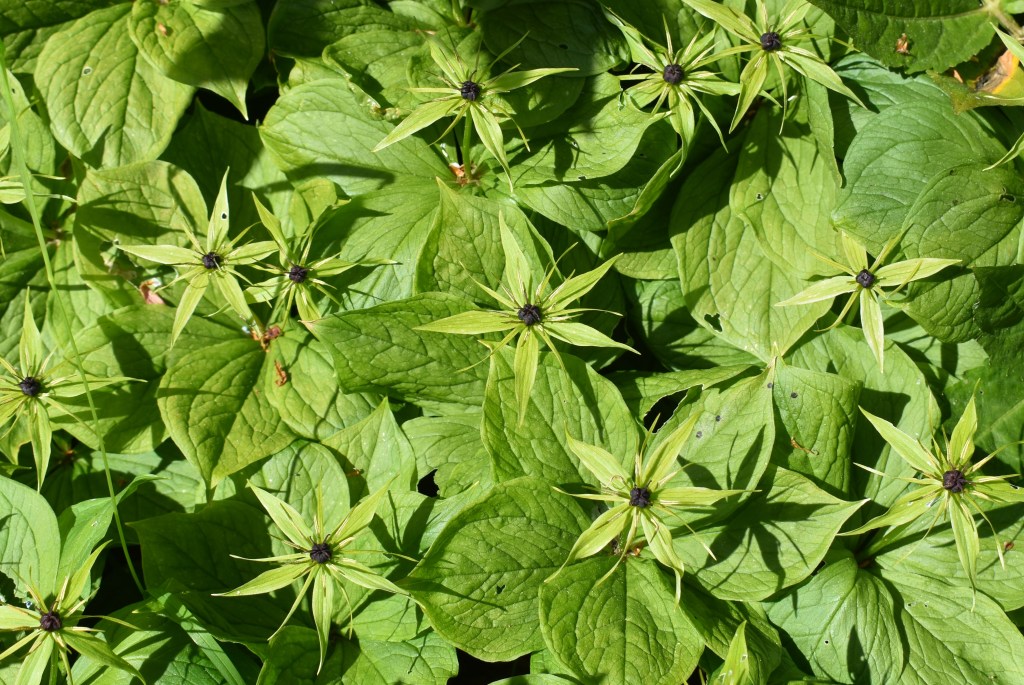
Another unusual native plant that grows in the garden is herb Paris, Paris quadrifolia. I am not sure if it is the native that grows in the garden, but I have seen it growing wild in Perthshire.
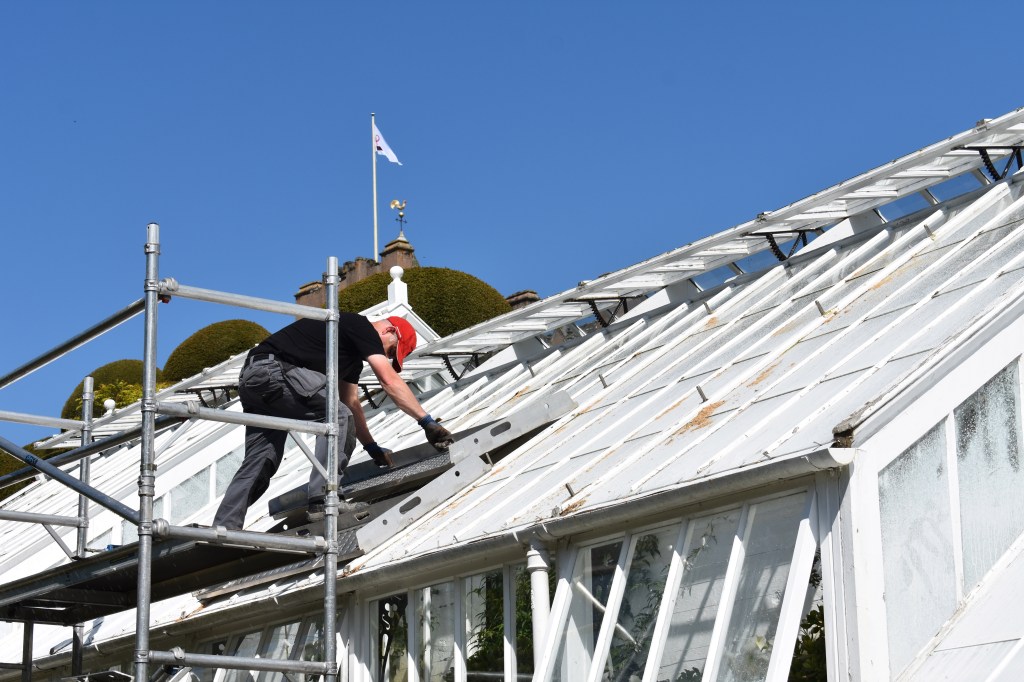
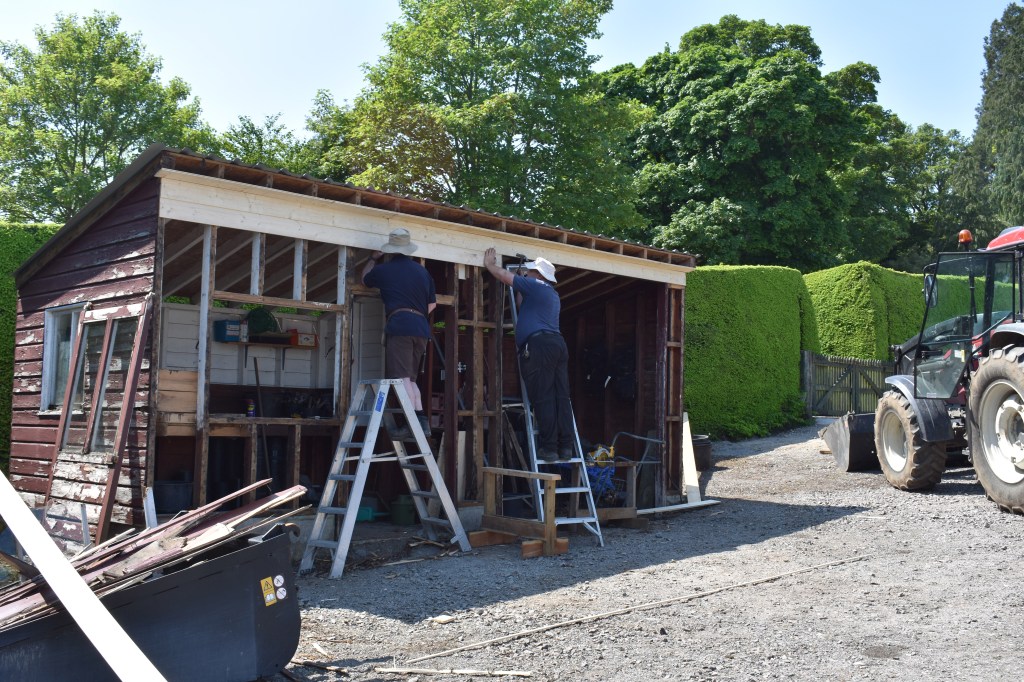
The glasshouses are always in need of maintenance, but access has been difficult involving a lot of scaffolding. Steve has now designed a system that will ensure safe and ongoing access. Scot has been brought in to fix stainless steel pegs (using resin) into the sound wood of the windows. Metal plates can fit on the pegs and repair and painting can go ahead on a regular basis. That’s another project successfully completed! Meantime Davy and Kevin have been working on shed maintenance in the nursery area.
As I wait for eye treatment I become completely dependent on the automatic focus; thank goodness for digital cameras. Often there are details that I only see when I zoom in on the computer.
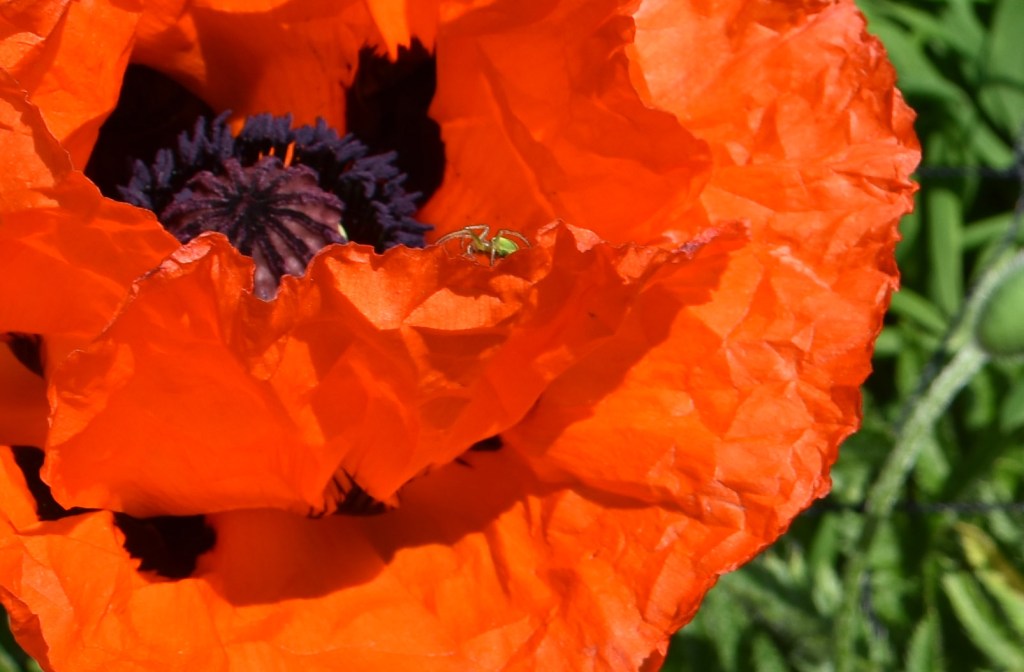
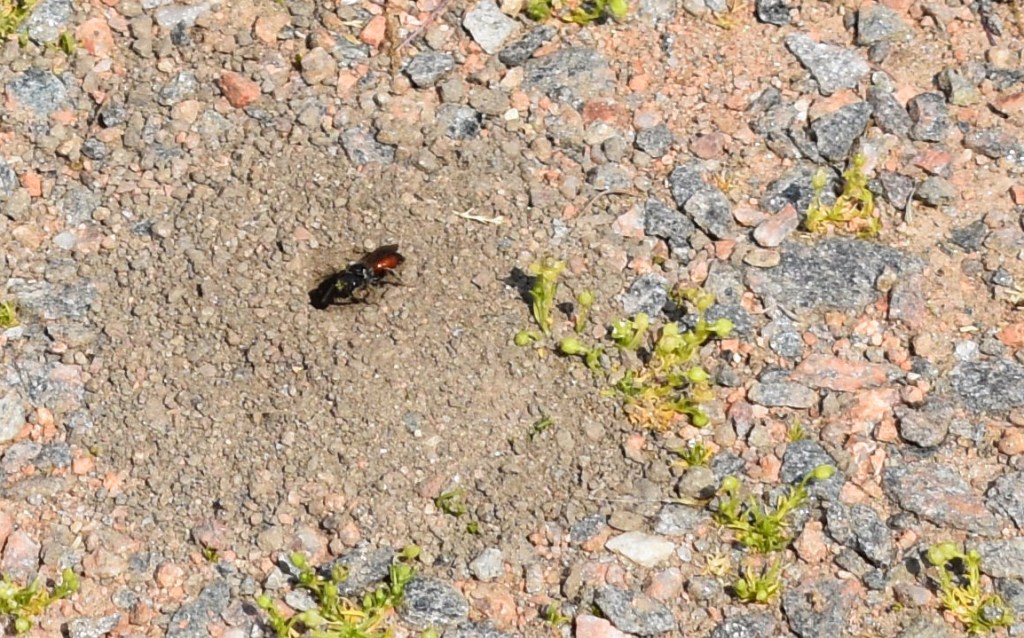
That’s how I came on what I think is a ruby-tailed wasp or a close relative. I had been reading about these wasps in Dave Goulson’s book The Garden Jungle. To be precise, I was re-reading the book; I am rather a fan of Professor Goulson who is an entomologist currently employed at Sussex University. His books championing insects are very readable and always impress on me the complexity of the ecosystems of which we are part. The ruby-tailed wasp is a cuckoo wasp – it lays its eggs (one egg to one bee grub) in the nests of mason bees. Once the bee larva has grown fat with pollen the wasp egg hatches and feasts on the bee larva. You may think ruby-tailed wasps are of no importance in the ‘scheme of things’, but ecosystems always remind me of the game of pick-up-sticks, where removal of one stick that is so intertwined with other sticks has unforeseen consequences. Since we don’t know the importance of the ruby-tailed wasp or the complexity of ‘the scheme of things’ we should celebrate the presence of this tiny insect.
Anecdotally there seemed to be a dearth of insects this year. They were talking about it on BBC’s Springwatch. We already know there is a steady decline in insect numbers, but this year it seemed more obvious than ever. However, in the last week there has been an encouraging increase in the buzz of bumblebees and I wonder if it was the long cold spring that held them back. I hear reports of honey bees doing well and one morning there was a sudden loud buzzing and bees were swarming about our roof. The next day the swarm was bigger and we had to get expert advice. A beekeeper and roofer came over from Huntly and established that the bees are not in the house, but in gaps of the gable edging. It is agreed that they will return to remove them although it will entail lifting some tiles. Honeybees are probably best in a hive where they can be managed, or in hollow trees, but not in houses – they are after all domesticated animals. I do hope that the bumble bees that nested under the shed last year will return. I try to photograph the insects I see at Crathes, but often they are too quick to capture on camera. The spectacular golden-ringed dragonfly that darted by on my way down the drive is magnificent, being about 5-6cm in length. I was luckier with the silver Y moth that I noticed in the Woodland Garden. These daytime flying moths are usually just a flying fuzz of grey around lavender flowers, often in considerable numbers, but this one on the path allowed me to see the Y on its wings quite clearly.


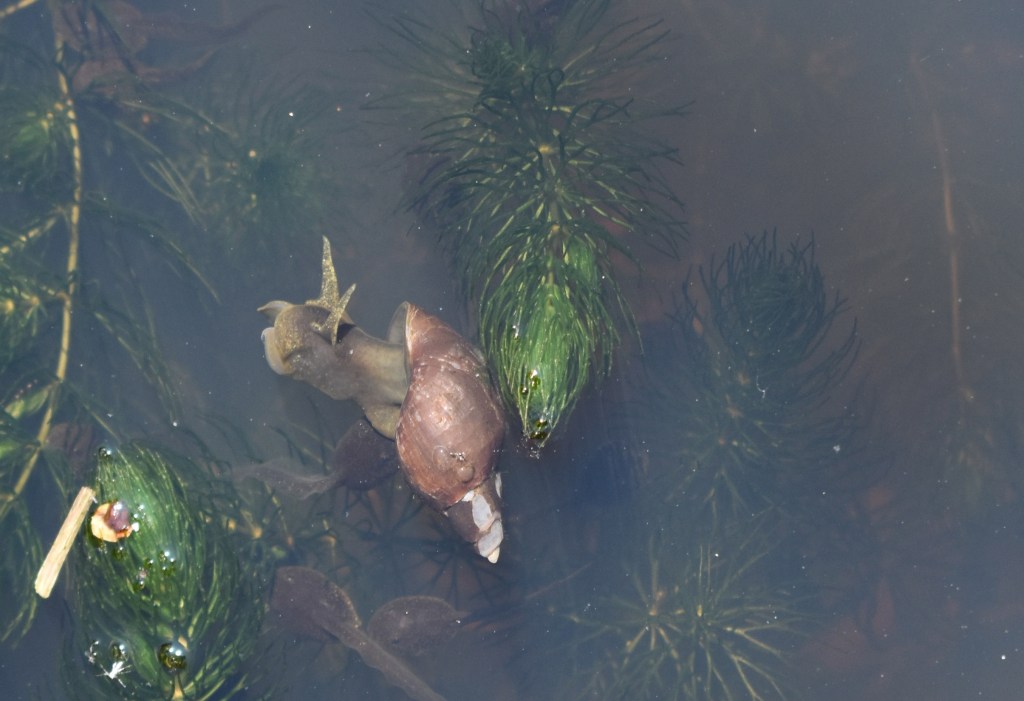
The Woodland garden has been closed because of the rabbits. When the gate, which is stiff, is left ajar the walled garden is open sesame to the nuisance creatures (1066 and all those rabbits, 21 February 2023). Now overgrown and overflowing with wild flowers I am allowed in and am pleased to see enormous tadpoles in the wildlife pond along with garden pond snails. A damsel fly alights nearby. It’s like going into the Secret Garden.
Updates:
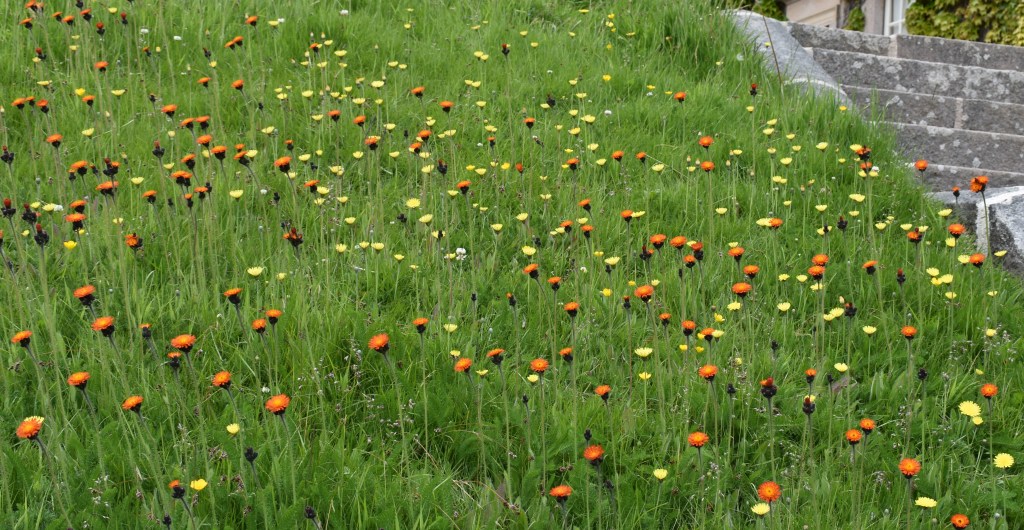
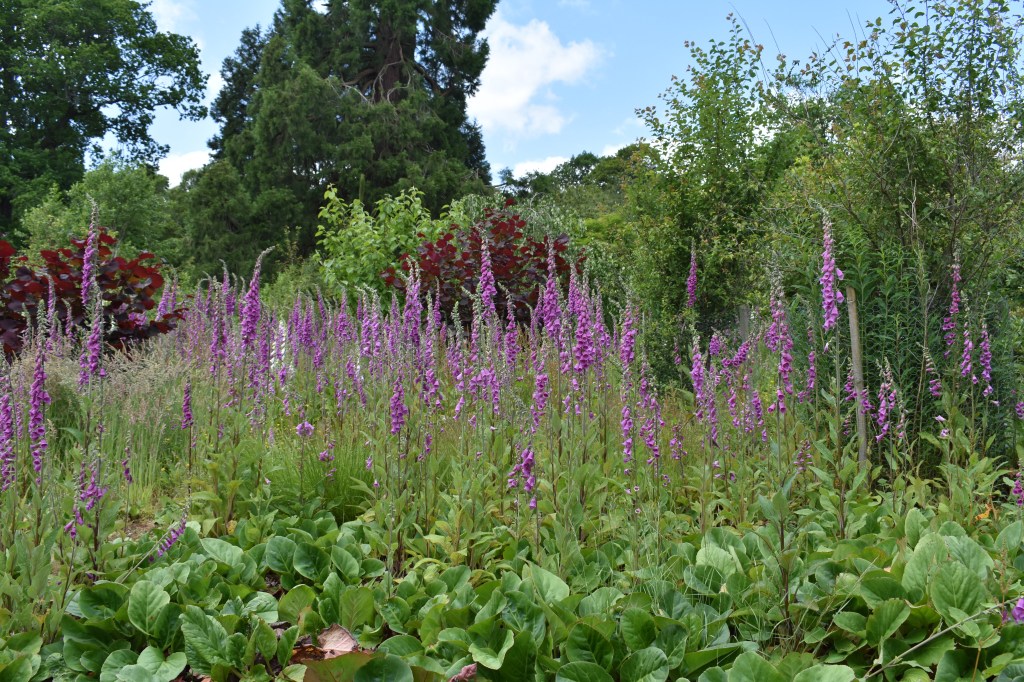
The meadow by the castle was looking great with orange and yellow hawkweeds, but unfortunately had to be cut before the flowers seeded because they were just above the croquet lawn. The self-seeded foxgloves by the viewpoint are looking majestic.
During the drought with the Rose Garden newly planted and most of the bedding plants needing to be planted out there was a lot of use of the sprinkler. The borehole development has now progressed and the water tank should be in place by early August. It is anticipated that the borehole will provide 9,600 litres a day; that’s 3.6 million litres a year. The tank can hold 12,000 litres and is expected to provide water for the bothy, the glasshouse, the nursery and the lower garden.
There are reports of increase in beaver numbers across Scotland and an encouraging slight increase in numbers of Capercaille in Speyside. A project to release 20 Scottish wildcats, bred in captivity, into secret sites in the Highlands is also hopeful. The hot weather is not good for salmon prospects; they badly need the shade offered by regenerating and planted trees. Tragically the wild fires near Cannich, above Loch Ness, damaged a lot of newly planted trees. We hope we can avoid fires in Deeside so that the recent tree planting and regeneration might soon produce shade for the salmon that are such an important part of our ecosystem. (see Cycles of life 16 November 2022)
As I write the weather cools and rain falls. We are always obsessed by the weather in Scotland, but worry about global warming makes us doubly concerned.
The Garden Jungle by Dave Goulson (2019)
 Notes from Crathes
A glorious time of year indeed! Thank you for yet another uplifting article! We now have 3 separate colonies of peacefully busy tree bees in various sites in the garden! Hopefully we will manage a visit to Crathes again soon. The rain now is very welcome and fingers crossed that we avoid another oppressive heatwave.
LikeLiked by 1 person
The tree bumblebees have spread so quickly through Britain; everything is changing, but I did love the warmth while it lasted.
LikeLike
Catching up Susan! The garden did look beautiful in June and your photographs show how lovely the roses were. Isn’t that Thyme-leaved speedwell just the prettiest thing?!
LikeLiked by 1 person
I’ve so enjoyed the summer flowers, both cultivated and wild. And now that the heather is at its peak it seems like icing on the cake!
LikeLike