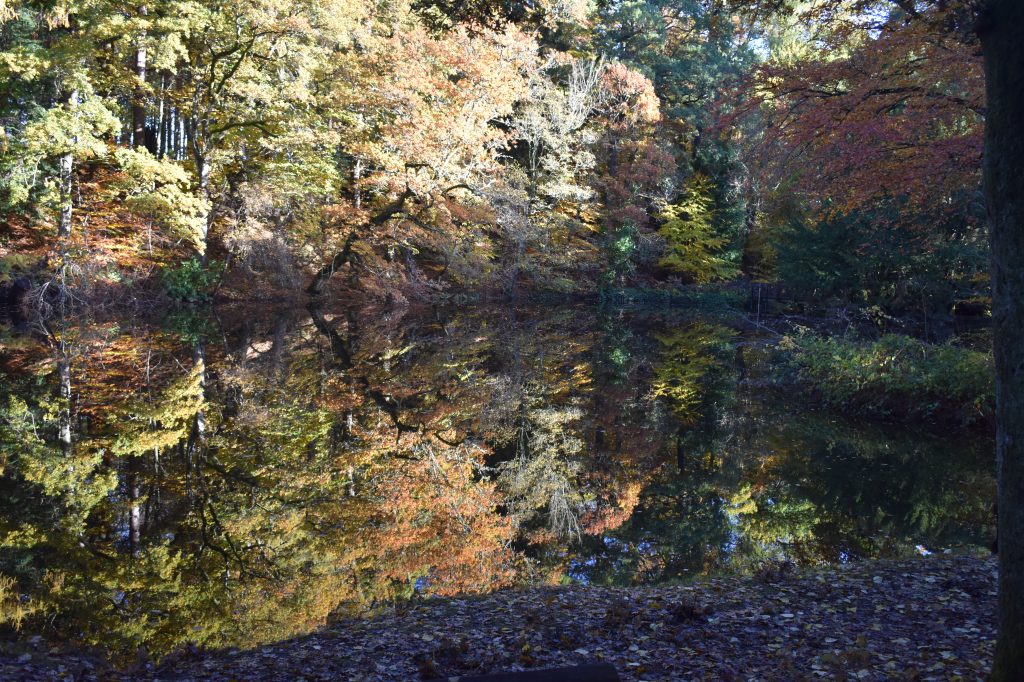
The sun was just rising over the houses and lighting up a clear frosty day in Torphins. Most of the leaves had fallen, but gold and orange remnants gave the garden its autumn cloak. To complete the picture a flock of waxwings had settled on the trees that fringed the garden. There were over twenty perching proud in their buff raiment with black, yellow and red highlights and cocky quiffs. They made the day. We don’t see these winter visitors from Scandinavia every year; they come in search of berries as food gets scarcer in the north. There are plenty of berries here in North-East Scotland this year. The redwings have taken most of the rowan fruit in my garden, but there are still plenty cotoneaster berries to feed these lovely waxwings. No one has seen waxwings this year at Crathes, but I imagine they have been feasting unseen on the many rowans that grace the estate. I have seen them at Crathes in other years, when I happened to be in the right place at the right time. The clear sunny days of the mid-November weekend made a pleasant interlude before the next storm hit.
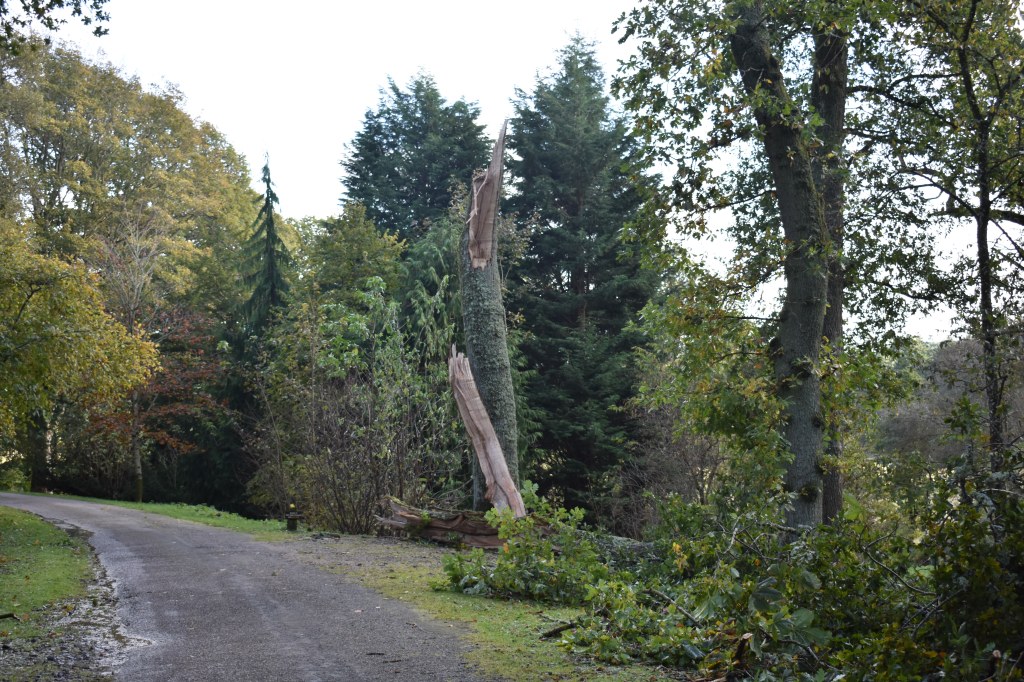
Storm Babet was on its way when I last wrote and it will be added to the other names we remember – Frank and Arwen. It’s only two years since Arwen hit. Increasing frequency of more extreme weather is a symptom of the climate crisis. Babet raged all Thursday night, through Friday and into Saturday. Homes were flooded in Brechin and a life was lost when a car was swept away by the water. Since James was away that weekend Steve, with difficulty, manged to negotiate the flooded roads to assess the damage at Crathes. The estate was closed, but with all three drives blocked by fallen trees it was imperative to clear at least one drive in case emergency access was needed. Steve and Davy worked Saturday and Mike (also hampered by flooded roads) came in to work with Steve on the Sunday. Some of the old oaks had lost their tops and a Himalayan birch had blown across the bottom of the East Drive. The Millpond was overwhelmed, even with new sluices, and the water overflowed the pond sweeping away some of the newly laid paths with its force.
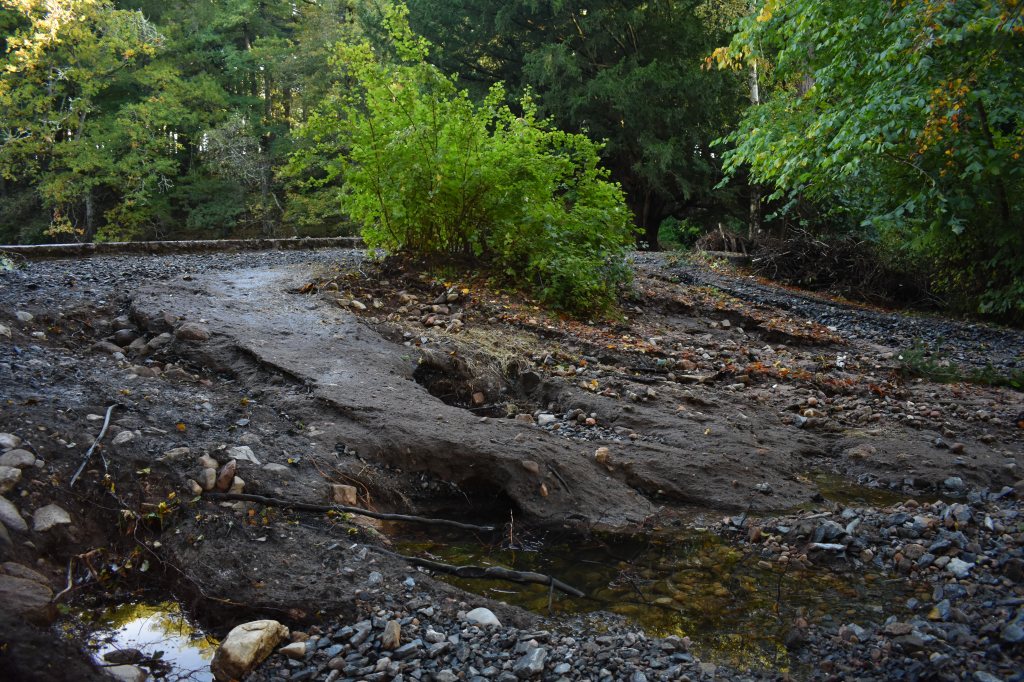
A clear day on Monday with a lull in the rain enabled me to visit and see the damage afflicted around the Millpond. How it has affected the fish and wildlife may take a while to establish. At least the Millpond dredging project had been completed. Goodness knows what would have happened if the storm had hit when heavy machinery was still using the ramp to access and clear silt from the pond.
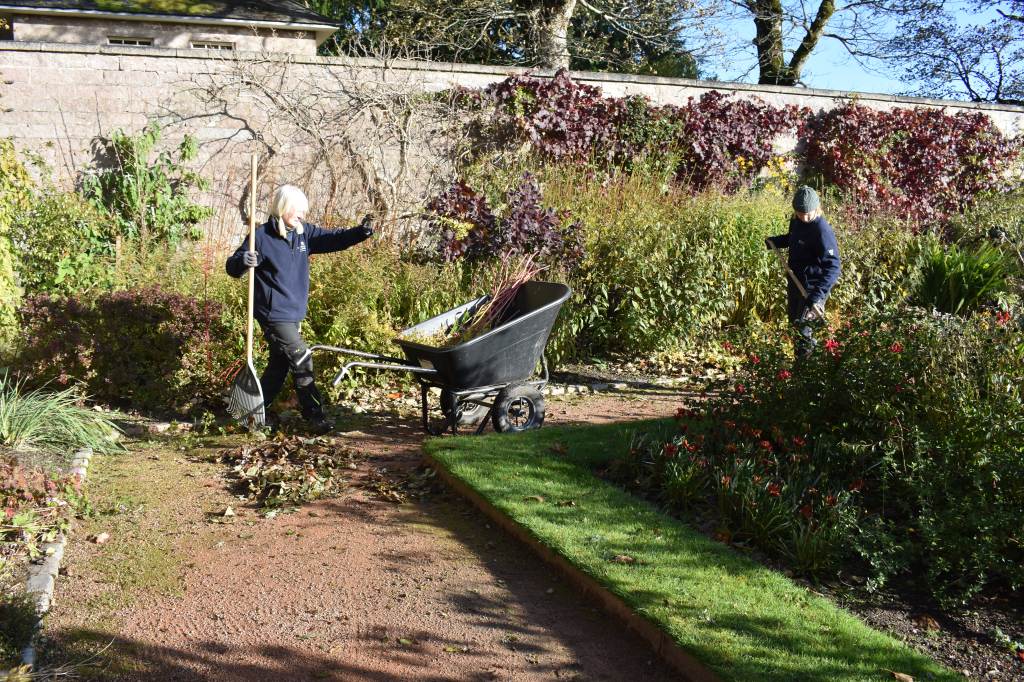
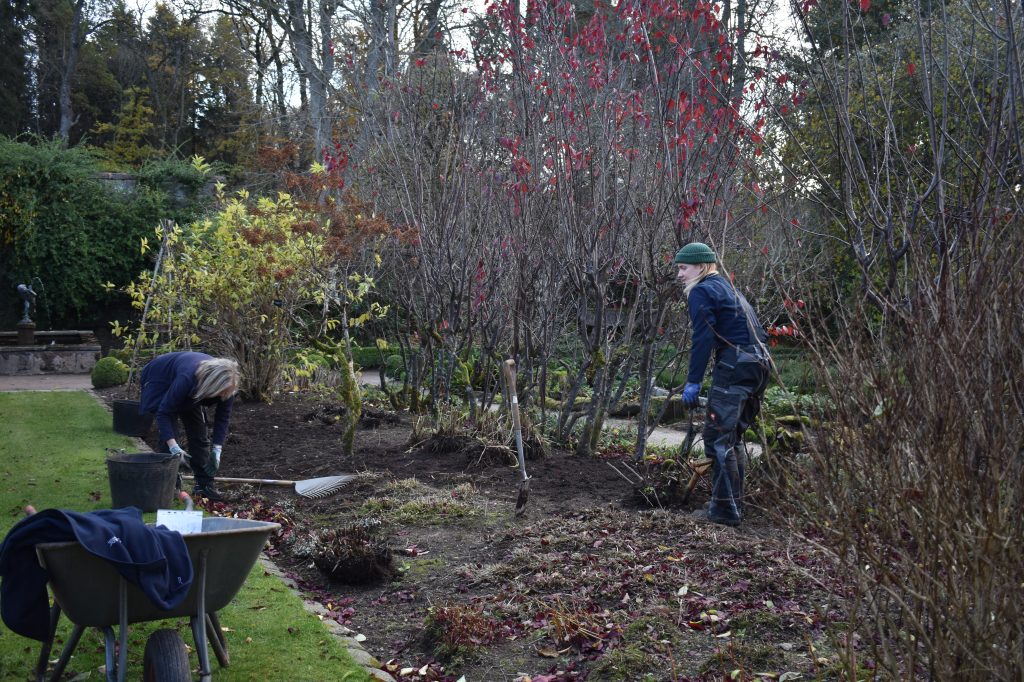
In the garden basic tidying up and clearing away of fallen debris was the order of the day.
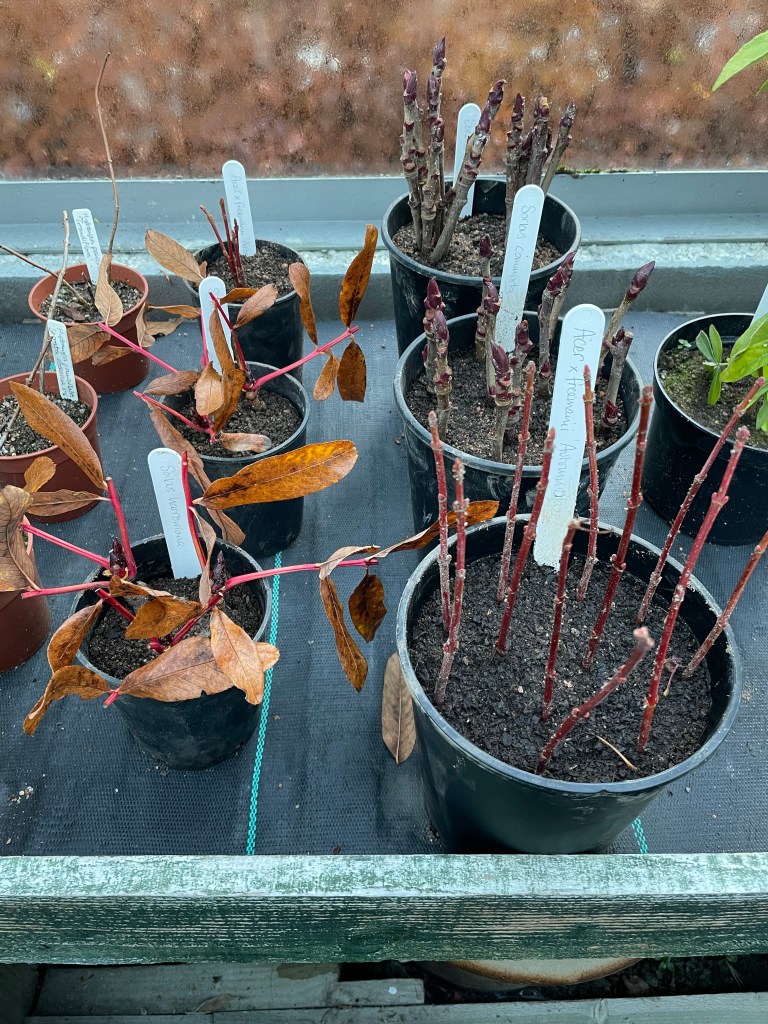
Then the rain began again; relentless and soul destroying. A week later I seized the chance of another pleasant day. There was more damage: A maple, Acer x freemanii ‘Autumn Blaze’, down beside the path to the castle had taken down a Japanese rowan, Sorbus commixta, as it fell. The maple, a Scottish champion, had a rotten rootball. Joanna took cuttings from the crown in the hope of a new tree for the future. The rowan had been healthier with a decent root plate, but there was no chance of saving it other than by successful cuttings.

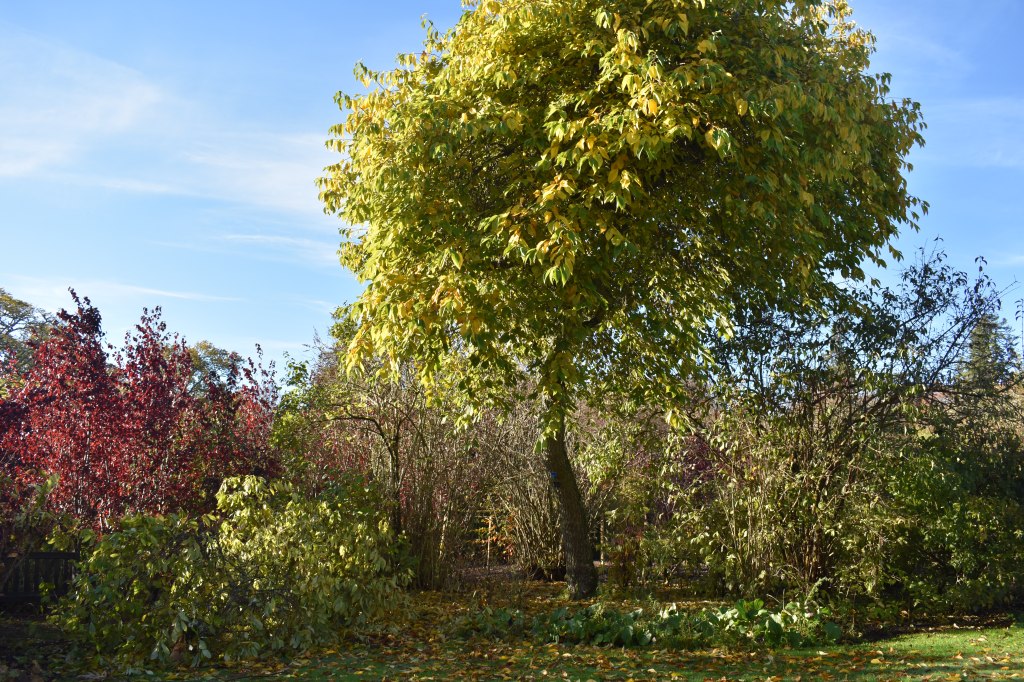
In the Trough Garden a large limb had fallen off the snowdrop tree, Halesia carolina Monticola group, also a champion (county).
James, Steve and Mike were busy tidying up the oak tree that had lost its top near the emergency drive. They needed to remove a tall limb that grew just above an old and rather fine rhododendron (not the invasive kind). Using the MEWP and a system of ropes and pulleys they were able to achieve their aim. The main trunk will be left standing, because, as James said, it holds a lot of carbon. The ancient trees of Crathes are important holders of carbon and, since the tree is not dead, it is bound to resprout in time and continue to draw in carbon from the atmosphere.

I was surprised by the change in the garden in just a week. The glorious red and orange leaves of the enkianthus avenue had blown away, but there were other autumn colours to see.
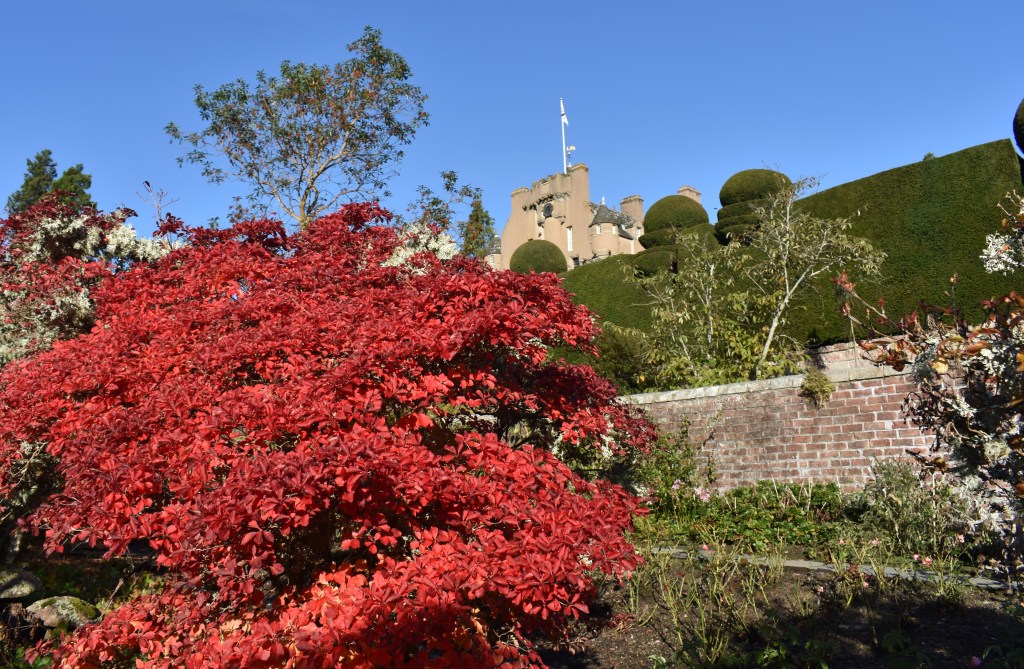
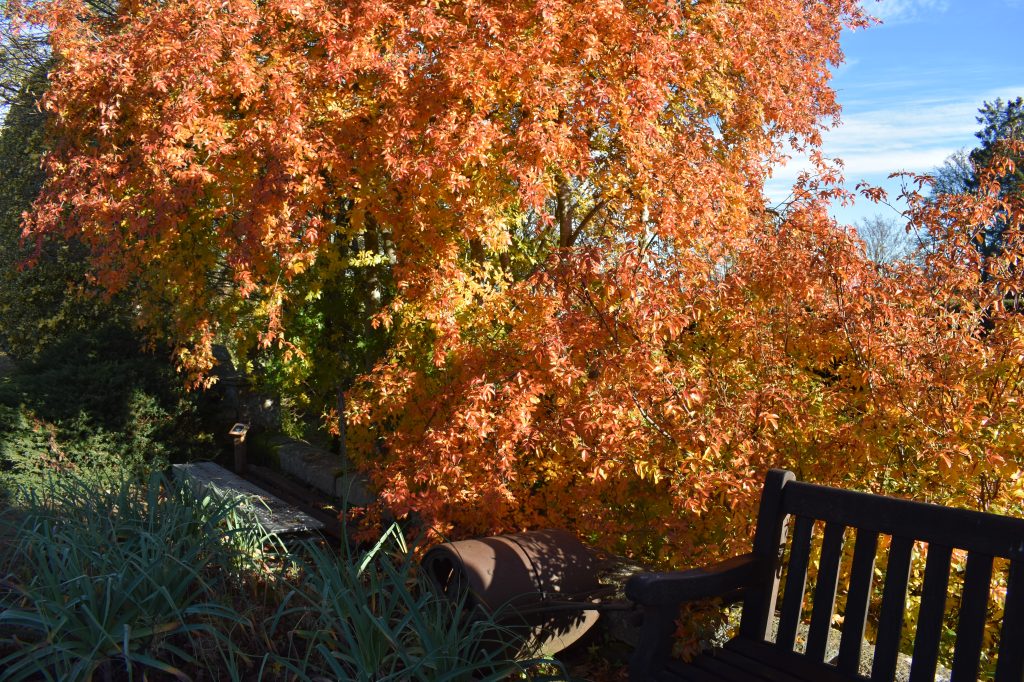
Storm Ciaran came after Babet and though it hit the south and the continent worst, the rain continued. A few glorious days of sunshine and frost gave us some respite until Storm Debi delivered more rain. It’s hard to imagine a drought in 2024, but casting back to June 2023 might jog our memories. Few like gardening in the rain, but the real problem is that the ground gets sodden and working on it or with it damages its structure. All the autumn jobs get delayed. A blustery day in late November was welcomed by the gardeners who could then get on with winter jobs.

What we need is a giant sponge which could soak up all the excess water and then release it in a slower and more manageable way. Fortunately, we have that in the woodlands and peatlands of Scotland where sphagnum moss is nature’s sponge; unfortunately, large areas have been degraded by drainage ‘improvement’, historical peat cutting, block planting of sitka spruce, uncontrolled deer numbers, and muirburn management of grouse moors. The sponge is not working properly because it is drying out and releasing, instead of storing, carbon. As the moor dries out the sphagnum moss dies and peat hags develop. Then water runs off the hill more quickly and causes floods.
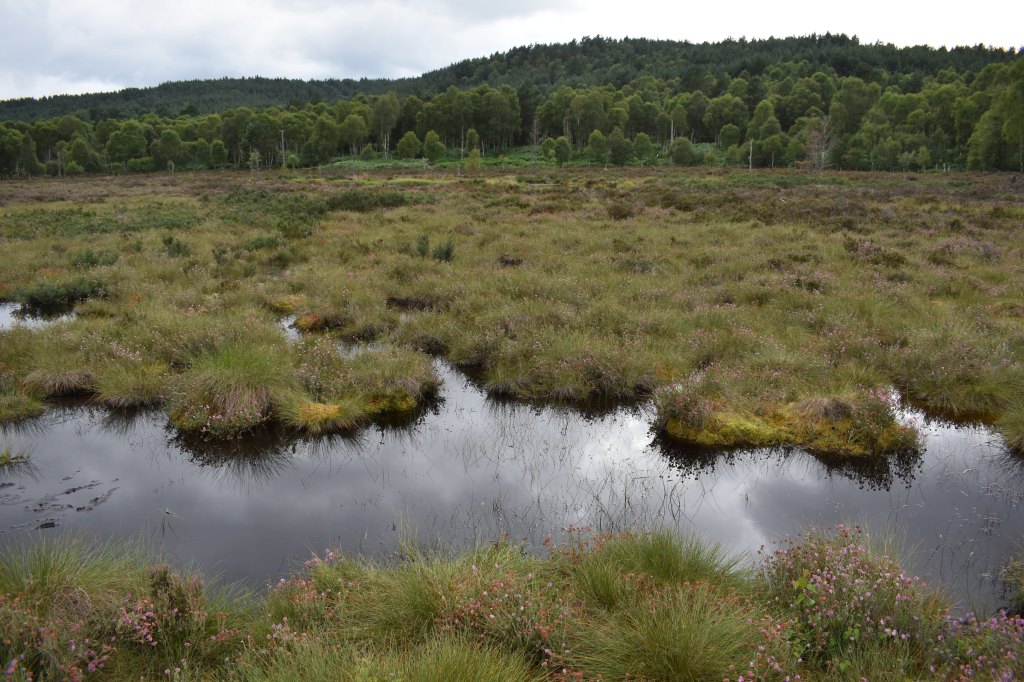
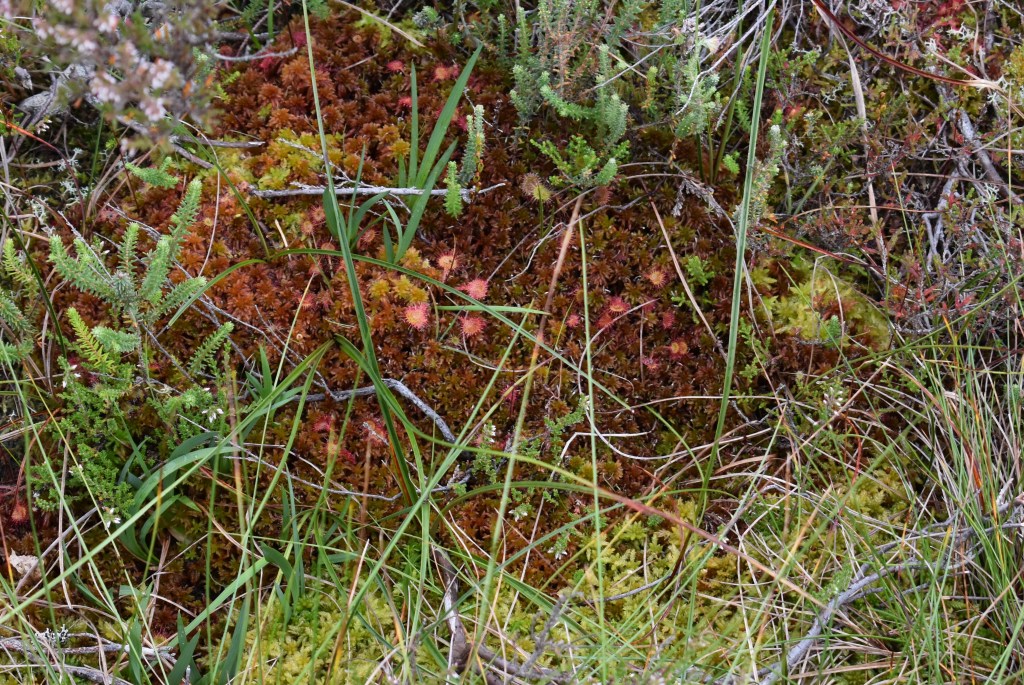
A new understanding of the importance of Scotland’s peatlands is becoming apparent to landowners. I receive an email from Scotland the Big Picture that is full of optimism. It’s eighteen months since I wrote about the Beltie Burn and Mar Lodge Estate and attempts to encourage the salmon (Who knows where the time goes, 13 July 2021), and a year since I posted about the Riverwoods* Film and the importance of salmon to the ecosystems of Scotland (The cycles of life, 16 November 2022). Now I learn about the expanding projects of Riverwoods. The email leads me to a series of five short films that cover varied areas of Scotland and tell of the increasing success of the projects. River trusts and estates are working together to support the return of the salmon – the Tweed, the Forth, the Kyle of Sutherland, the Dee, and Findhorn, Lossie and Nairn trusts work with estates such as Glenmazeran in the Findhorn catchment area, Dundreggan in GlenMorriston and the Balmoral Estate, along with farmers such as Clunes Farm near Inverness that has beavers doing the hard work of restoring the river to bring back the salmon. And if the salmon return in any number it will indicate that the whole ecosystem is thriving. This is an economic exercise as well as a healing process; salmon are big business as well as keystone creatures in the landscape. People who will pay good money to catch salmon need places to stay; the tourist industry will thrive if the salmon return. We do need commercial forestry, but we need to have a conversation about the best use of land whilst giving nature the respect it needs. Monocultures of sitka spruce are open to attack from invasive pests as well as being of limited use to wildlife.
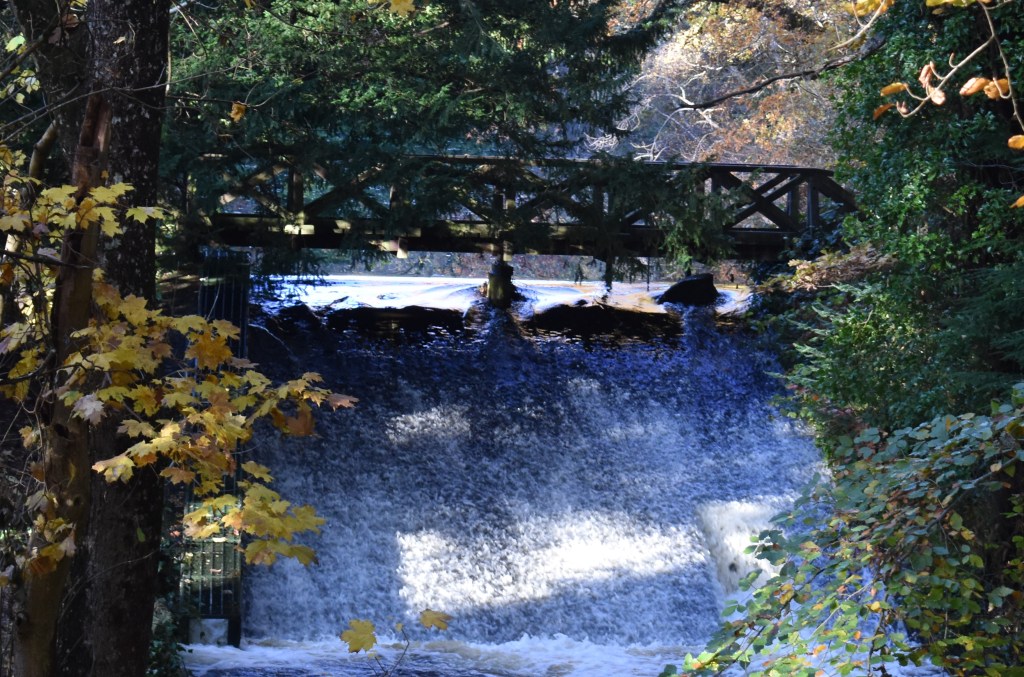

Furthermore, the cost of all the recent storms makes the economic case for tackling climate change; the costs are only going to increase if we do nothing.

The movement to heal the land is gathering pace and achieving results. Often cooperation between farmers and ecologists has been beneficial for both groups, with livestock still accessing the land where appropriate and people finding jobs in conservation. The rewilding of Scotland that I was writing about in October is obviously gathering momentum. There is news about the purchase of the 18,500 acre Dalnacardoch Estate between Blair Atholl and Dalwhinnie beside the A9. The anonymous purchaser (a family foundation) has leased the estate to the Durrell Wildlife Conservation Trust. The lease is for 100 years indicating that this (the first project that the Durrell Trust has undertaken in Scotland) is a serious commitment. The estate is within the Cairngorms National Park and one of the neighbours is Gaick Estate which is part of Cairngorm Connect**. The corridors of care are extending. The press release indicates progress towards net zero, peat restoration, increased woodland and green training schemes. Surveys of the biodiversity are already taking place and will be a vital part of the project.
Capercaillie is one of the species that the Durrell Trust is keen to help back from the brink of extinction. Although native to Scotland they became extinct in the late eighteenth century and the present population was introduced from Sweden in the nineteenth century. I was privileged to spend a night in Monaughty Forest near Elgin in the 1980s waiting/sleeping in a temporary hide in the hope of seeing a capercaillie lek – where the males display for the females. It was late in the season for lekking (1 May) but in the early morning I was lucky enough to see one male just in front of me with his red eyebrow, spikey beard and fanned turkey-style tail strutting about whilst uttering a deep throated croak.
Capercaillie used to be found in the Crathes woods. Occasionally they were shot and recorded in the Crathes game books of the late nineteenth and twentieth centuries. Today the increased presence of people and dogs together with the building developments that surround Crathes make it unlikely that capercaillie will return in the near future. The decision to stop using the estate for commercial forestry will be beneficial generally.
Despite many efforts to support capercaillie there has been a steady decline in recent years. Across Scotland there are estimated to be only 542, most of them in the Cairngorms National Park. This makes them one of the red list priority species for conservation concern and the Dalnacardoch Estate project is welcome news. Capercaillie like mature pine forest where plants such as blaeberry thrive; maybe in 100 years capercaillie will have sustainable populations throughout the highlands.
I watch the Earthshot prize ceremony on the television. It’s heartwarming to learn about all the finalist projects that are helping to care for the planet. One of the prize winners, Accion Andina, ‘is a grassroots, community-based initiative working across South America to protect native High Andean forest ecosystems for their invaluable benefits to nature and millions of people in the region’. The prize of a million pounds will help this project deliver the benefits of natural water conservation and carbon storage which in turn will benefit the degraded farmlands of the lower slopes.
Across the world communities are fighting for the planet. From the recycling of lithium batteries, to combating food waste for female farmers in Africa, people are answering the call to arms, but governments are lagging behind. The resolve of Cop 26 has not yet been delivered; what will the imminent COP 28 bring? The United Nations report that we are heading towards a three degree Celsius rise in temperature this century is a frightening prospect. Rewilding will not save us if our politicians continue to support fossil fuels.
Updates:
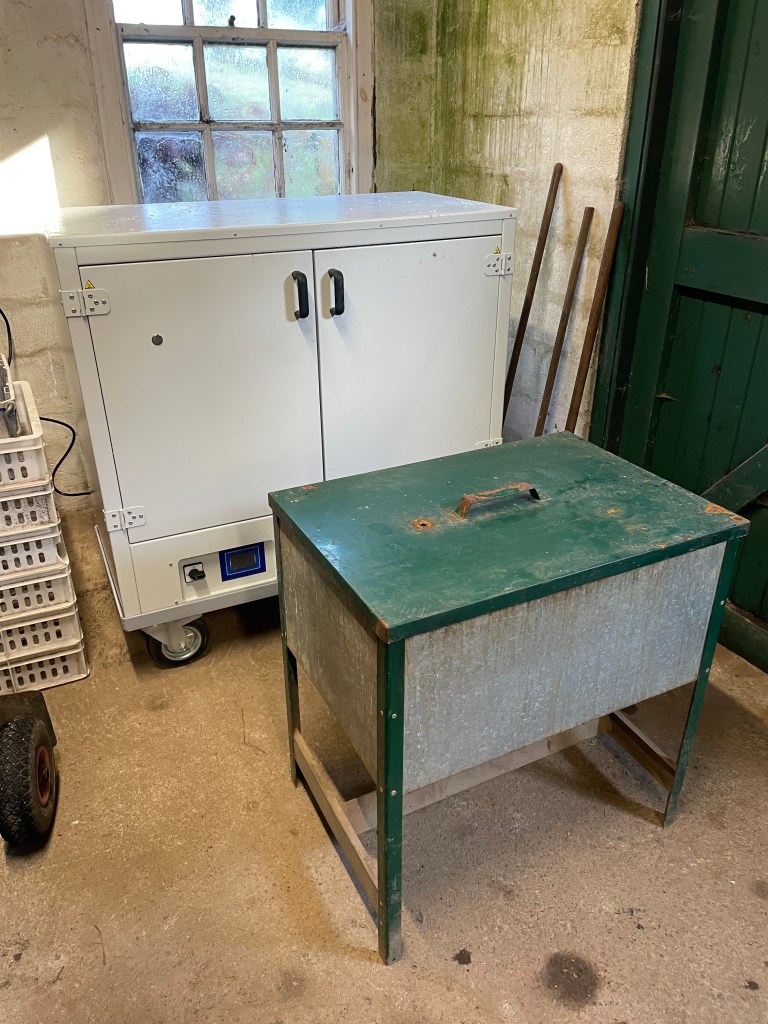
The new soil steriliser is performing well.
Joanna and Emily have cleaned the broadspan greenhouse roof.
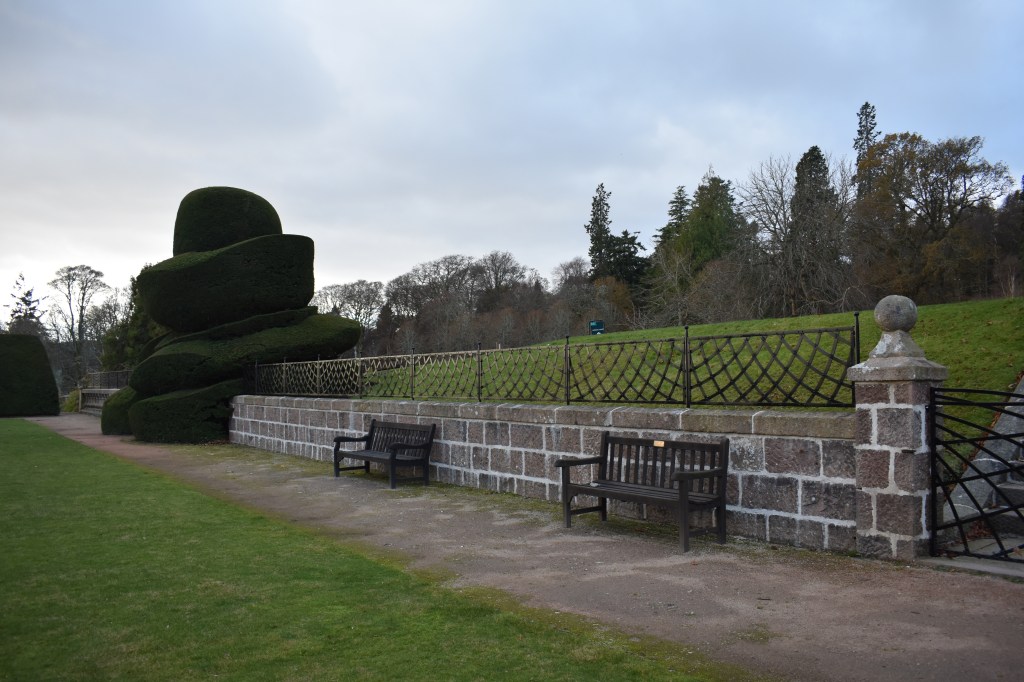
New railings have been added to the Croquet Lawn wall to keep the deer out of the walled garden.
A book I have enjoyed this month is The Lost Rainforests of Britain by Guy Shrubsole (2022) – now in paperback.
*Riverwoods is a partnership initiative led by the Scottish Wildlife Trust.
**Cairngorms Connect is a partnership of neighbouring land managers, committed to a bold and ambitious 200-year vision to enhance habitats, species and ecological processes across a vast area within the Cairngorms National Park.
.
 Notes from Crathes
Thank you for the information. Very informative and gives a good picture of what is occuring in and around the grounds!
LikeLiked by 1 person
Good to hear you enjoyed it Belinda. Thank you.
LikeLike
Belinda, This is the first time I have seen notes from the gardens. Touring the garden with my husband and Jamie was a main highlight of my visit to Crathes. I hope to read more of your informative articles. Sincerely, Sharon Jacobs, North Carolina, USA
LikeLiked by 1 person
Thank you, It’s always a pleasure visiting Crathes!
LikeLike