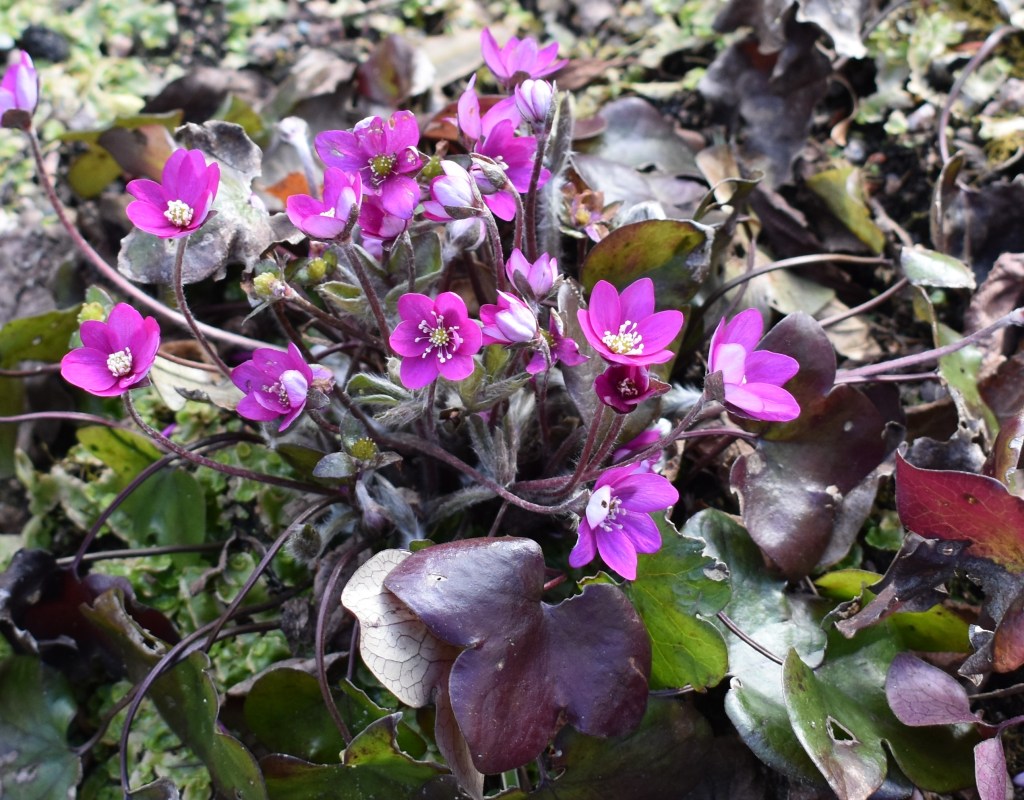
Hepatica nobilis ‘Rubra’ in the Evolution Garden, 22 March 2024.
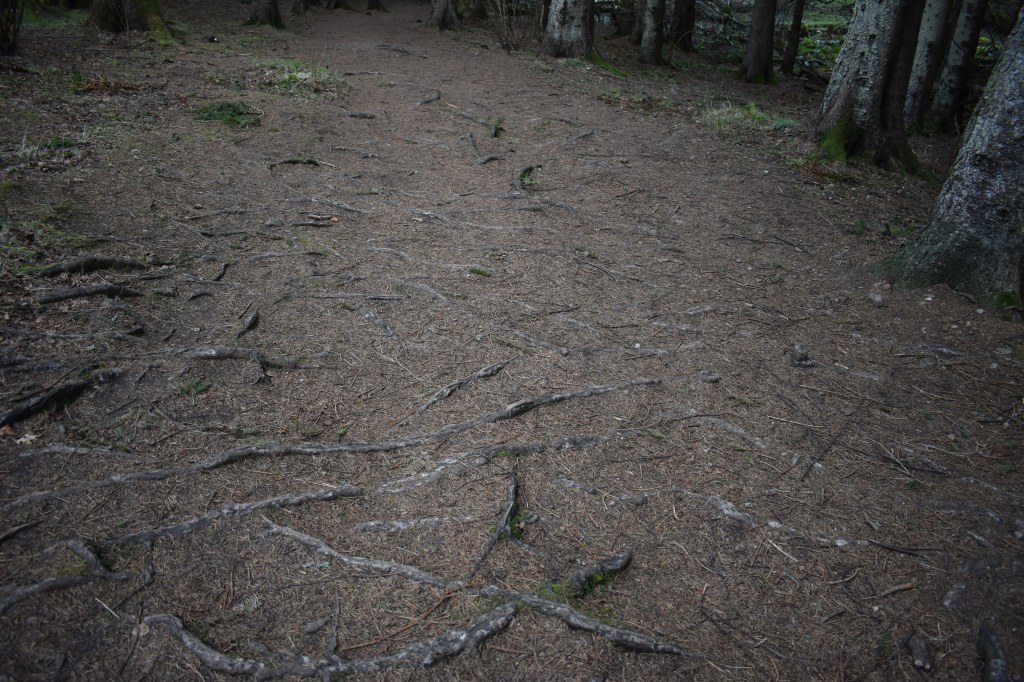
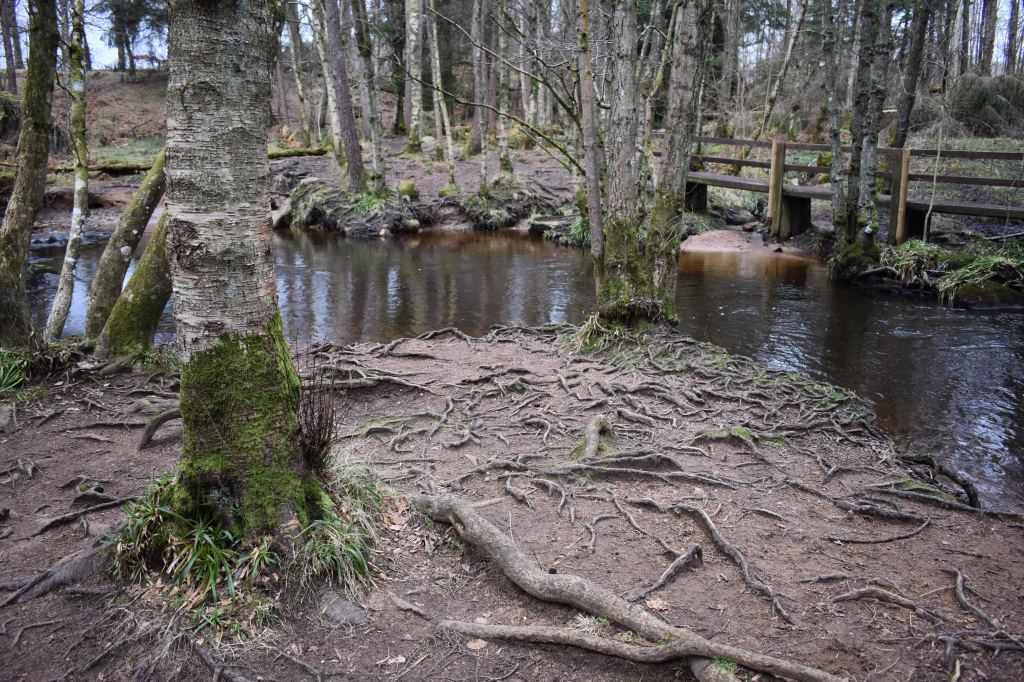
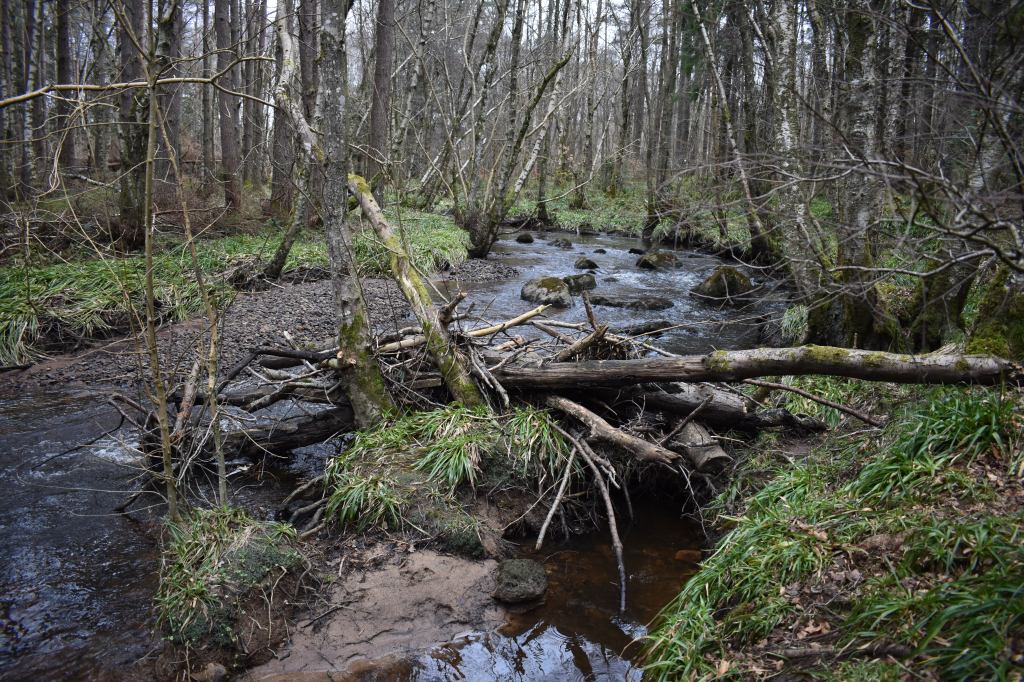
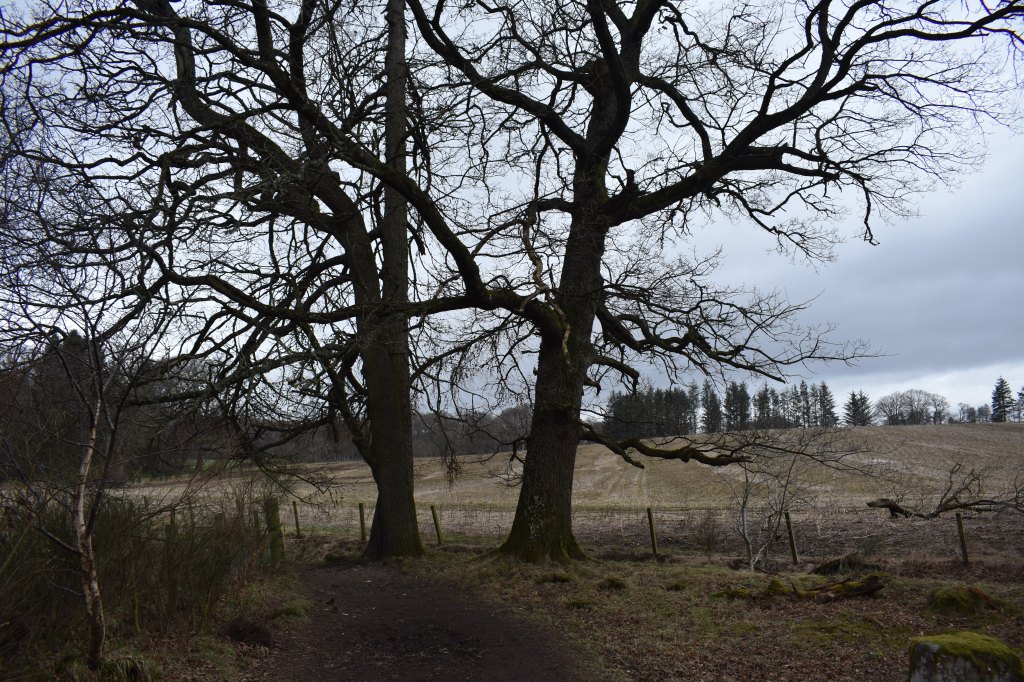
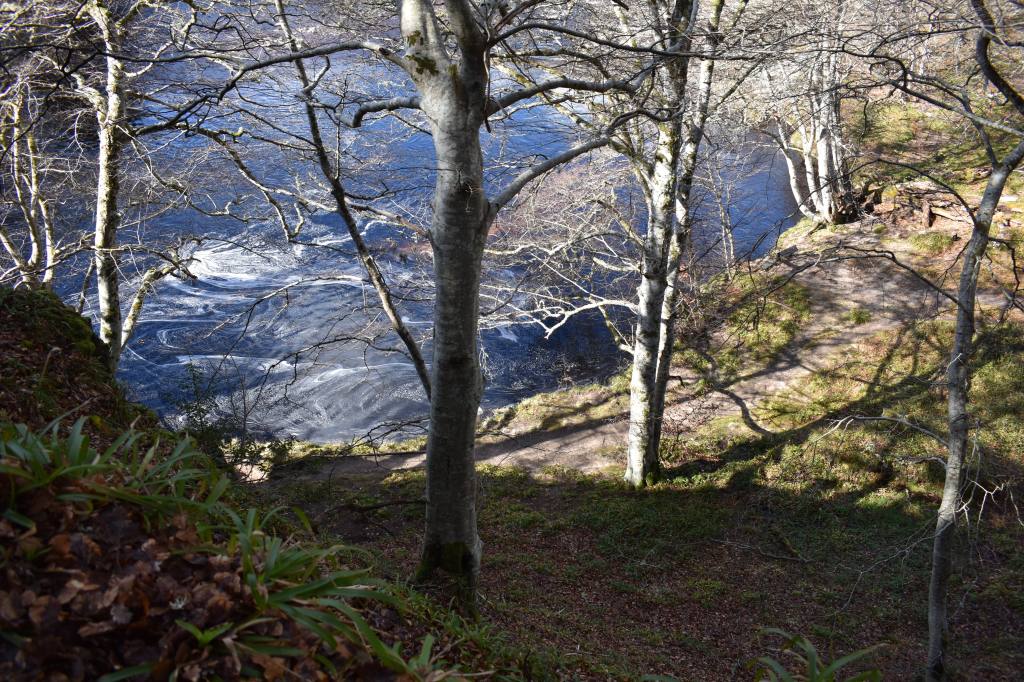
I take the Coy Burn Path to the garden, passing over the burn by the Millpond and walking through the board walks. It’s a gloomy day and the after-effects of the various winter storms are evident. Water has obviously been much higher than it is today; sand and silt have been deposited in unexpected places and trees have been swept down the burn only to lodge against rocks and other trees that have fallen into the burn. I am taken by the amount of roots that are exposed on the path and by the burn. There must be millions of roots penetrating the soil; probably billions, all helping to slow down the water as it passes through the estate. This in complete contrast to the runoff from a motorway or the tarmacked drives of a housing estate.
roots on the path by the spruce plantation, 28 February 2024.Roots beside the Coy Burn, 22 March 2024.Blockages slow down the water, 22 March 2024.
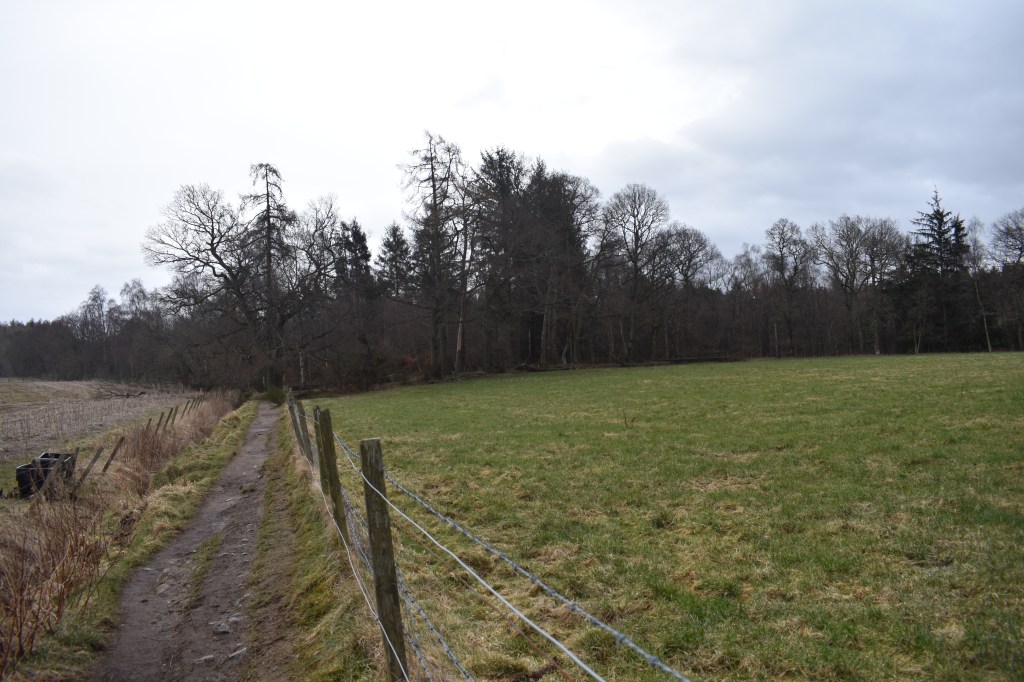
Because the bridge over the burn was damaged by Storm Arwen, it’s been a while since I’ve taken the shorter path through the fields. I am still thinking about roots. If I turn through 360 degrees there are trees on every horizon, all of them in the estate; that’s an enormous amount of roots helping to reduce water impact in times of spate.
The Coy Burn path continues through the fields, 22 March 2024.Looking west towards Millars Ward, 22 March 2024.Looking east; all the trees on the horizon belong to the Crathes estate, 22 March 2024.
The burn blockages help to slow down the water as it makes its way from the Hill of Fare through farmland and the Crathes estate to the Dee; thence to Aberdeen and the North Sea. The blockages also provide shelter for young trout and salmon.
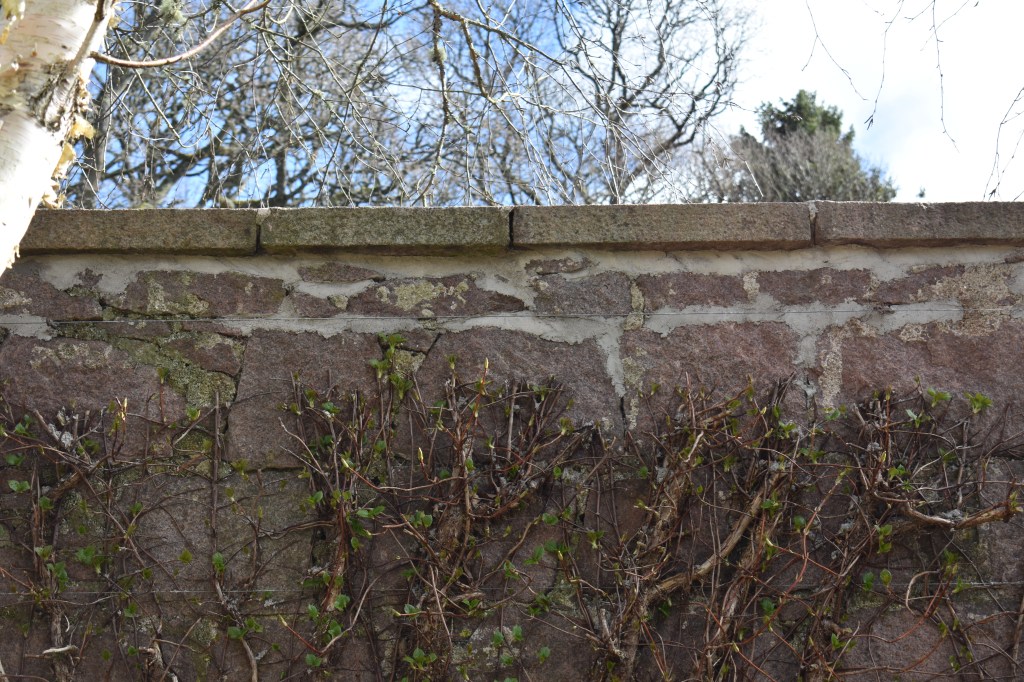
In the garden I ask James what he thinks about roots and find that they are very much in the minds of the gardeners just now. It’s all about the ivy and other aggressive climbers that grow on the east wall of the garden beside the doocot border. The roots of these climbers had found their way under the coping of the wall. The wall, which is probably at least a hundred years old, is constructed of partially dressed stones with an interior of rubble and lime mortar, all topped with coping stones. As the roots forced their way under the coping they let water into the wall and the structure began to deteriorate. The climbers have been removed and 30 metres along the top of the wall has been repaired. This is especially important because the bothy and garden sheds are leanto buildings on the other side of the wall. With the repair the water previously leaking into these sheds has been quenched. The ivy in my garden is welcome for nesting birds, but it is not allowed near the house.
Repairs to the wall, with climbing hydrangea cut back, 22 March 2024.
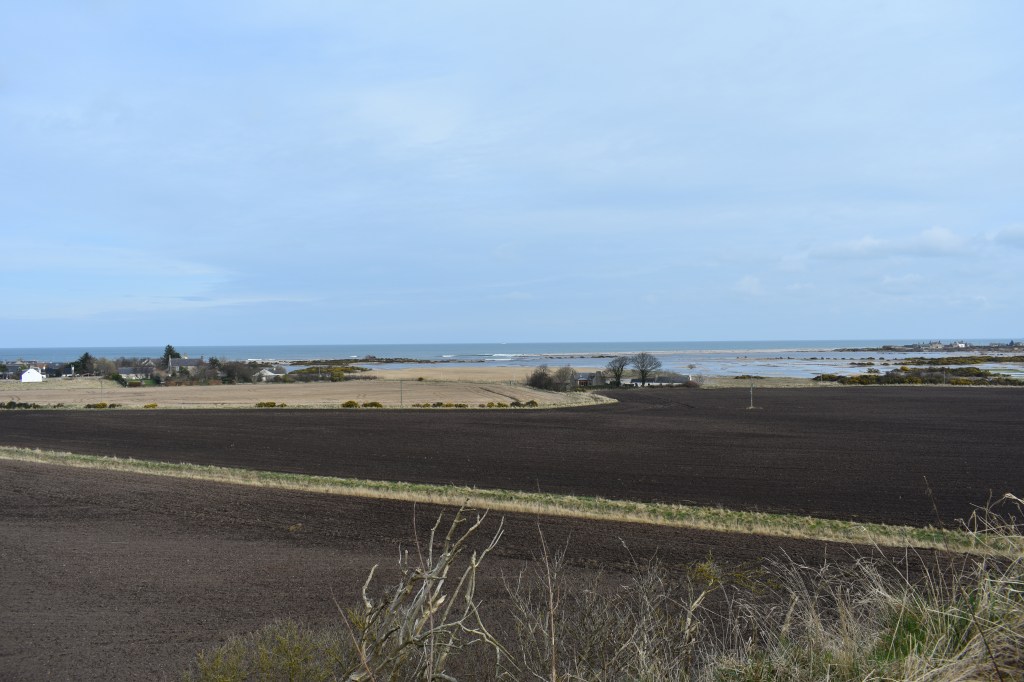
We have been off on a jaunt, staying for a while at the mouth of the Spey where we used to live. The Spey is one of the great salmon rivers of Scotland and like other Scottish rivers is showing a massive, worrying, decline in salmon numbers. As with the Dee there is a lot of work environmental work going on to improve the catchment area of the Spey; likewise on the Findhorn, which we also visited.
The Spey estuary at a very high tide. The buildings across the river are of the former salmon station and ice house, now a wildlife centre. 12 March 2024.Paths by the Findhorn near Logie House, 17 March 2024.
The weather was good whilst we were away, but as luck would have it, the morning I went to see an interesting garden it was pouring rain. Laundry Cottage near Huntly is part of the Scotland’s Garden Scheme and is open all year by appointment. The cottage is set on a high bank overlooking the Bogie. The view from the cottage is glorious, a borrowed landscape to add to the garden design. The higher part of the garden surrounds the cottage. I was particularly taken by the orchard and the bulb meadow, designed to give interest throughout the year. There are steep paths down to the Bogie and riverside tracks. I will need to visit this garden again in better weather when I can get some photographs. The Bogie flows into the Deveron, another important salmon river that flows into the sea at Banff. It, too, has projects ongoing to restore the catchment environment for the salmon.
Scotland’s Garden Scheme was established in 1931 and by 1933 Sir James Burnett, 13th baronet at Crathes, was active in the organisation. Private gardens belonging to the scheme can be opened to the public on one or more occasions with donations going to charity. Initially the scheme supported the Queen’s Nursing Institute Scotland (especially important before the establishment of the NHS) but nowadays part of the donation goes to the Garden Scheme* and part goes to a charity of the owner’s choice.
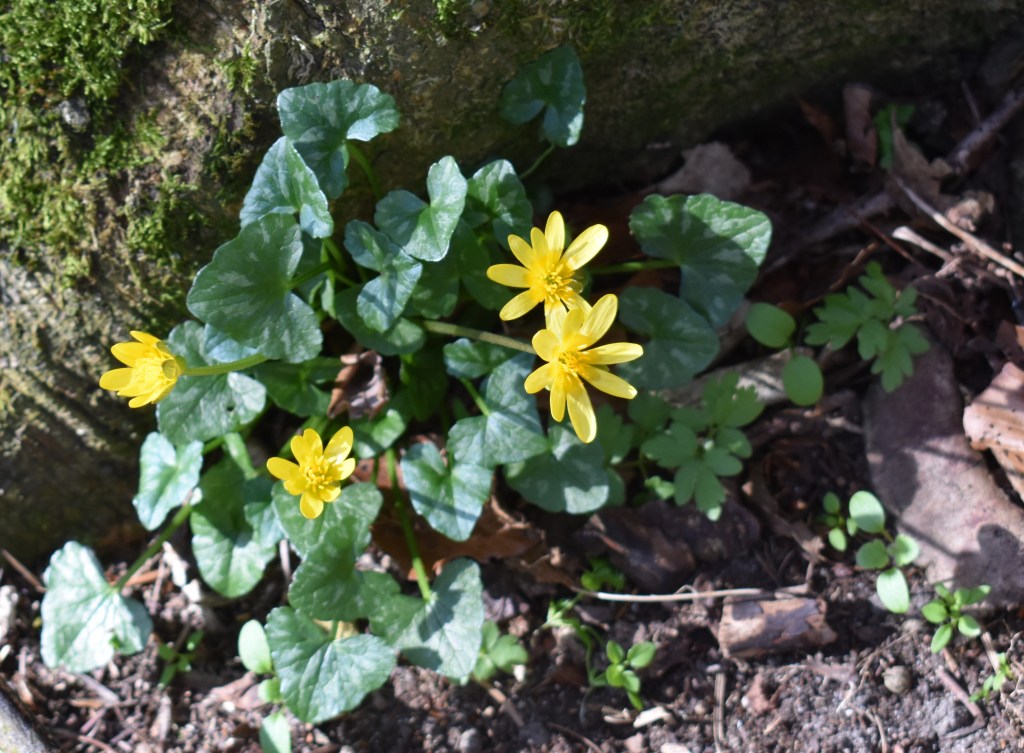
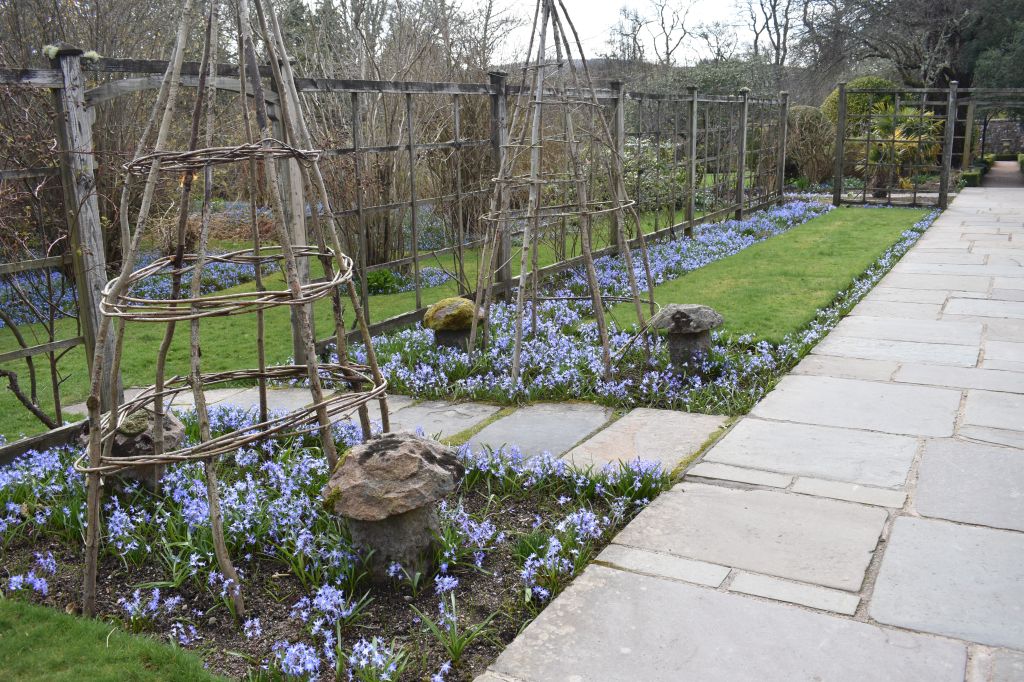
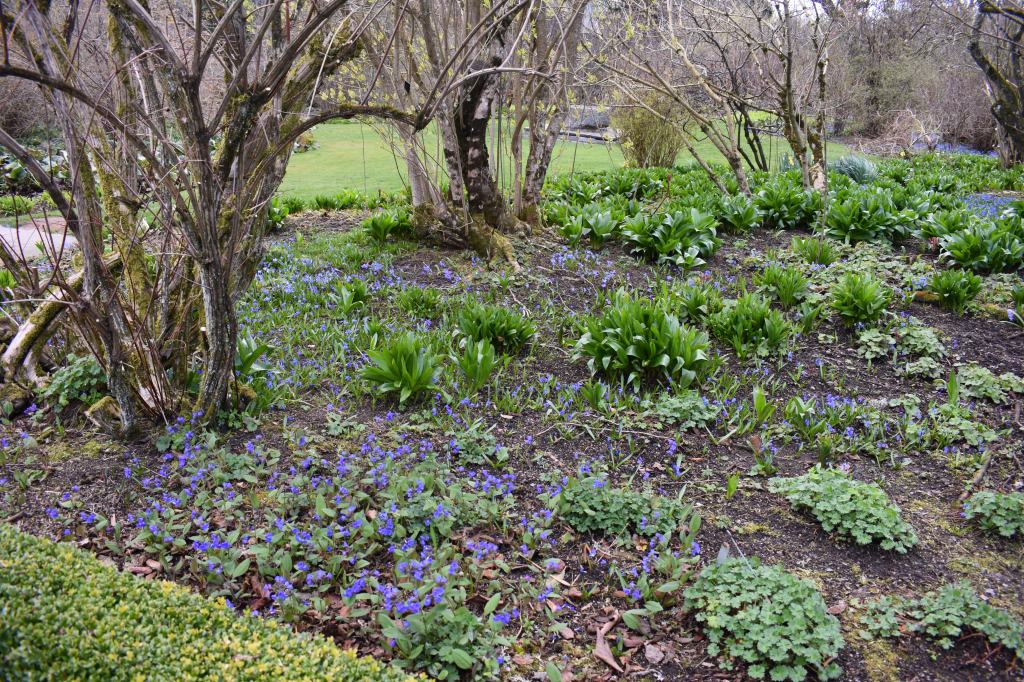
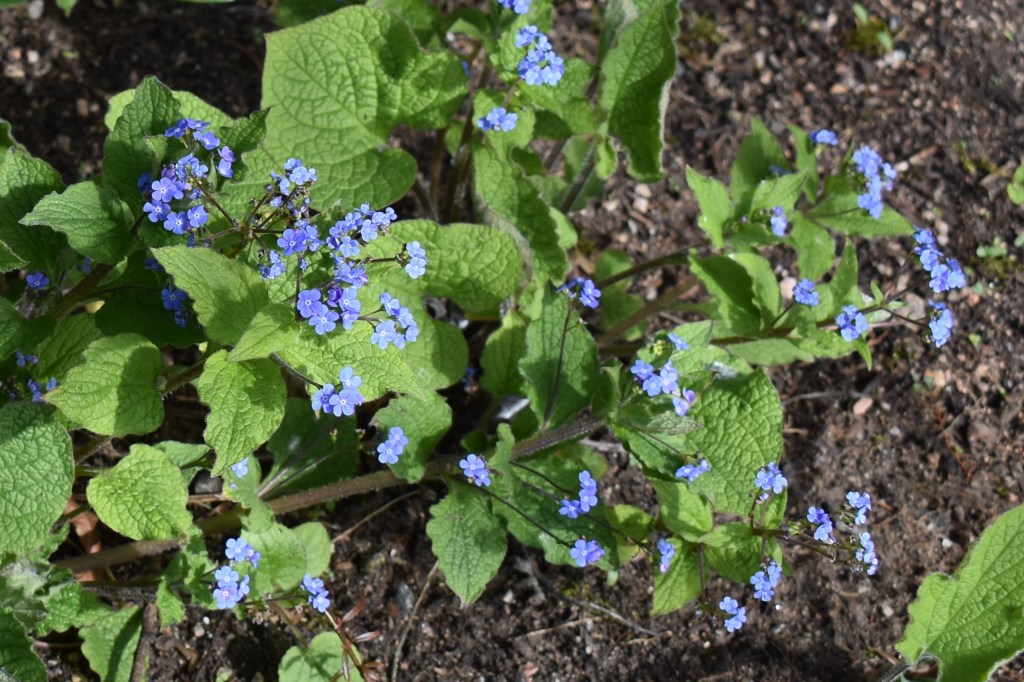
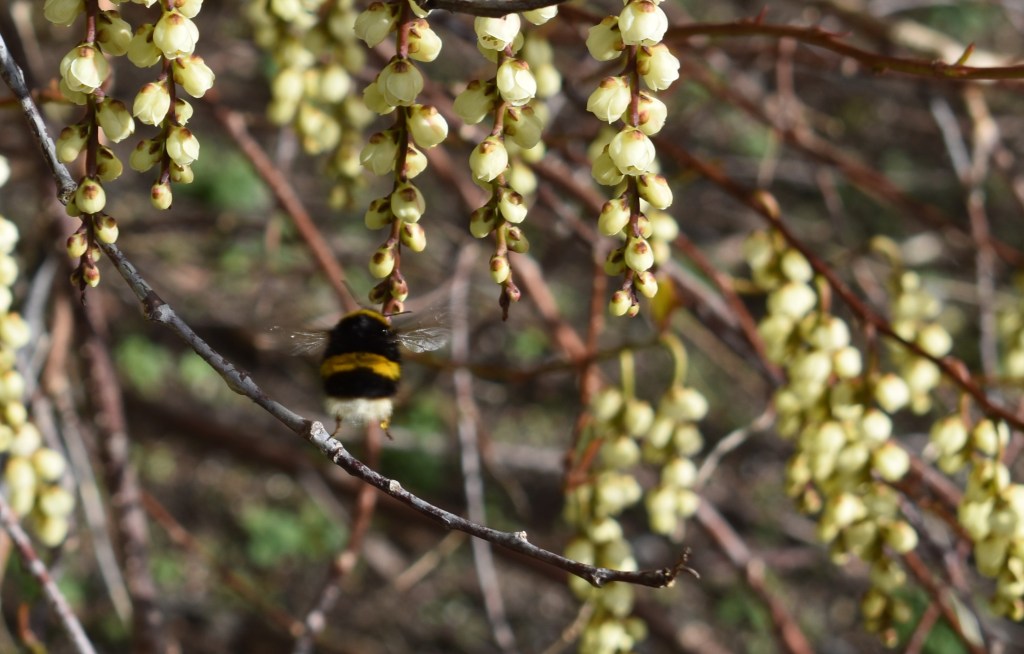
Returning to Crathes after a week away I found that spring had arrived. Celandines were plentiful and wood anemones were coming into flower in the woodlands; inside the garden the yearly magic of blue was spreading across the ground. Most of the blue is because the chionodoxa have spread in the compost and are turning up everywhere. There are also scillas, similar to chionodoxas but darker in colour, and pulmonarias. Mike thinks the dark blue pulmonaria is ‘Blue Ensign’. These blue flowers are much loved by the bees, but James has reservations about the chionodoxas turning up in the Golden and the Red gardens. Another plant much loved by the bees, and by me, is the Stachyurus praecox. I found it on the aviary terrace accompanied by the gentle hum of bumble bees – all probably queens newly out of hibernation. In the Fountain Garden I found another blue flower – brunnera – looking similar to a forget-me-not.
Celandines herald the spring, 22 March 2024.Chionodoxa creeps across the garden, 22 March 2024.Pulmonaria in the Trough Garden, 22 March 2024.Brunnera in the Fountain Garden, 22 March 2024.Queen bumblebee finds nectar on Stachyurus praecox, 22 March 2024.
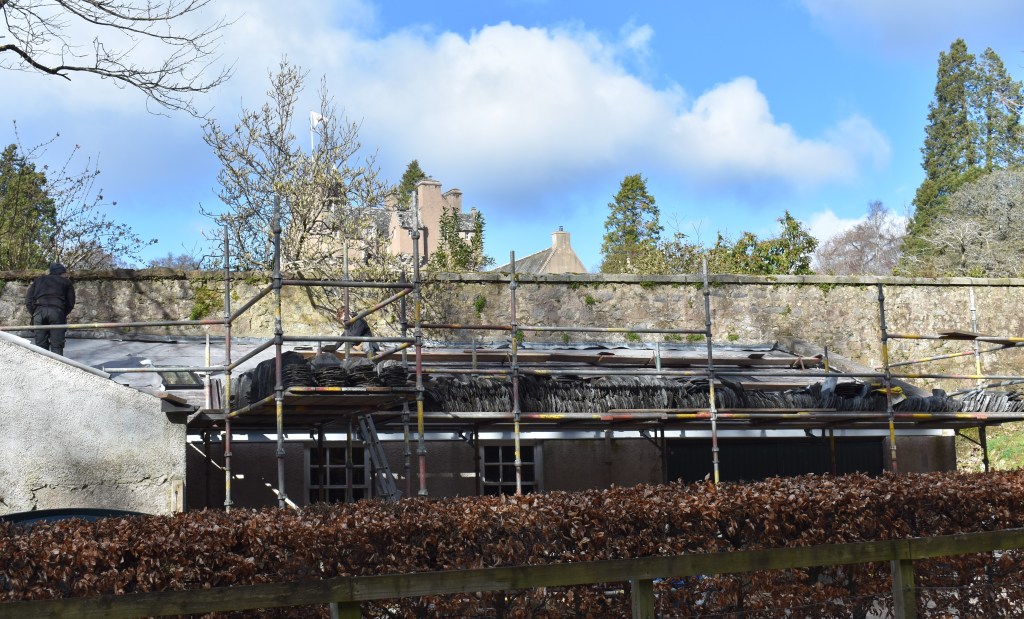
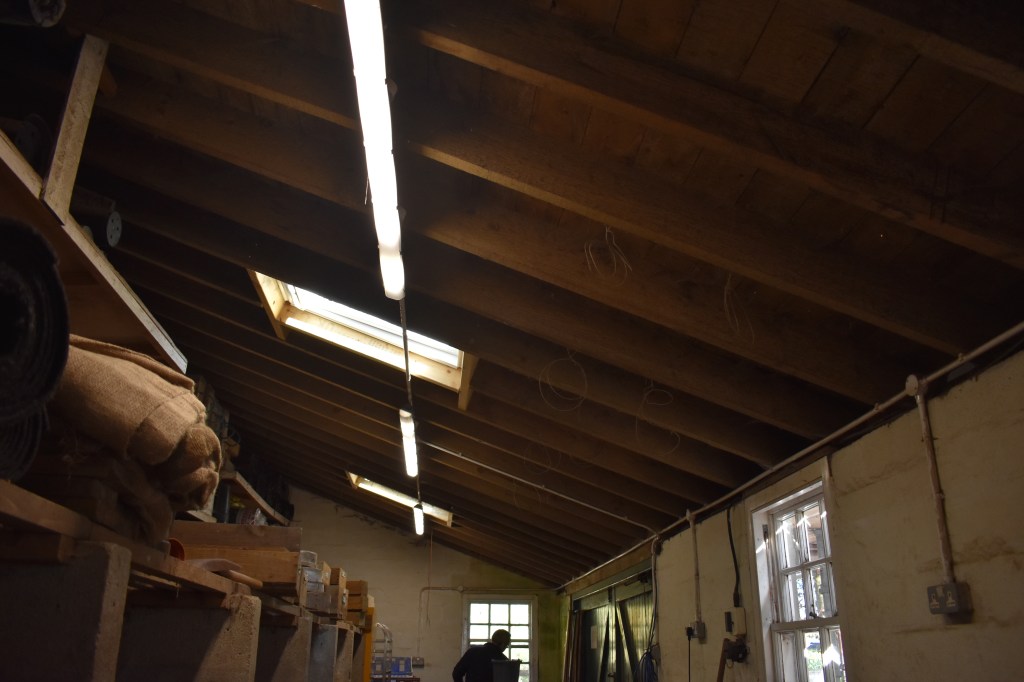
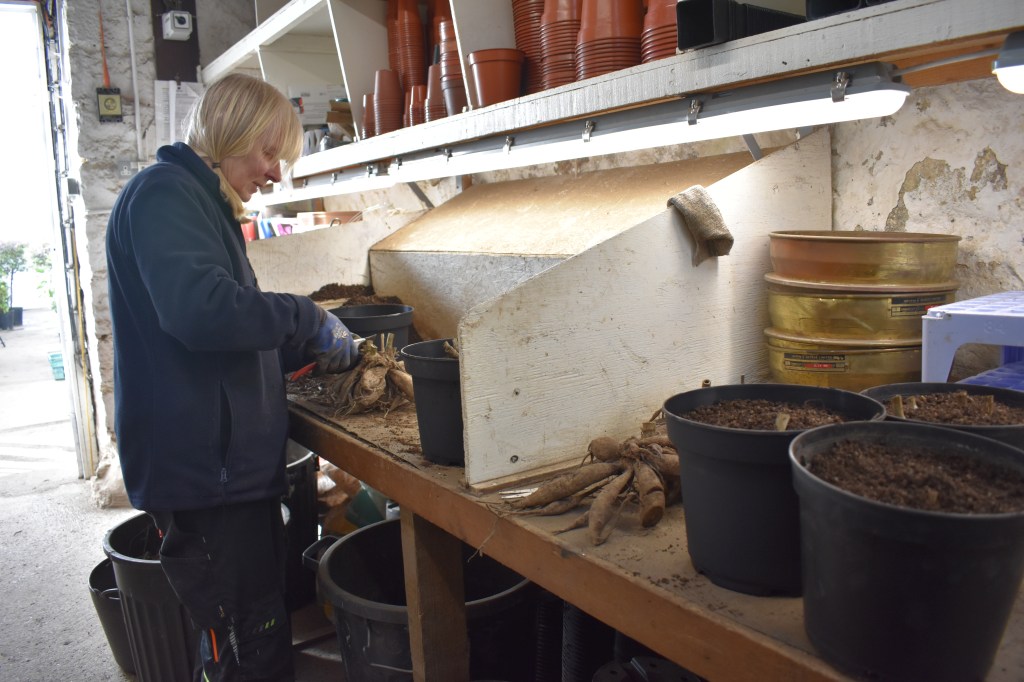
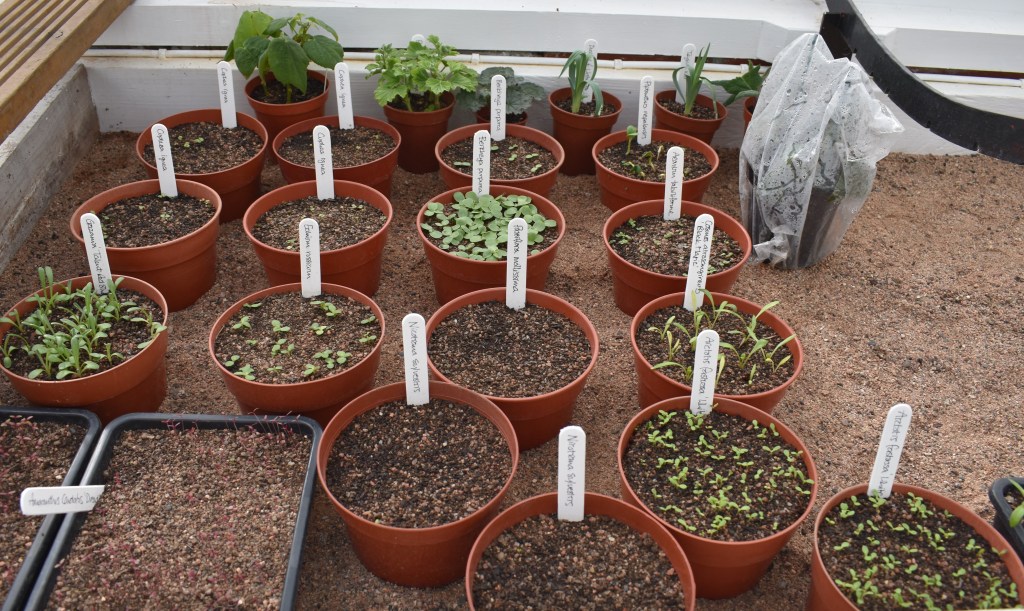
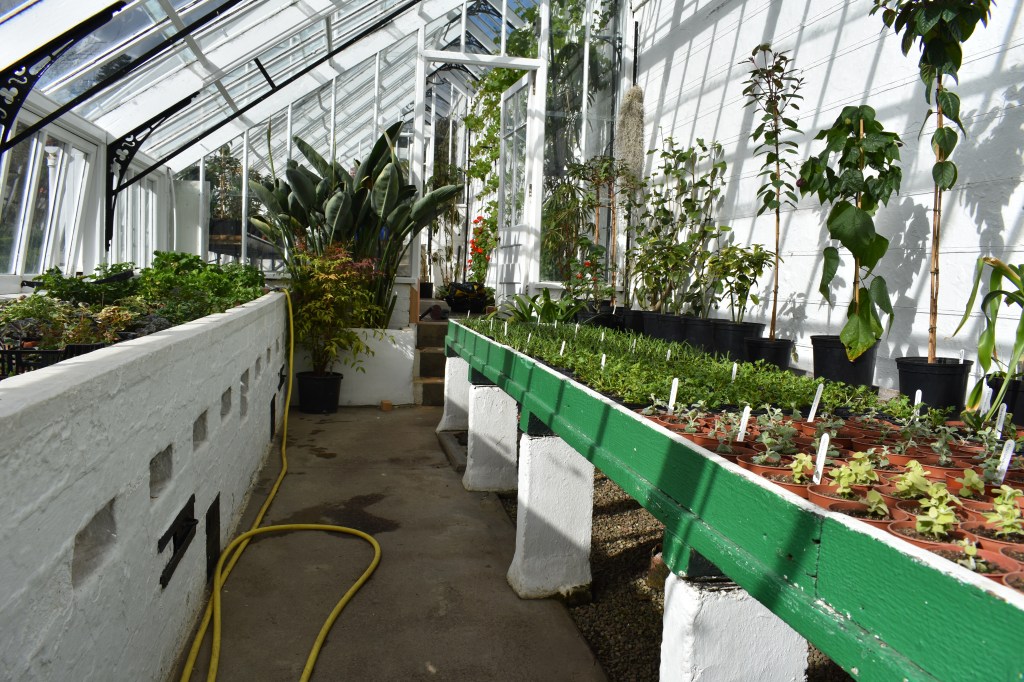
The potting shed extension has finally got its new roof and the tilers are nearly finished. Glasshouse one is still not quite finished; the staging has been ordered. The new frames are awaiting their covers, so space is at a premium. With all the plugs arriving, seeds germinating and cuttings to tend it’s all go for Joanna who is looking forward to reclaiming her workspaces and getting everything back to normal. On my last visit she and Cecilia were busy potting up the dahlia tubers which had been dried out over winter. Potting them up gives them a head start before planting out after the spring frosts. Mike was still at the pruning with help from Judy. Emily and Steve were away at Inverewe as part of their training.
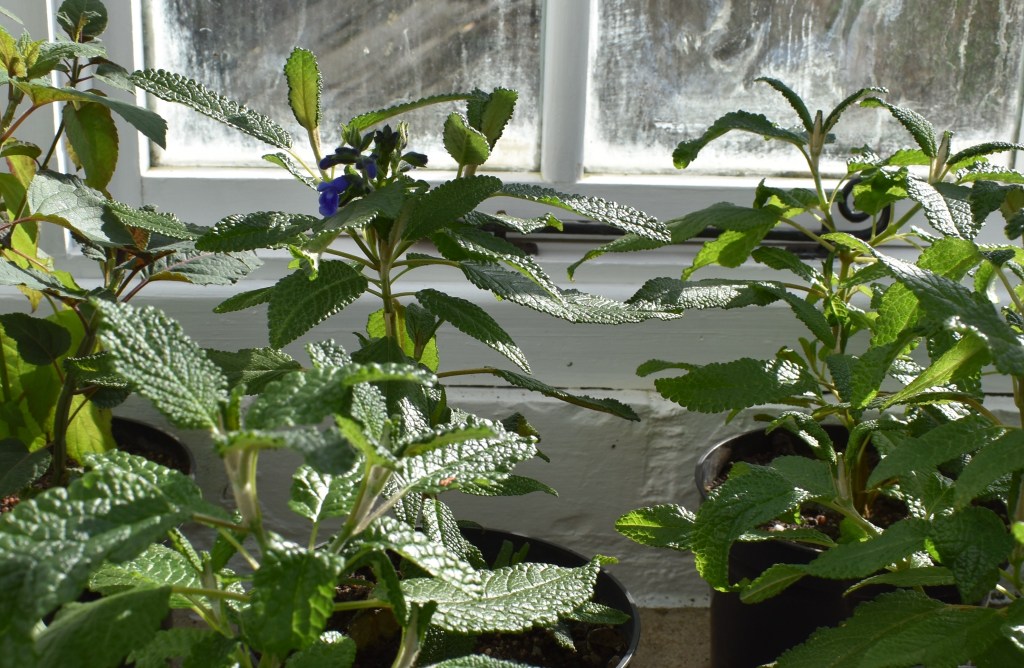
Tilers at work on the potting shed extension, 22 March 2024.Interior of extension – with James cleaning windows, 22 March 2024.The glasshouses are rather crowded, 22 March 2024.Cecilia pots up dahlias, 22 March 2024,Salvia corrugata cutting already flowering, 22 March 2024.Hundreds of seeds germinating, some collected at Crathes, Plugs have been potted on.22 March 2024.Plugs have been potted on, 22 March 2024.
There is frogspawn in the woodland garden pond and toadspawn in the dipping pool. Unlike frogspawn, which is laid in clumps, toadspawn is laid in long strings and wrapped around vegetation. When working up in the viewpoint area, gardeners came upon a common lizard. Biodiversity in this area has increased since removal of the banks of rhododendrons (largely ponticum) about nine years ago. The resulting increase in insect populations provides food for lizards and other animals, and the reduction in herbicide use is good news for reptiles and biodiversity generally.
The rewards of spring are on their way and as the summer unfolds we will appreciate fully the result of all the hard work: planning, pruning, weeding, compost spreading, growing and dealing with storm damage.
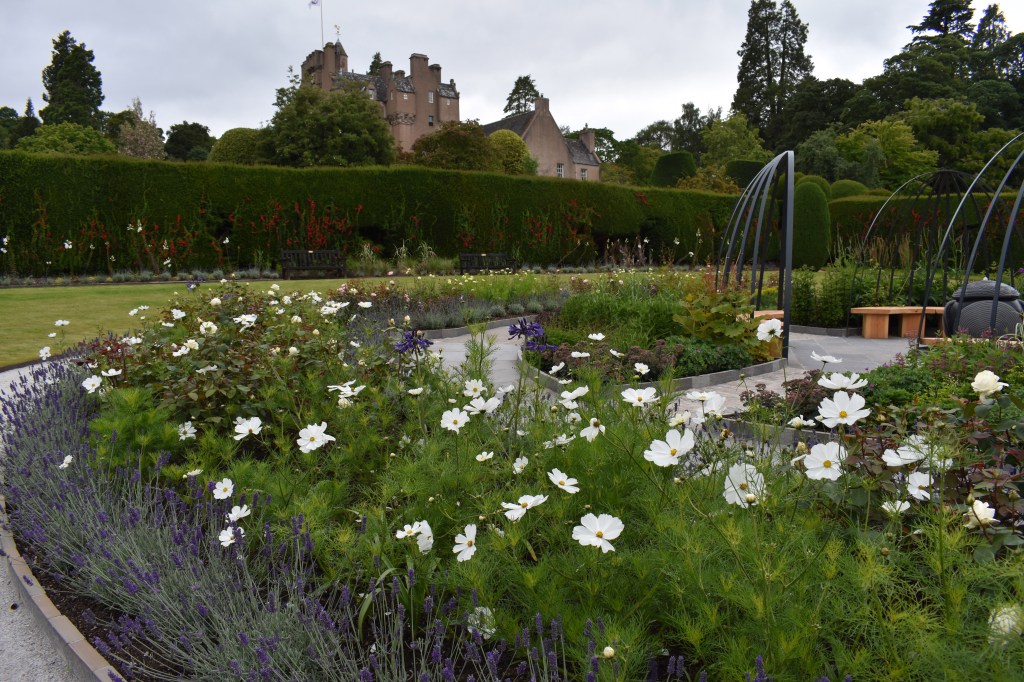
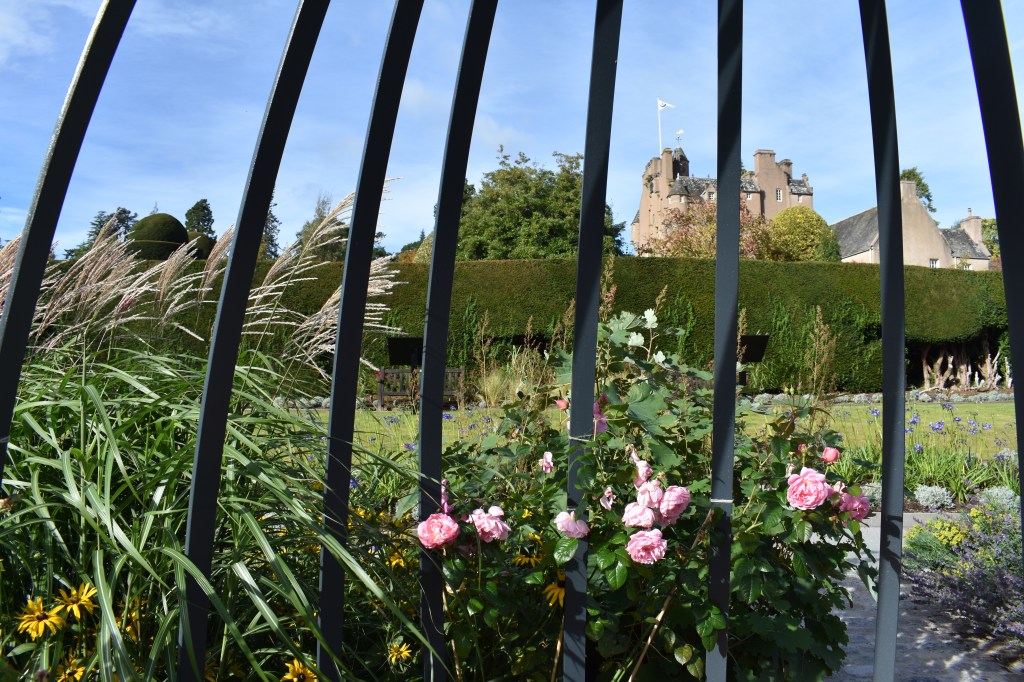
The Rose Garden has received a commendation from the Aberdeen Society of Architects. The judges commented: ‘A subtle intervention into a historic landscape garden. Judges [were] impressed by the way the accessibility and functionality was fully integrated in a way that preserves the formal nature of the space.’
This is primarily an architecture-based awards scheme, which makes the commendation especially satisfying. It is the culmination of a lot of hard work and organisation, none of it possible without a generous donation from the Young family.
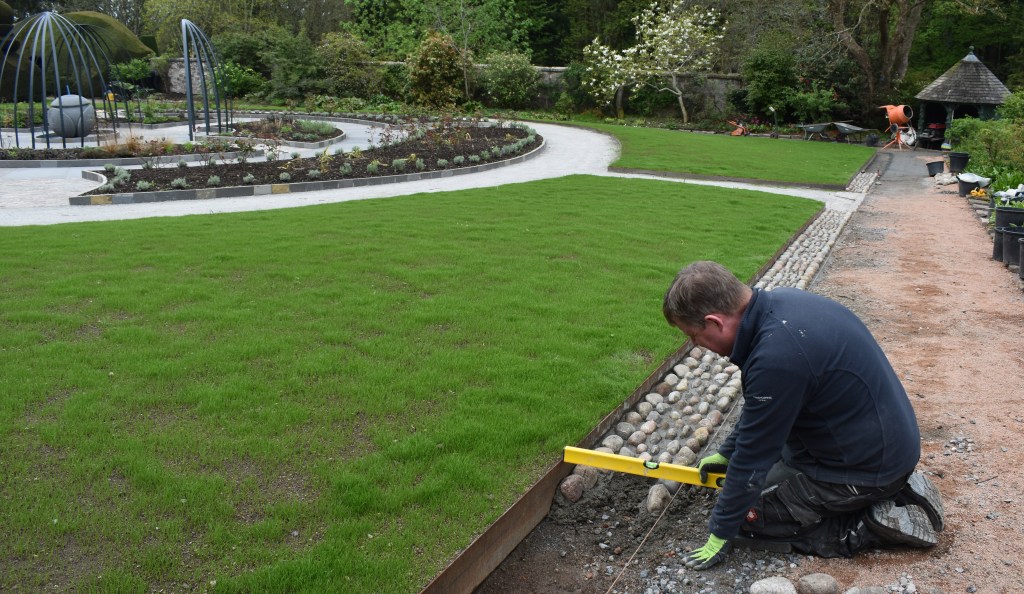
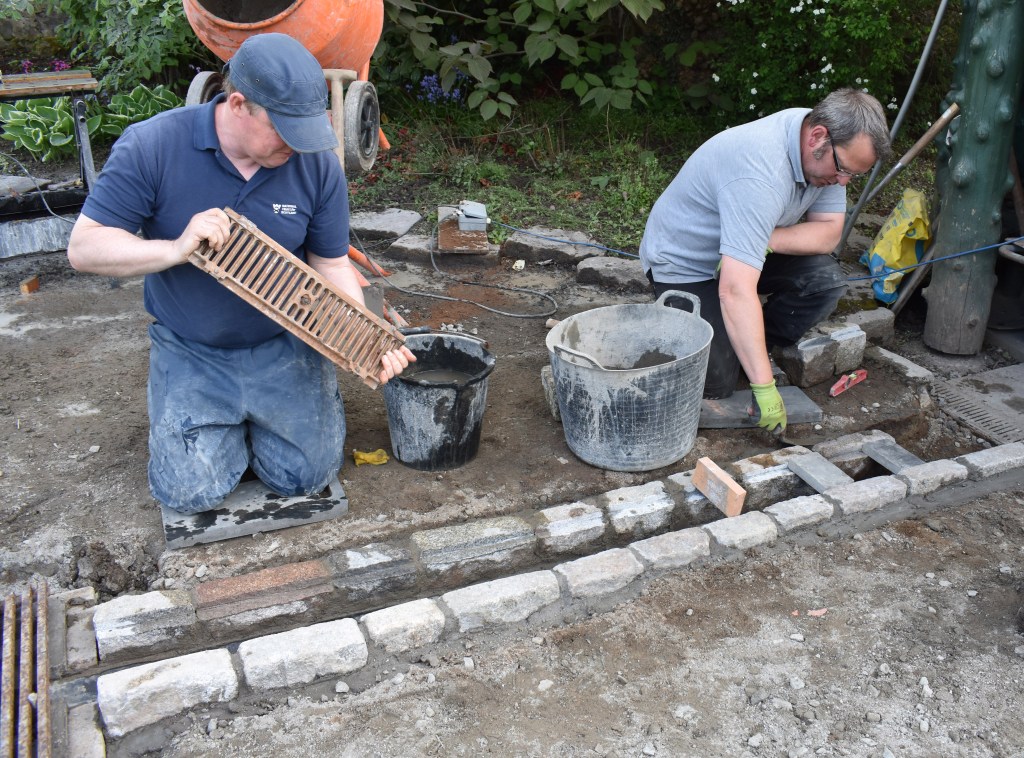
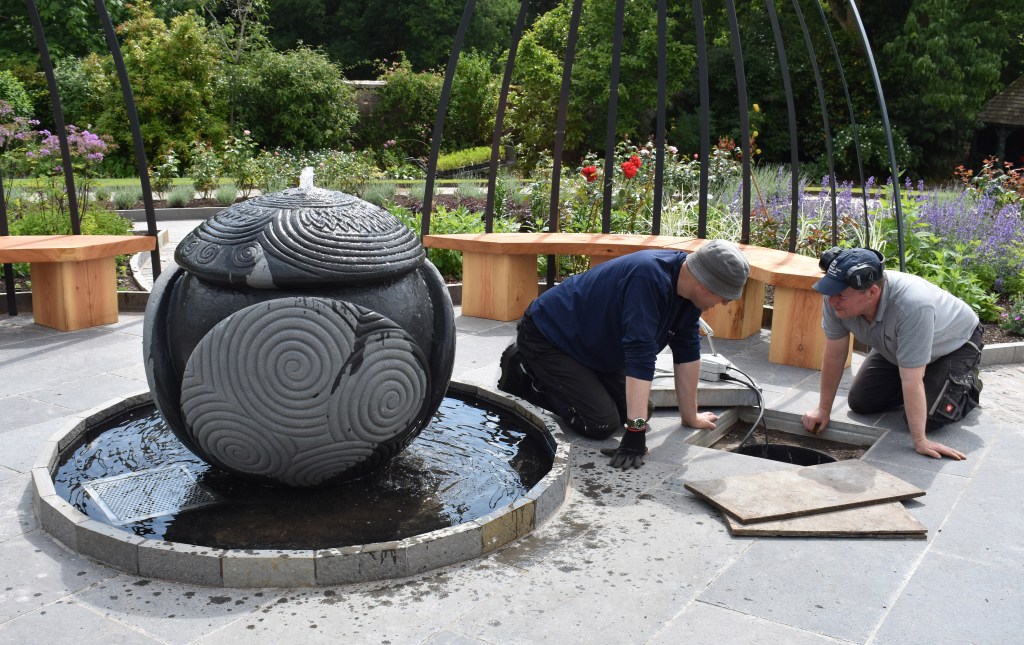
The old Rose Garden before work began, 10 November 2021.The contractors moved in, 18 August 2022.The contractors moved out, 11 November 2022.The ‘Towie ball’ and arbours were delivered, 30 March 2023.With the grass sown and planting begun Steve tok time to work on drainage issues, 11 May 2023.Steve and James finished off the drainage system, 19 May 2023.Mike and Steve dealt with the water feature problems, 22 June 2023.
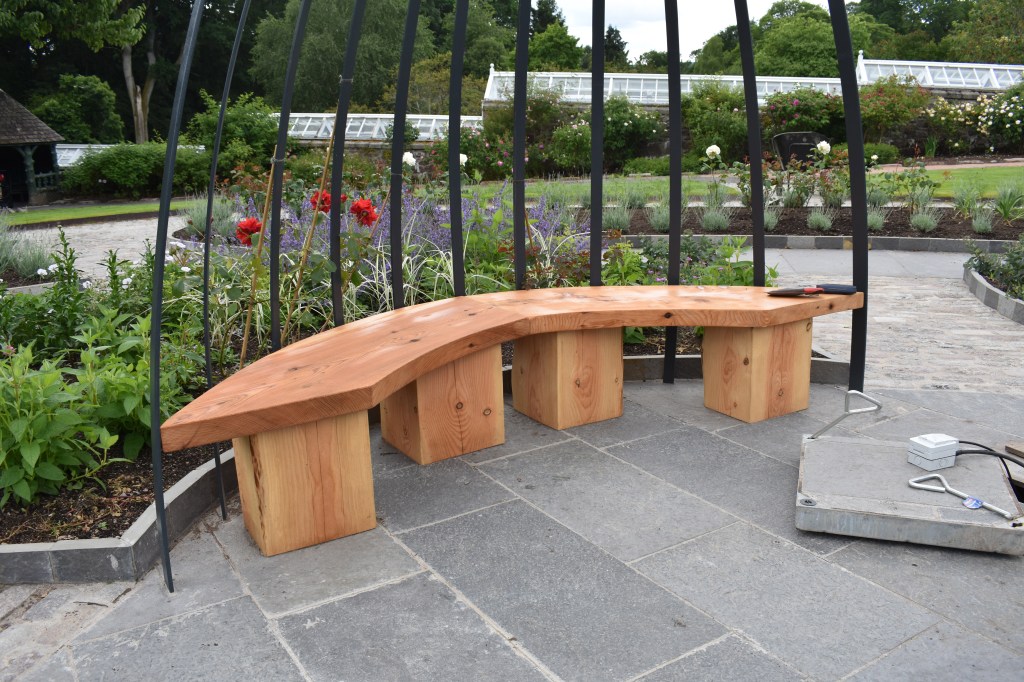
The seating, made from local blown wood, arrived, 22 June 2023.
The plants began to soften the hard landscape, 22 June 2023.Ready for opening, 24 July 2023.Eventually the climbing roses wil cover the arbours, 6 October 2023.Just waiting for the spring, 12 February 2024.
*The charity publishes a useful book: Your guide to Scottish Gardens Open for charity 2024
The world of roots is fascinating – especially when we are now learning how they interconnect and communicate via fungi. Today winter is trying to return, but in our small garden, scilla are creating a glorious puddle (as opposed to a sea) of blue which is uplifting! We hope to be able to visit the Towie Ball & rose garden but meantime thank you very much for another interesting blog!
And yes, I should have mentioned the fungi that are essential for transferring nutrients from the soil to the plant through their roots. I see the UN have been calling for more recognition for fungi.








 Notes from Crathes
The world of roots is fascinating – especially when we are now learning how they interconnect and communicate via fungi. Today winter is trying to return, but in our small garden, scilla are creating a glorious puddle (as opposed to a sea) of blue which is uplifting! We hope to be able to visit the Towie Ball & rose garden but meantime thank you very much for another interesting blog!
LikeLike
If only spring would stay when it comes. We have sleet and rain today and all those bumblebees have to survive!
LikeLike
And yes, I should have mentioned the fungi that are essential for transferring nutrients from the soil to the plant through their roots. I see the UN have been calling for more recognition for fungi.
LikeLiked by 1 person
Catching up on your blog Susan. I love that paragraph where you write about the water running from The Hill of Fare to The North Sea!
LikeLike
Thanks Sheila. I so enjoy the way we’re all connected one way or another.
LikeLike