
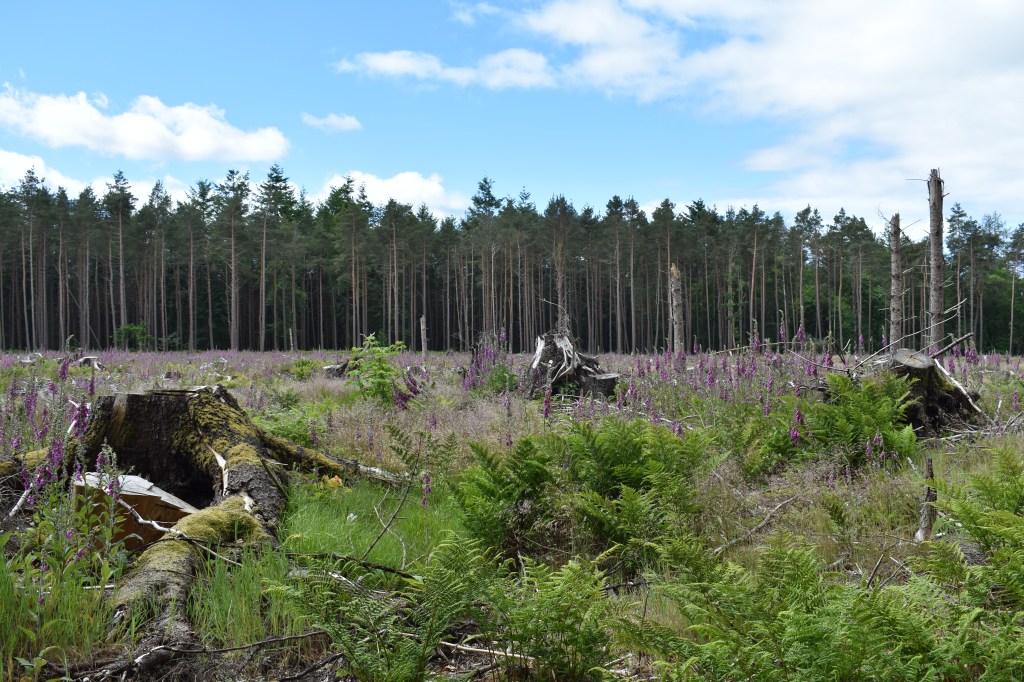
Summer Solstice, a pleasant warm day and I am in search of meadows. On the way up the East Drive I come on a swathe of foxgloves. Last month I was looking for oak saplings in this area (which was felled after the damage wreaked by Sorm Arwen); today I am treated to a natural spectacle brought on as the light floods into the landscape. The oak saplings are still here but also noticeable are the wild raspberries, just now in flower; plenty pollen and nectar here for the bees and other pollinators. Someone else is scouting about trying to get good photographs. We exchange comments about the wonder of it all.

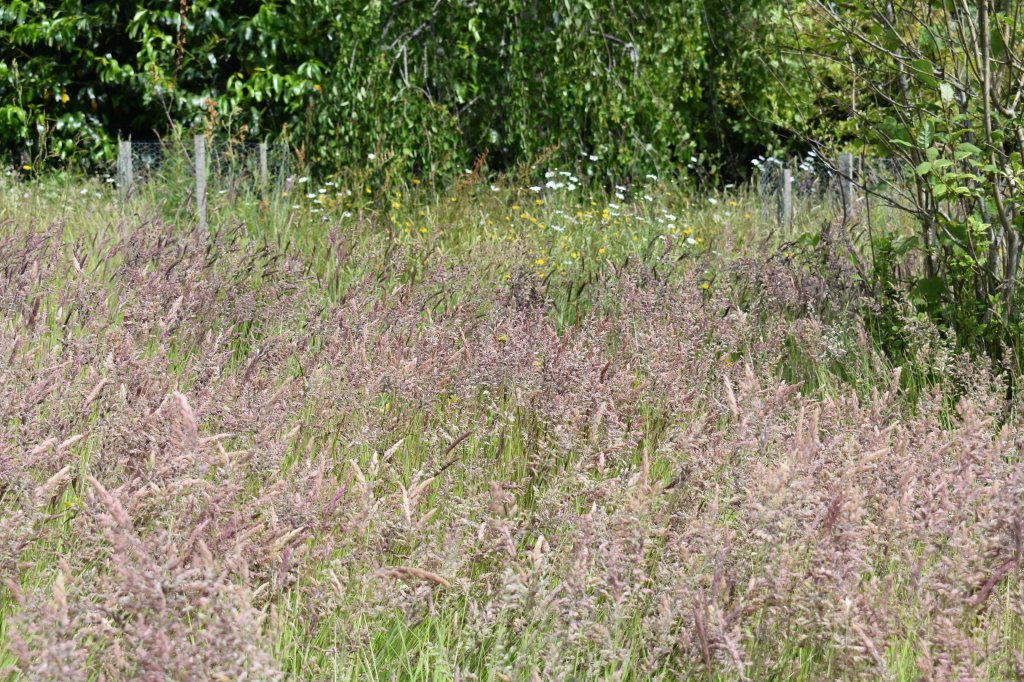
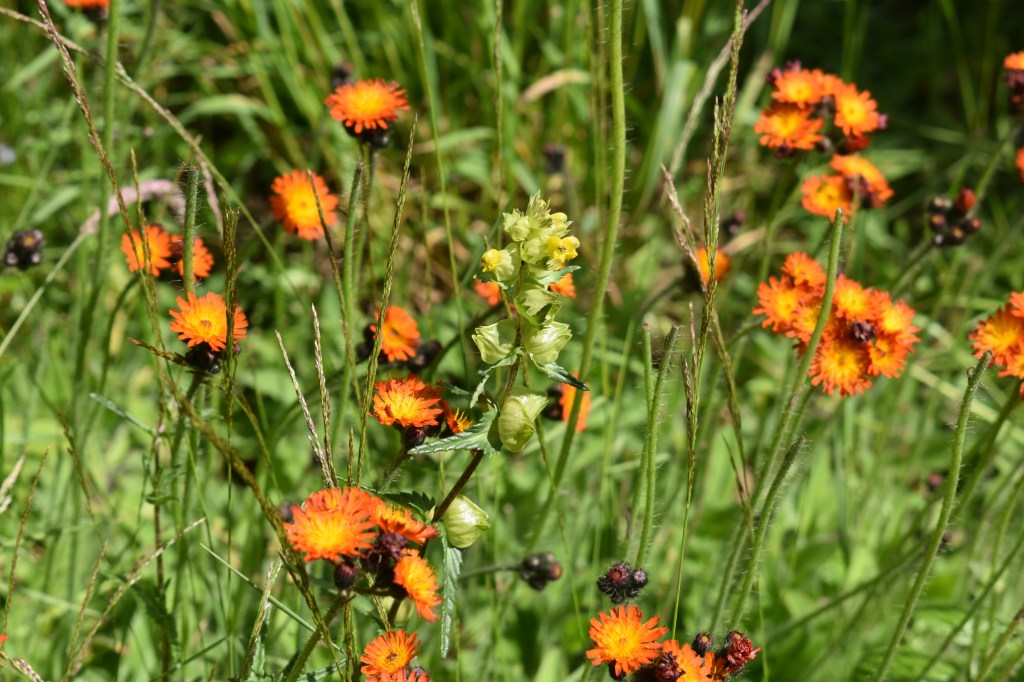
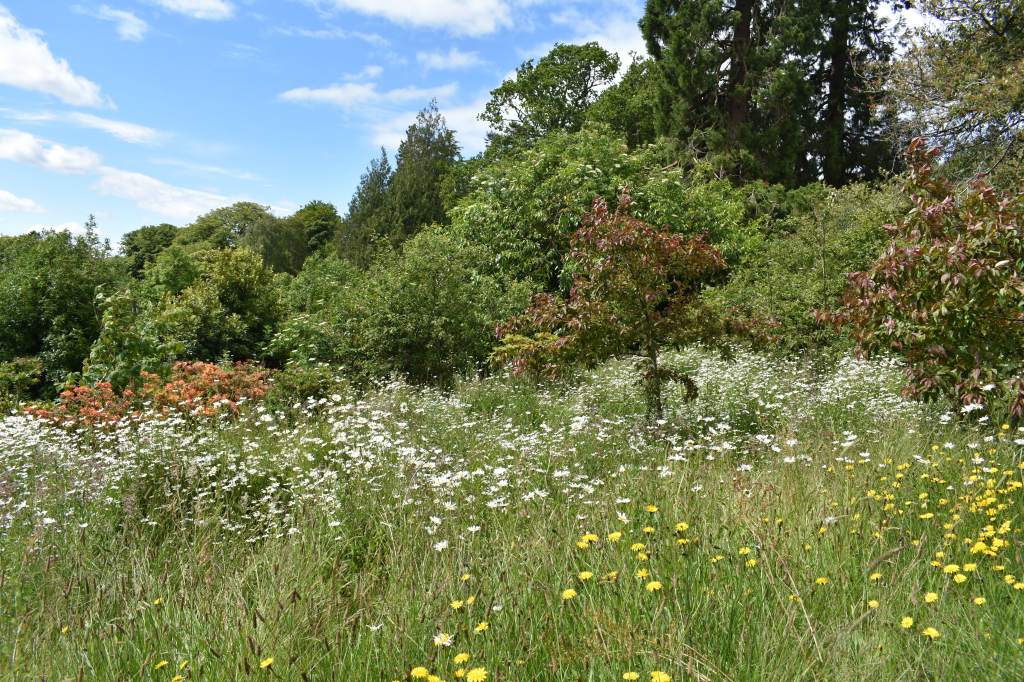
Up by the viewpoint another spectacle: a waving ‘sea’ of pink Yorkshire fog grass (Holcus lanatus) with a background of white ox-eyed daisies. But this meadow did not come by itself. Ten years ago the viewpoint was covered with rhododendrons – mostly, as I remember, of the invasive ponticum species. After clearance the area was planted up with shrubs such as viburnums, witch hazels, crab apples, even a monkey puzzle. Foxgloves invaded, but also rank docks and grasses and less welcome ‘weeds’. By dint of careful weeding, seeding, and removal of all the herbage after the meadow had shed its seeds, we have the result we see today. Yellow rattle is important in the mix as it parasitises the rank grass roots. Some meadows come naturally so long as the grass is not cut and pesticides and herbicides are banned, but there is no guarantee of success. The meadow above the viewpoint will continue to evolve but will always need some management and gardening time. It is particularly important to remove the considerable amount of herbage each autumn to keep the soil deplete of nutrition so that the wild flowers can flourish.
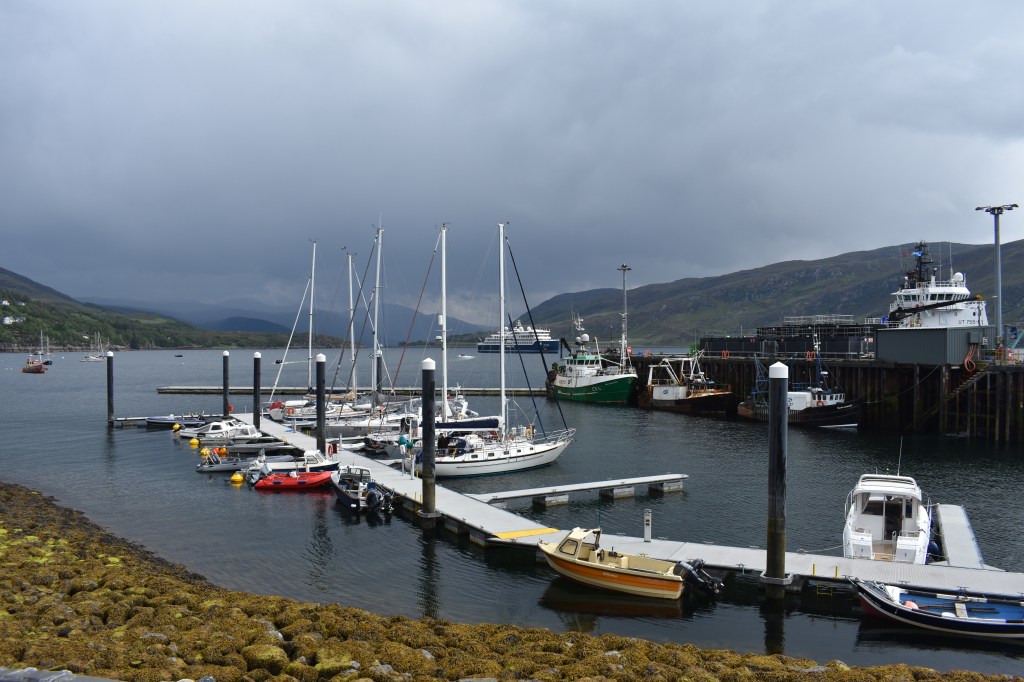
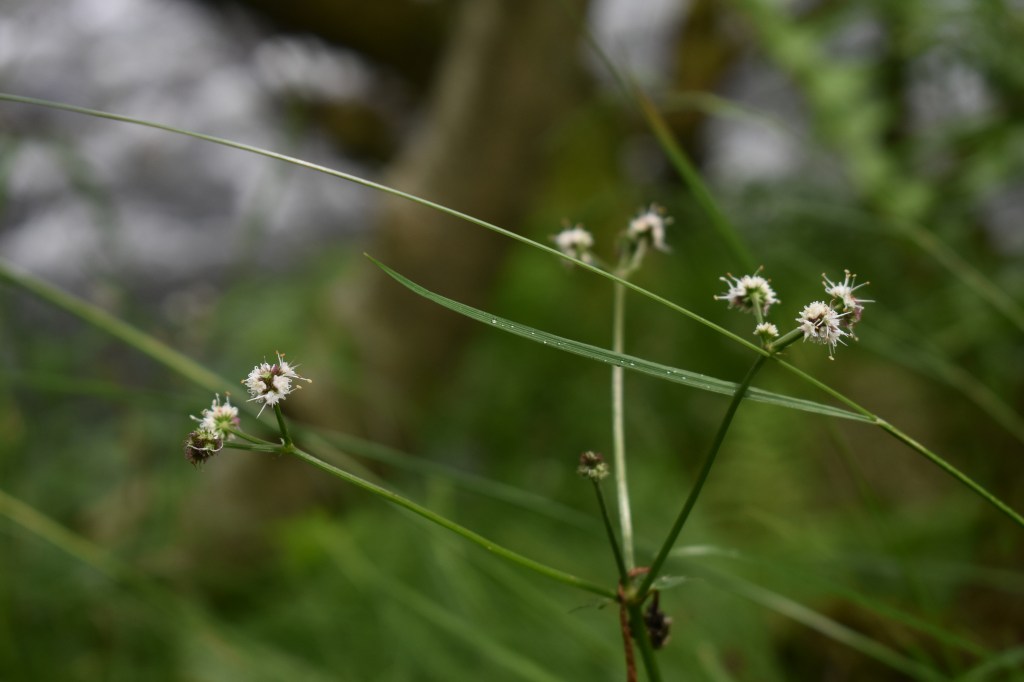
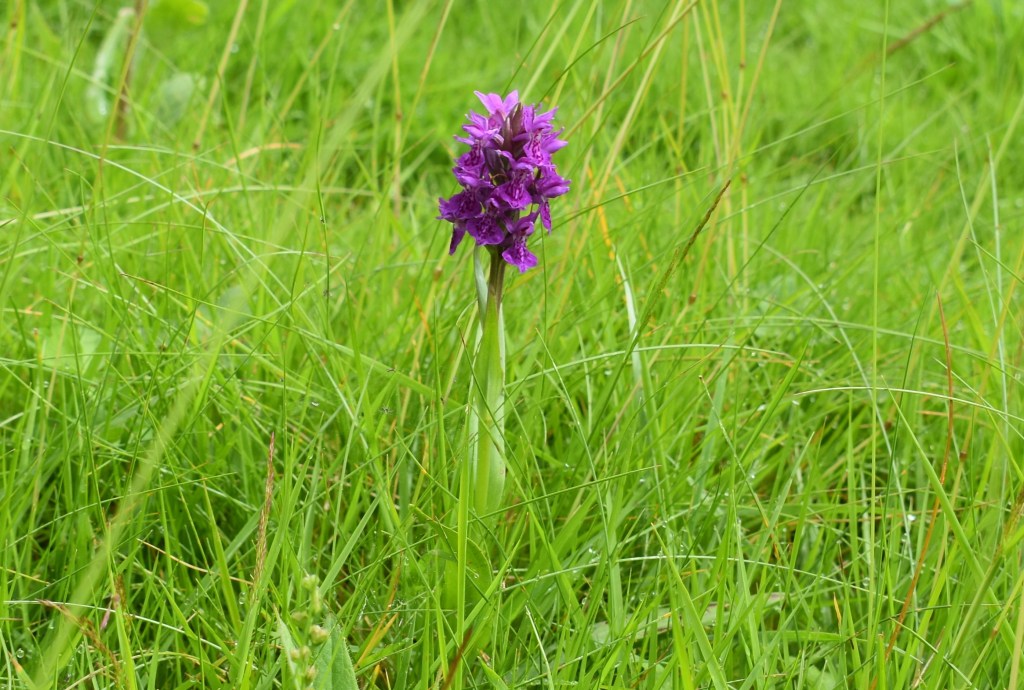
We have been on another jaunt, this time to Ullapool on the west coast. Ullapool is now part of the NC500 (North Coast 500). The town has changed from its original purpose, of fishing (a few fishing boats remain), to tourism with motor homes and cruise ships now bringing challenges and opportunities. The weather in the first week of June was abyssmal: cold and wet. Whatever the weather there are always plants to seek out. The native sanicle, Sanicula europaea, grew beside the riverside walks. Sanicle is a member of the apiaceae or carrot family (umbelliferae). Locally common throughout the British Isles, it is only occasional in Aberdeenshire and it is a while since I have seen it. Viburnum opulus also grew beside the river. Although I could not be sure if it had been planted it is another native that is only occasional in Aberdeenshire; I don’t think I have ever seen it growing wild in Scotland. We have a few cultivars of Viburnum opulus at Crathes – all planted for their attractive flowers and berries. I looked wistfully at the Ullapool front gardens where orchids grew in the grass that had been left uncut. Imagine, then, my surprise on returning from the week away to find that my own front garden, also left uncut, now sported a northern marsh orchid of its own.

My last garden was doing quite well for mini-meadows, but I was not hopeful for this new one. We plan and dream and can’t know the outcome, but that does not mean we should opt out of our part in the future. I was reading a philosophical book entitled What we Owe the Future by William Macaskill (2022). I must admit that I was a little out of my depths with this book although I am well aquainted with the concept of longtermism if not the word; anyone who plants trees or likes to walk in the woods must understand that planting trees is for generations to come. I was also fascinated to learn of the Aymara indigenous people of South America who look forward to the past and back to the future. At first a puzzle, but then I saw the logic: we can see the past – or evidence of it, but the future is unknown.
Another book I have been reading is The Garden Against Time In search of a common paradise (2024). From the Garden of Eden, via Milton, gardens built on money made through the slave trade, William Morris, Mussolini, the bomb sites of Britain after WW2, Derek Jarman’s garden on the shingle at Dungeness and many more gardens, the author, Olivia Laing, interlaces her research and thoughts with the practicalities of renovating a twentieth century garden during Covid. Olivia Laing had never had a garden of her own until her forties. The garden she and her husband bought had once belonged to Mark Rumary. Director of Landscaping at Notcutts Nursery. (I once chatted unknowingly to Sir Charles Notcutt in the Fountain Garden – he was a regular visitor at Crathes.)
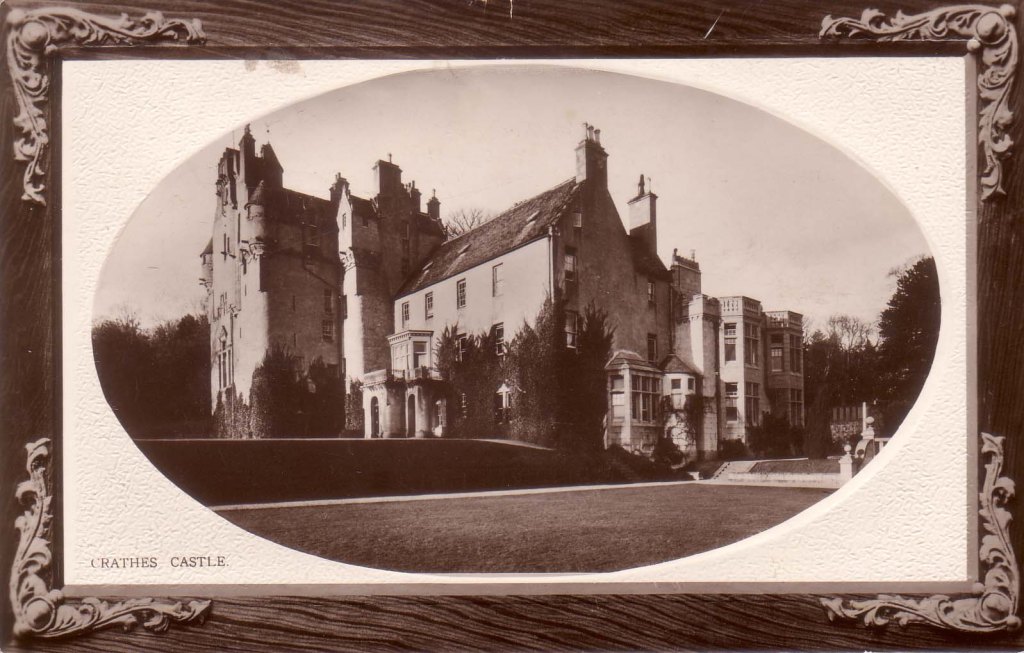
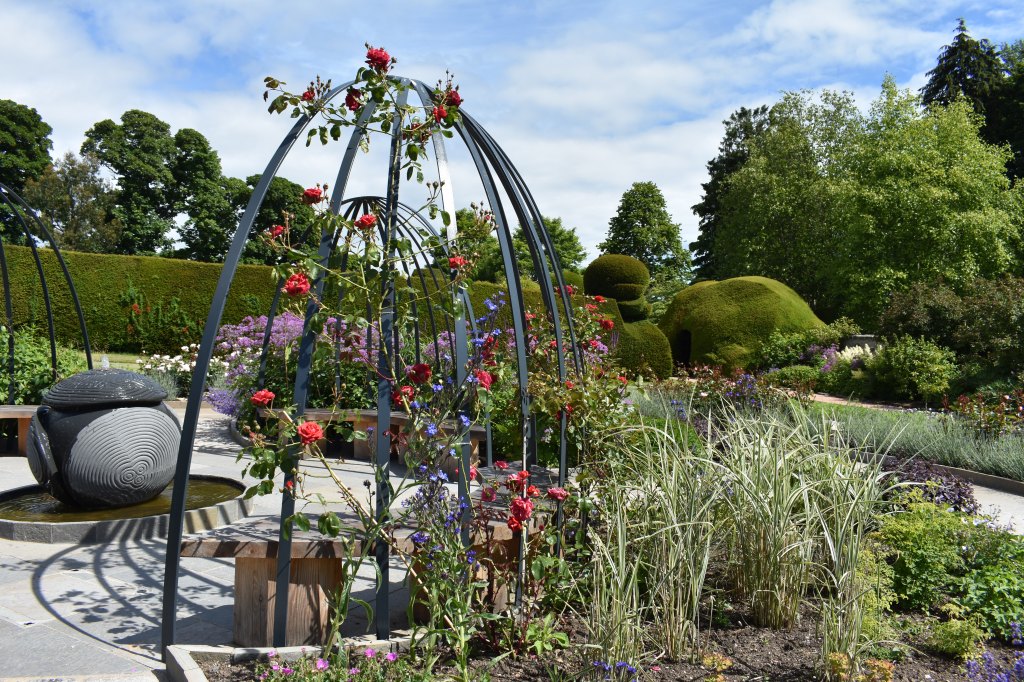
In the Crathes bothy we talk about historical ‘pressure’ when working in a famous garden. In a garden like Sissinghurst or Hidcote the historical aspect is relatively clear – both are twentieth century gardens made by one person (or, in the case of Sissinghurst, a couple). If desired, the garden could be kept more or less as it was at its peak. Crathes is different. Over four hundred or more years the garden has been planned, replanned, developed, and redeveloped, though never neglected. Although we cannot know how it all happened it seems that the garden evolved without ever being wholly redesigned; an area was changed here, fashion made an impact there, seeds of conifers arrived from California, a doocot was moved to make a decorative feature; it was continually adapting to the family wishes and changing circumstances. The result is something unique and glorious. There is no point in its history where the National Trust for Scotland (NTS) could state ‘that is how Crathes should be now’. Nevertheless certain features, such as the ‘egg and eggcup’ topiaries, give Crathes its identity; but that too could change.

I read the last chapter of The Garden Against Time twice. After struggling for perfection when Laing opened her garden to the public, her realisation that the garden doesn’t have to be perfect and is in fact better if she accommodates the moles, weeds and dying plants because it is their place as well as hers, gives her a contentment that transcends the problems of fine expensive gardens, access, and land ownership.
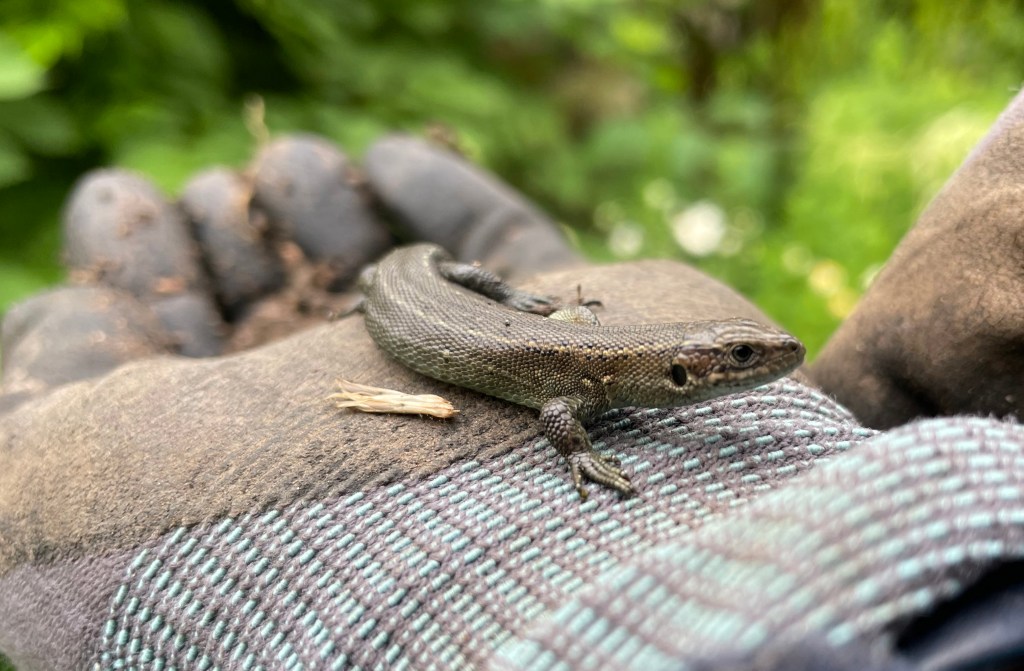
A garden can be a refuge, maybe from the news, from Covid, from personal problems, but, surely, it should also be of the world. Today we cannot ignore the plight of the Climate Crisis and if we own a garden it is in our power to help. To this end the NTS launched its Plan for Nature on 28 May 2024 as part of the Trust’s action in its own properties to mitigate the Climate Crisis (NTS owns about 180,000 acres of Scotland). Important conservation work has been going on for many years with emphasis on properties like Ben Lawers and Mar Lodge, but this plan also recognises the importance of work in all NTS properties at all levels of concern. Decisions such as that to move away from commercial forestry plantations in order to increase biodiversity directly affect Crathes. Working in Partnership with other organisations is also important as in the Millpond project which works to help conserve the Dee salmon. Control of invasive plants, and the role of education enabling youngsters and adults alike to enjoy and understand the complexities of our natural world are other areas where Crathes has an ongoing role to play. The plan is launched this year, but there is no fixed endpoint. ‘It can take decades to restore a species-rich meadow, a century to regenerate native woodland and 300 years to grow an ancient tree’ says Jeff Waddell, NTS head of nature conservation. The meadows up by the viewpoint show the march of time in no uncertain way. Where these meadows flourish, insects abound, where insects abound there are birds. The house martins returning from Africa will benefit as will swallows, many other birds, lizards, shrews and many more creatures. Centuries ago this was the natural rhythm of life, a rhythm which we have almost destroyed; there is time still to make a difference. Sometimes the march of time is circular. The decision to reduce pesticides and herbicides to a minimum may be the most important decision James makes during his time as head gardener.
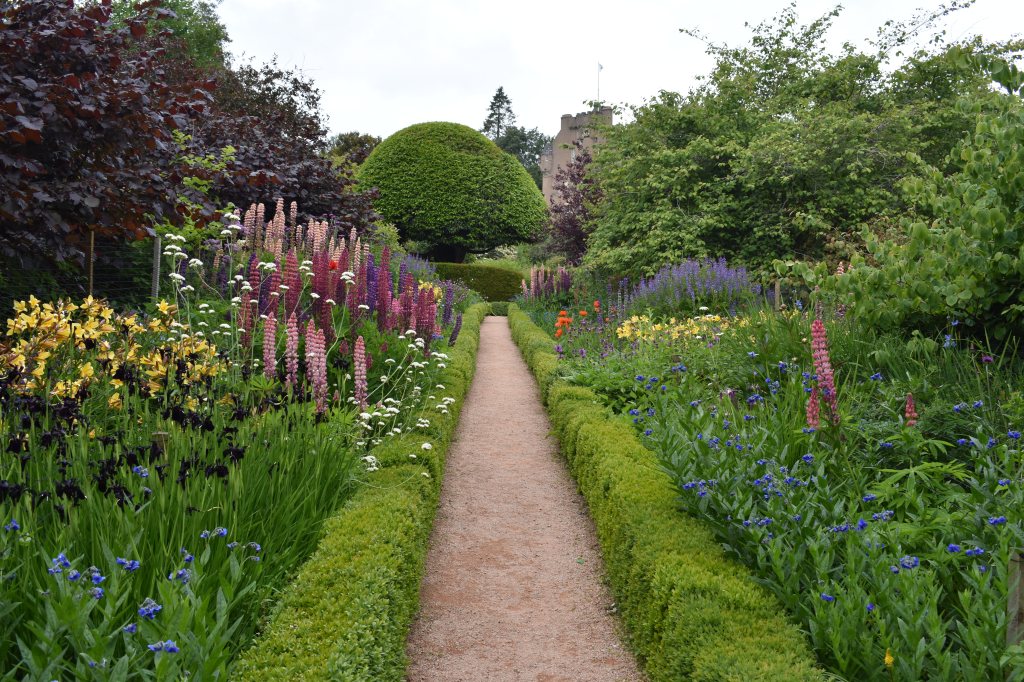
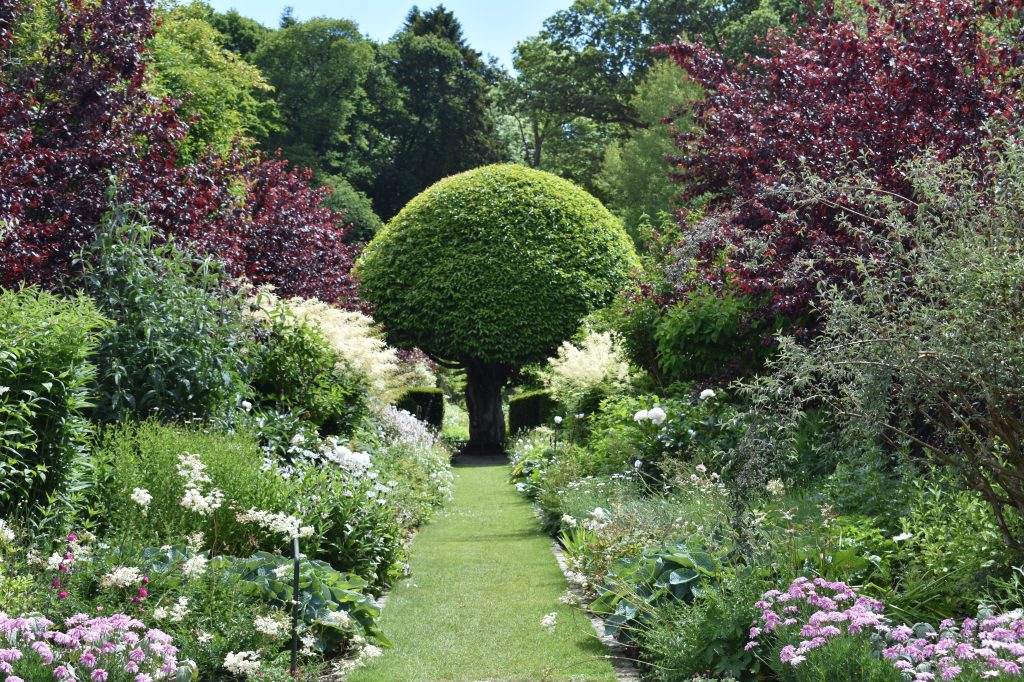
Meantime, despite the cold wet weather that followed the heat in early May, the garden is progressing well, with a lushness to the plants that has surprised James. Mulching helps and good plants are essential. James and Joanna have been wondering if the untreated water from the borehole is a positive factor in the production of healthy plants. Now, with all the planting out finished, the garden is looking lovely and smelling delicious.
Updates:
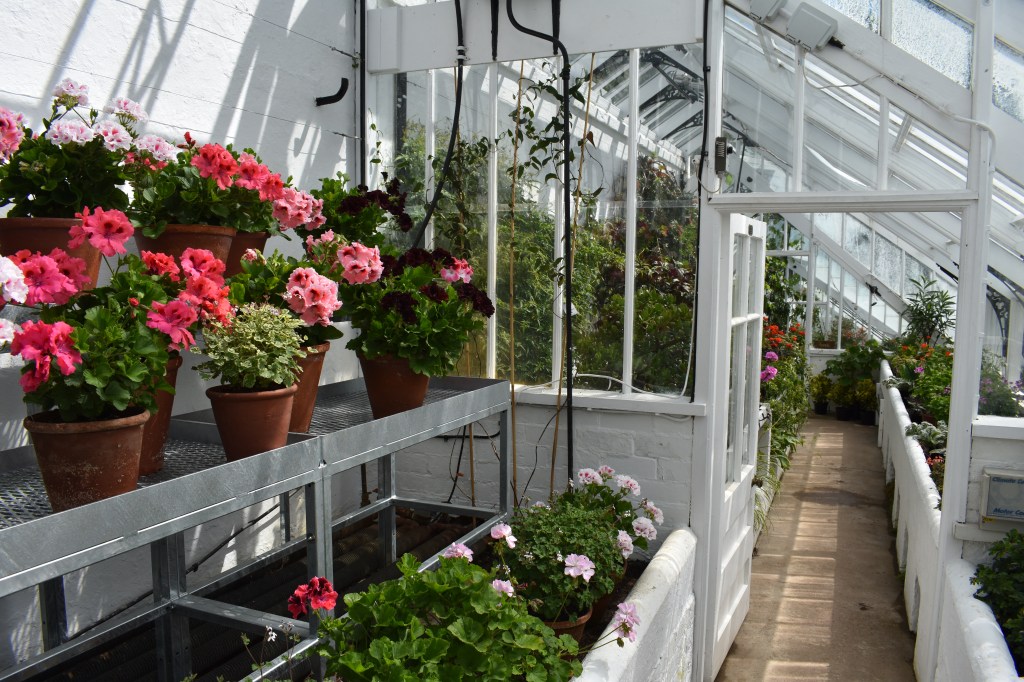
All the maintenance work on the glasshouses has been completed, the new staging has arrived for the show glasshouse and Joanna is getting back into the regular routines.
The oyster catchers produced two chicks and moved to the Croquet Lawn. One chick disappeared. On 11 June a parent was sitting on the grass brooding the remaining chick. Later the two parents and the chick were finding food in the gravel. However, the three have since disappeared and their whereabouts is unknown.
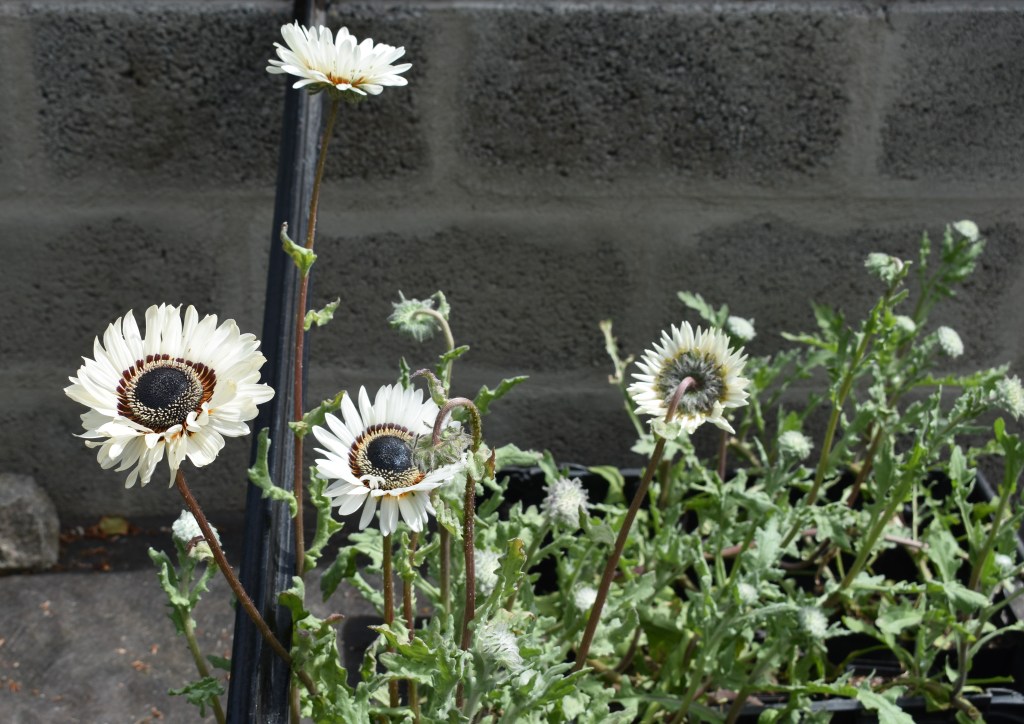
Arctosis fastuosa ‘White’ is in flower in the garden frames. Joanna grew this from seed but thinks she sowed it too early as the plants have grown rather leggy. Some have been planted out, but she plans to try these attractive flowers again next year.
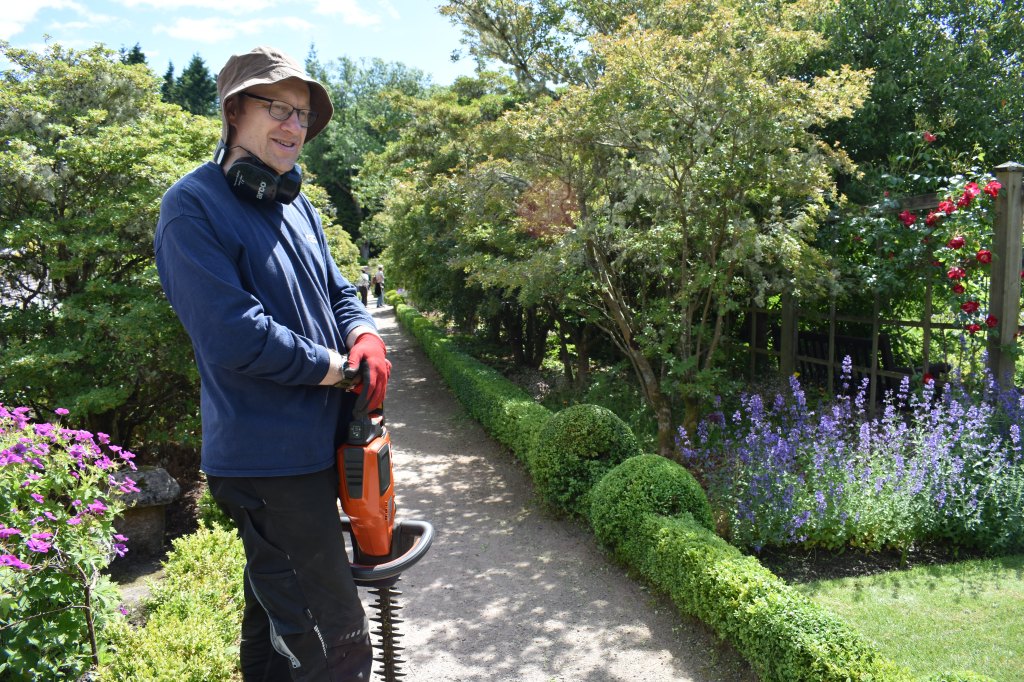
Box edging is now being cut.
Two of the female wildcats released in the Cairngorms National Park last year have given birth to kittens. This is a significant step in the conservation of these native cats.
 Notes from Crathes
Thank you Susan for that wonderful piece on the month of June. Your writing is so informative and though-provoking. Crathes is a really very special place. As the many French visitor to the garden have commented recently……”tres magnifique”.
LikeLiked by 1 person
Thanks Sheila, the garden is looking fabulous just now.
LikeLike
Thank you Susan.
So good to see the old places again and as ever the gardens are beautiful!
LikeLiked by 1 person
Thanks Audrey, the Chilean lantern tree has done really well these last few years, probably due to climate change.
LikeLike